How to Remove Cooking Smells from Your Kitchen: 7 Tips
Learning how to remove cooking smells from your kitchen can make your home feel fresher after preparing meals. Whether you’ve been frying fish, sautéing onions and garlic, or cooking a strongly spiced dish, some food aromas can linger long after dinner is finished.
These smells may remain in the air or cling to greasy surfaces, kitchen towels, and other nearby materials. Simply spraying an air freshener may cover an odor temporarily, but it does not necessarily remove its source.
A more effective approach combines ventilation, careful cooking habits, and regular cleaning.
These seven practical kitchen tips explain how to reduce cooking odors, deal with lingering smells, and keep your kitchen more comfortable without relying on harsh chemical mixtures.
Why Do Cooking Smells Stay in the Kitchen?
Cooking releases a mixture of airborne particles, moisture, and gases. Their amounts and composition depend on the ingredients, cooking temperature, and preparation method.
Frying and high-temperature cooking can release more particles and noticeable odors than some lower-temperature methods.
Grease can also settle on countertops, cabinets, stovetops, and nearby surfaces. When it accumulates, it may continue holding food-related smells.
Several factors make cooking odors more persistent:
- Poor kitchen ventilation.
- Cooking with oil at excessively high temperatures.
- Grease accumulating on nearby surfaces.
- Dirty range hood filters.
- Food scraps or used cooking oil left uncovered.
- Kitchen fabrics exposed to repeated frying.
- Limited airflow between the kitchen and outdoors.
Understanding where the smells come from helps you choose a more effective solution.
7 Practical Tips to Remove Cooking Smells
1. Turn On Your Range Hood Before Cooking
One of the best ways to manage cooking smells is to capture fumes while they are being produced.
If your kitchen has a range hood that vents outdoors, turn it on when you start cooking.
A properly functioning exhaust hood helps carry cooking fumes, moisture, and airborne particles outside.
How to Use It Effectively
- Switch on the exhaust hood when cooking begins.
- Choose a fan speed suitable for the amount of steam or smoke.
- Use the back burners when practical, as they may allow better capture by the hood.
- Keep the exhaust fan running after cooking.
The U.S. Environmental Protection Agency recommends leaving an outdoor-venting range hood operating for approximately 10–20 minutes after cooking.
This allows additional time to clear remaining cooking emissions.
Important: Some range hoods recirculate air back into the kitchen instead of exhausting it outside. These systems rely on filters and do not provide the same outdoor ventilation.
Practical tip: Turn on the hood before strong frying odors spread through the room.
2. Open Windows When Outdoor Air Conditions Are Suitable
Fresh outdoor air can help dilute and remove indoor cooking odors.
If you don’t have an outdoor-venting range hood, opening a window may help improve ventilation.
However, opening windows isn’t always appropriate.
Avoid bringing outdoor air inside when there is heavy pollution, wildfire smoke, or other unsafe outdoor conditions.
How to Improve Airflow
Open a kitchen window when it is safe to do so.
If you have a suitable window-mounted exhaust fan, use it to move indoor air outdoors.
Allow fresh air to enter through an appropriate opening when possible.
Keep the cooking area supervised if food is still on the stove.
Why This Helps
Ventilation moves some odor-producing pollutants out of the kitchen and replaces indoor air with outdoor air.
This is generally more useful than simply adding another fragrance to the room.
Practical tip: For kitchens with fuel-burning appliances, avoid improvised high-powered exhaust arrangements that could interfere with combustion ventilation. Consult a qualified professional if you are unsure.
3. Prevent Excessive Smoke When Frying
Strong cooking smells often begin when oil or food becomes too hot.
Heating cooking oil beyond an appropriate temperature can produce smoke and unpleasant odors.
Burnt food can also release airborne particles that spread through the kitchen.
How to Reduce Smoke While Cooking
Choose an appropriate cooking temperature for your food.
Use cooking oil suited to the intended cooking method.
Avoid allowing oil to smoke unnecessarily.
Do not leave pans unattended.
Remove burnt crumbs and residue from cookware between batches when it is safe to do so.
Keep the cooking area well ventilated.
Why This Helps
Reducing smoke at its source limits the amount of material released into the kitchen air.
It also helps prevent unpleasant burnt flavors in food.
Practical tip: When frying fish or preparing strongly aromatic foods, use the exhaust hood throughout cooking rather than waiting until the kitchen already smells strongly.
Safety note: If cooking oil catches fire, do not pour water onto it. Follow appropriate cooking-fire safety procedures and seek emergency assistance when necessary.
4. Clean Grease from Nearby Kitchen Surfaces
Cooking smells don’t always remain only in the air.
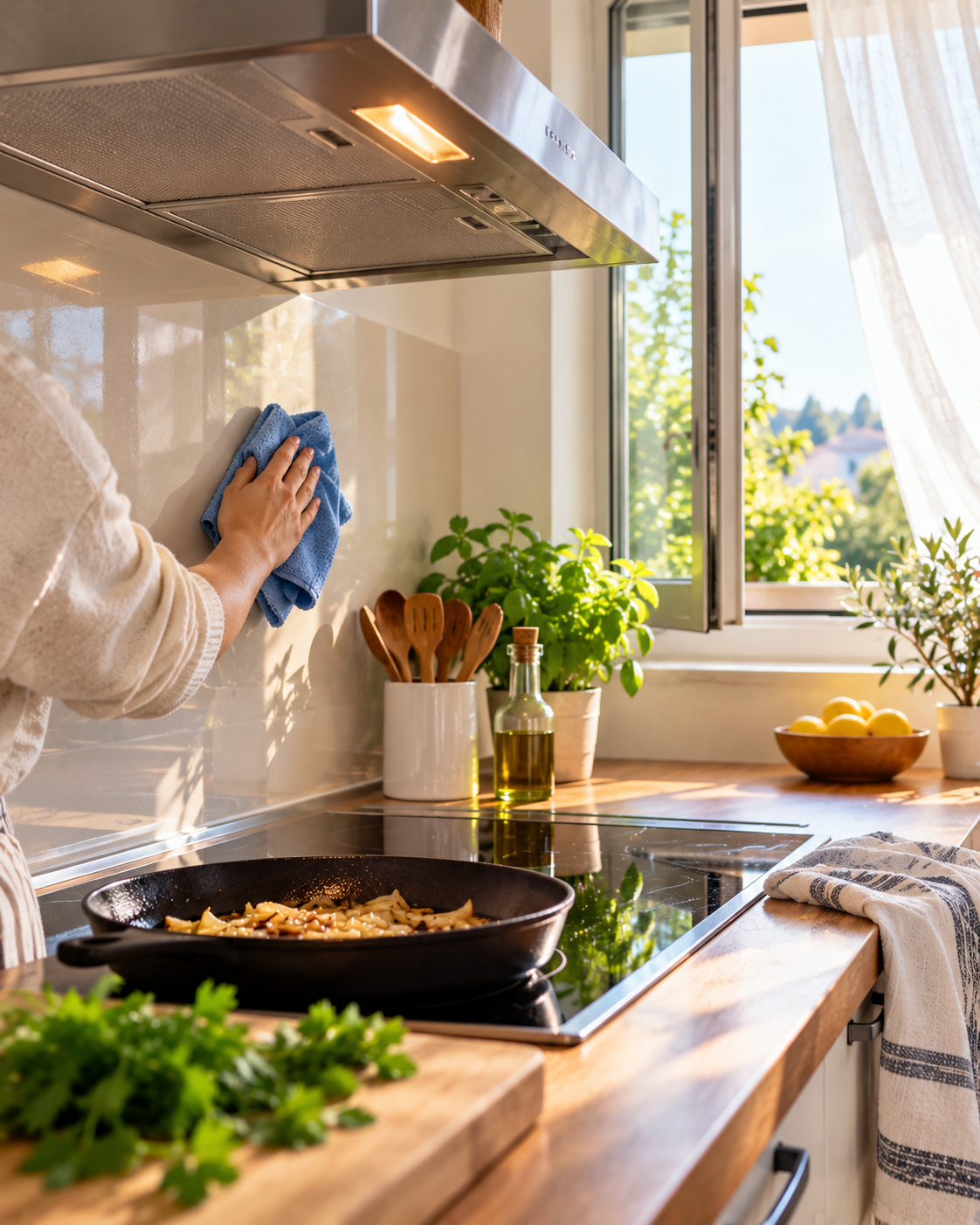
During frying and sautéing, tiny grease droplets can settle on kitchen surfaces.
Over time, this residue may hold onto odors.
Pay attention to:
- The stovetop.
- The backsplash.
- Countertops near the stove.
- Cabinet surfaces around the cooking area.
- Accessible areas around cooking appliances.
How to Clean Safely
Allow hot surfaces to cool first.
Use a soft cloth and mild dish soap diluted in warm water, provided the surface manufacturer permits this method.
Wipe away greasy residue.
Follow with a clean, damp cloth to remove soap.
Dry the surface using a clean towel.
Avoid spraying water into electrical controls, gas burners, or appliance openings.
Why This Works
Dish soap helps loosen oily residue so that it can be removed rather than simply covered by another scent.
Practical tip: Wipe grease splashes after cooking and cooling instead of allowing them to build up over several meals.
5. Check Your Range Hood Filters
A range hood works more effectively when its filters are maintained according to the manufacturer’s instructions.
Many hoods contain metal grease filters.
Others, particularly recirculating models, may also use activated carbon filters designed to reduce certain odors.
These filters serve different purposes.
Metal Grease Filters
Metal filters help capture greasy particles.
Some are washable with warm, soapy water or in a dishwasher.
However, dishwasher compatibility varies by product.
Follow the manufacturer’s instructions before removing or washing a filter.
Activated Carbon Filters
Carbon filters are commonly used in recirculating range hoods.
They can reduce certain odor-causing gases, but their capacity is limited.
Many charcoal filters must be replaced rather than washed.
Replacement intervals depend on the model and how frequently you cook.
Why Filter Maintenance Matters
Grease accumulation can restrict airflow or contribute to persistent smells.
An exhausted carbon filter may become less effective at capturing odors.
Practical tip: Check your range hood’s model number and cleaning instructions rather than assuming every filter is washable.
6. Remove Food Scraps and Used Cooking Grease Promptly
Sometimes the smell you notice after dinner is no longer coming from the air above the stove.
It may come from discarded food, greasy cookware, or a waste bin containing strongly scented leftovers.
Fish scraps, onion peels, sauces, and cooking grease can continue producing odors.
What to Do After Cooking
Transfer food scraps into a suitable waste container.
Close the waste-bin lid.
Remove particularly strong-smelling waste from the kitchen when practical.
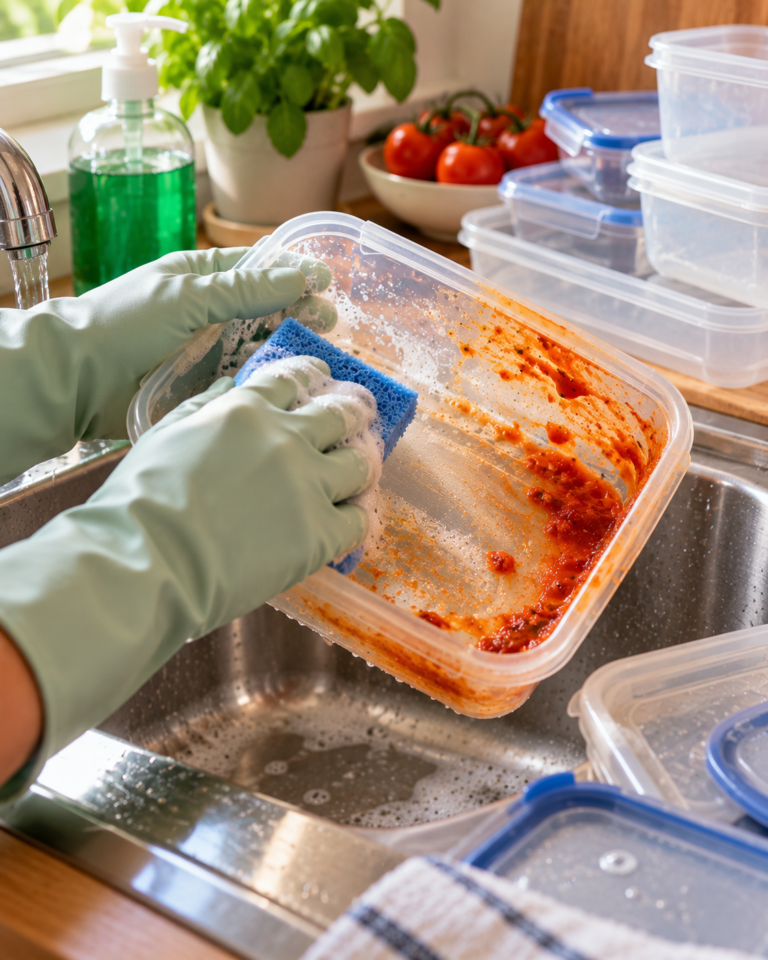
Wash greasy pots, pans, and utensils once they have cooled enough to handle.
Check the sink strainer for trapped food.
Wipe up leaked sauces or cooking liquids.
Don’t Pour Cooking Grease Down the Drain
Large quantities of fats and oils can contribute to plumbing blockages.
Allow cooking grease to cool and dispose of it according to local waste-management guidance.
Why This Helps
Removing odor sources prevents smells from continuing after the meal is finished.
Practical tip: After preparing fish, inspect the cutting board, sink strainer, utensils, and waste bin before trying an air freshener.
7. Wash Kitchen Fabrics and Consider Suitable Air Filtration
Kitchen towels, curtains, and other nearby fabrics can pick up cooking-related odors.
These smells may linger after the kitchen air has become fresher.
If washable kitchen textiles smell greasy or strongly of food, clean them according to their care labels.
Replace dirty dishcloths with clean ones.
Allow washed fabrics to dry thoroughly.
What About Air Purifiers?
Air filtration can sometimes help reduce remaining cooking-related pollutants.
However, not every air purifier is designed to remove odors.
HEPA filters are primarily intended to capture airborne particles.
For odor-causing gases, a product with an appropriate activated carbon filter may provide additional help.
The effectiveness depends on the type and quantity of carbon, the pollutants involved, room size, and maintenance.
An air purifier should supplement ventilation and cleaning rather than replace them.
Avoid ozone-generating air cleaners. Ozone can irritate the respiratory system, and the EPA does not recommend using ozone generators in occupied indoor spaces.
Practical tip: Start with ventilation and surface cleaning before purchasing a device to manage occasional cooking odors.
Why These Cooking Odor Removal Tips Work
There are three main approaches to reducing lingering kitchen smells.
Source Control
The first approach is to reduce odor-producing material at its source.
Preventing excessive cooking smoke, removing food scraps, and cleaning grease deposits all help accomplish this.
Ventilation
Outdoor ventilation helps move cooking fumes and airborne pollutants out of the kitchen.
A range hood that exhausts outdoors can be especially useful because it works near the cooking source.
Cleaning and Filtration
Cleaning removes residue from surfaces.
Appropriate air filters may help reduce certain remaining particles or gases.
However, filtration alone cannot eliminate every indoor pollutant.
These approaches work best when used together.
How to Remove Different Types of Cooking Smells
After Frying Fish
Fish can produce a strong aroma that remains noticeable after cooking.
Start by ventilating the kitchen during frying.
Once the cooking equipment has cooled, clean the pan, utensils, and nearby surfaces.
Remove fish scraps promptly and wash the cutting board and sink strainer.
If the smell remains, check for hidden food residue before using additional deodorizing products.
After Cooking Onions and Garlic
Onions and garlic contain sulfur-containing compounds that contribute to their characteristic aromas.
Ventilate while cooking.
Afterward, wash cutting boards, knives, pans, and food containers that retain the smell.
Clean any greasy splashes around the stovetop.
Avoid assuming that simmering scented ingredients will remove the original odor. Adding fragrance may simply create a mixture of smells.
After Deep-Frying
Frying can release airborne particles and greasy residue.
Use suitable ventilation throughout the cooking process.
Maintain an appropriate oil temperature.
Once the oil and equipment have cooled, clean splattered grease and dispose of spent oil appropriately.
Wash nearby fabrics if they have absorbed noticeable odors.
After Burning Food
If food burns, turn off the heat when safe and address the situation immediately.
Do not leave a smoking pan unattended.
Ventilate once conditions are safe.
After the pan and surrounding surfaces cool, remove burnt food residue.
If the smell is accompanied by persistent smoke, an electrical problem, or suspected combustion hazards, treat it as a safety issue rather than an ordinary cleaning task.
Common Mistakes to Avoid
Using Air Freshener Instead of Ventilation
Problem: Fragrance may temporarily mask cooking smells without removing pollutants.
Better approach: Ventilate and remove odor sources first.
Opening Windows When Outdoor Air Is Polluted
Problem: Poor outdoor air quality can introduce additional pollutants.
Better approach: Check conditions and use suitable indoor ventilation or filtration strategies.
Forgetting the Range Hood Filter
Problem: Grease buildup and exhausted filters may reduce the effectiveness of odor control.
Better approach: Follow the hood manufacturer’s cleaning and replacement schedule.
Leaving Greasy Pans Overnight
Problem: Remaining food residue and oils may continue producing smells.
Better approach: Wash cookware after it has cooled safely.
Mixing Household Cleaning Chemicals
Problem: Combining products such as bleach with vinegar or ammonia can release dangerous gases.
Better approach: Never mix cleaning chemicals. Use one appropriate product according to its label.
Using Ozone Machines to Remove Odors
Problem: Ozone can harm respiratory health and is not an appropriate routine solution for kitchen smells.
Better approach: Focus on source control, outdoor ventilation, and suitable non-ozone filtration.
Simple Habits That Help Prevent Kitchen Odors
You don’t need a complicated cleaning routine to improve everyday kitchen freshness.
Before cooking, check that the ventilation system is functioning.
During cooking, control the temperature and avoid unnecessary smoke.
After cooking, remove food scraps, clean splashes once surfaces are cool, and let the exhaust hood continue operating for its recommended period.
Check your range hood filters regularly and wash kitchen textiles when needed.
These small maintenance habits help reduce odor buildup over time.
Frequently Asked Questions
What Is the Best Way to Remove Cooking Smells from a Kitchen?
The most useful approach is to remove odor sources, ventilate outdoors when possible, and clean greasy surfaces. An outdoor-venting range hood can help capture fumes during cooking.
How Long Should I Leave the Range Hood Running After Cooking?
The EPA recommends approximately 10–20 minutes after cooking for a range hood that vents outdoors.
How Do I Remove Fish Smell from My Kitchen?
Ventilate during cooking, remove fish scraps, wash utensils and cookware, and clean affected surfaces. Persistent smells may indicate overlooked residue.
Does Baking Soda Remove Cooking Smells from the Air?
Baking soda is sometimes used for household odor control, but placing a bowl of it in the kitchen should not be treated as a proven replacement for ventilation and cleaning.
Can Vinegar Remove Cooking Odors?
Vinegar may help clean some compatible surfaces, but leaving a bowl of vinegar out or boiling it is not a reliable substitute for removing cooking fumes. Never mix vinegar with bleach.
Why Does My Kitchen Still Smell After Cleaning?
Check for lingering grease on surfaces, a dirty range hood filter, food waste, or smells absorbed by nearby fabrics.
Are Recirculating Range Hoods Effective?
They may reduce some grease particles and odors when properly maintained, but they return filtered air to the room rather than exhausting it outdoors.
Can an Air Purifier Remove Frying Smells?
A suitable air purifier with activated carbon may reduce certain odor-causing gases. A particle-only filter is not designed to remove all gaseous odors.
Should I Use Scented Candles to Remove Cooking Smells?
Scented candles add fragrance rather than removing the original source. Burning candles also produces indoor emissions, so they are not a preferred cooking-odor control method.
What If I Smell Gas Rather Than Food?
A suspected gas leak is not an ordinary cooking odor. Leave the area and contact your gas emergency provider or local emergency services from a safe location. Do not operate switches or appliances near a suspected leak.
Final Thoughts
Removing cooking smells from your kitchen is most effective when you combine good ventilation with regular cleaning.
Using an outdoor-venting range hood, controlling cooking temperatures, cleaning grease, and disposing of food waste promptly can help reduce the odors left behind after preparing meals.
If smells continue to linger, check filters, kitchen fabrics, and overlooked surfaces before relying on fragrances or specialty products.
With these seven practical tips, you can make your kitchen more comfortable after cooking while avoiding unnecessary chemicals and unsafe cleaning shortcuts.