How to Clean Plastic Food Containers: 7 Safe Tips
Learning how to clean plastic food containers properly can save time in the kitchen, especially after storing oily leftovers, pasta dishes, or tomato-based sauces.
Plastic containers are practical for everyday food storage, but they can develop a greasy film, lingering odors, and stubborn orange stains after repeated use. Tomato sauce is particularly challenging because its natural pigments can cling to certain plastic surfaces, even after ordinary washing.
Fortunately, removing food residue does not usually require harsh cleaning chemicals or aggressive scrubbing.
These seven practical cleaning tips explain how to remove grease, wash away tomato sauce residue, care for lids and seals, and protect reusable food containers from unnecessary damage.
Why Do Tomato Sauce and Grease Stick to Plastic Containers?
Tomatoes contain a natural red pigment called lycopene.
Lycopene does not dissolve readily in water, which helps explain why tomato-based sauces can leave persistent orange or red marks on some plastic surfaces.
Cooking oil and other fats in sauces can also spread across the container, leaving a slippery film.
The problem may become more noticeable when food remains in the container for a long time or is repeatedly heated in unsuitable plastic containers.
However, an orange stain is not necessarily the same as leftover food.
A container can remain discolored even after its surface has been properly washed.
The goal is to remove grease and food residue safely without damaging the plastic.
7 Tips to Clean Plastic Food Containers
1. Remove Leftover Food Before Washing
Start by emptying the container completely.
Use a spoon or soft spatula to remove leftover pasta, vegetables, tomato sauce, or other food.
Avoid scraping the inside with a sharp knife or metal utensil.
Sharp objects may leave scratches that make future cleaning more difficult.
If the container holds a substantial amount of oil, wipe away the excess with a disposable paper towel before washing.
Dispose of the paper towel appropriately instead of washing large amounts of grease down the drain.
Why this helps: Removing food particles and excess grease allows dish soap to work more effectively on the remaining film.
Practical tip: Wash reusable containers soon after emptying them whenever possible, rather than allowing sauce residue to dry for several days.
2. Wipe Away Excess Grease First
Oily leftovers can leave a slippery coating on plastic.
This is especially common after storing foods such as pasta with meat sauce, roasted vegetables in oil, or rich tomato-based dishes.
Before filling the container with water, use a soft sponge or disposable paper towel to remove as much visible grease as practical.
Pay attention to the bottom corners, where oil can collect.
Avoid spreading greasy residue across the outside of the container.
If the sponge becomes heavily coated in oil, rinse or replace it before continuing.
Why this helps: Removing excess fat reduces the amount of oily material the dish detergent must lift.
It may also make the remaining tomato stains easier to see.
Practical tip: Clean greasy containers separately from delicate glasses or lightly soiled dishes to avoid transferring oil between items.
3. Wash with Warm Water and Dish Soap
For most reusable plastic food containers, warm water and mild dish soap are the best starting point.
Check the manufacturer’s cleaning instructions before washing.
Use water warm enough to help loosen the grease, but not so hot that it could deform the plastic.
Apply a small amount of dishwashing liquid to a soft sponge.
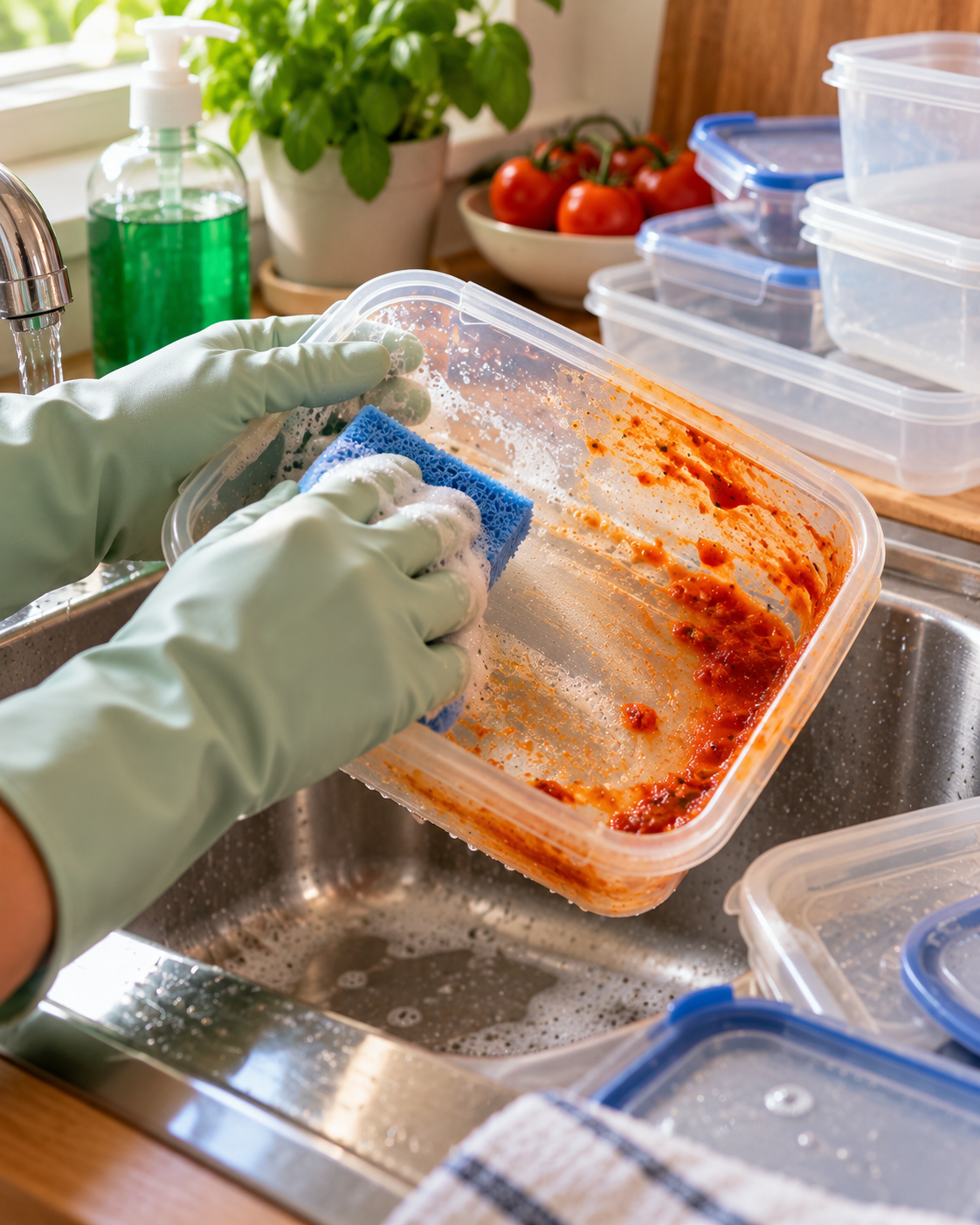
Wash the inside of the container using gentle circular movements.
Pay particular attention to the corners and any textured areas.
Wash the outside surfaces as well, especially if sauce leaked during storage.
Rinse with clean water and check whether the slippery feeling has disappeared.
If the container still feels greasy, repeat the washing process.
Why this works: Dish detergents contain surfactants that help loosen and disperse oily residue so it can be washed away with water.
Practical tip: Avoid using boiling water unless the manufacturer specifically confirms that the container can tolerate it.
4. Soften Stubborn Sauce Residue Before Scrubbing
Dried tomato sauce can cling to the bottom and sides of a container.
Instead of scrubbing aggressively, allow the residue to soften.
Fill the container with warm, soapy water, using a temperature suitable for the plastic.
Leave it for approximately 10–15 minutes.
This is a practical starting time rather than a guarantee that every stain will disappear.
After soaking, empty the container and wipe the inside using a soft sponge.
Repeat the wash if necessary.
For residue trapped in corners, use a small, soft cleaning brush that will not scratch the plastic.
Avoid steel wool, sharp scrapers, and abrasive scouring pads.
Why this helps: Moisture and dish soap can loosen dried food deposits, reducing the need for forceful scrubbing.
Practical tip: Soaking can help remove actual dried sauce, but it may not eliminate orange discoloration that has already become embedded in the plastic surface.
5. Try a Gentle Method for Remaining Tomato Stains
After washing, you may notice that the container is no longer greasy but still has an orange tint.
This often happens with tomato-based dishes.
At this stage, it’s important to distinguish between a dirty surface and persistent discoloration.
If your container’s manufacturer permits mild baking soda cleaning, you can try a small amount of baking soda mixed with a little water to form a soft paste.
Test an inconspicuous area first.
Apply gently with a soft cloth or sponge.
Avoid vigorous rubbing because baking soda has a mild abrasive effect.
Rinse thoroughly and wash again with dish soap to remove any remaining residue.
Check the result once the container is dry.
What If the Orange Color Remains?
Some tomato stains may not disappear completely.
That does not automatically mean the container is contaminated.
If it is intact, designed for repeated food use, and has been properly cleaned, a cosmetic stain alone is not necessarily a reason to discard it.
However, don’t keep applying stronger chemicals or rough abrasives just to restore the original color.
Practical tip: For foods that repeatedly stain plastic, consider using a suitable glass container instead.
6. Clean the Lid, Corners, and Silicone Seals
One of the most frequently overlooked parts of a food container is its lid.
Grease and tomato sauce can collect around the rim, beneath removable seals, and in small grooves.
Even if the main container looks clean, these areas may still contain food residue.
Remove the lid and inspect it closely.
If your container has a removable silicone gasket, follow the manufacturer’s instructions for removing and cleaning it.
Wash the gasket, lid, and container separately with warm, soapy water.
Use a soft brush if necessary to clean accessible grooves.
Rinse each part thoroughly.
Allow every component to dry completely before putting the seal back in place.
Do not force a seal out of a lid that is not designed to be disassembled.
Why this helps: Cleaning the hidden contact areas reduces the chance that trapped food residue will remain between uses.
Practical tip: If a silicone seal becomes torn, permanently deformed, or impossible to clean properly, check whether the manufacturer offers a replacement.
7. Rinse, Dry, and Inspect Before Reusing
After washing, rinse all surfaces thoroughly with clean water.
Check for remaining soap, food particles, or greasy spots.
Allow the container and its lid to dry completely on a clean drying rack.
Avoid closing the lid while the container is still damp.
Trapped moisture can contribute to unpleasant odors during storage.
Once dry, inspect the plastic for damage.
Look for:
- Cracks or splits.
- Deep scratches that are difficult to clean.
- Warped or melted areas.
- Damaged lids or seals.
- Persistent residue that cannot be washed away.
Replace containers that are damaged or can no longer be cleaned adequately.
Why this helps: Complete drying and regular inspection make reusable food containers easier to maintain.
Practical tip: Store clean containers with their lids separate or slightly open if appropriate for your storage space.
Can You Put Plastic Food Containers in the Dishwasher?
Some reusable plastic containers are dishwasher-safe.
Others may warp or become damaged when exposed to high temperatures.
Before placing a container in the dishwasher, check for a dishwasher-safe symbol or the manufacturer’s instructions.
If the product is approved for dishwasher cleaning, follow its specific placement recommendations.
Many dishwasher-safe plastic items are intended for the top rack.
However, the safest position and drying settings depend on the product and appliance.
Never assume that a container is dishwasher-safe simply because it feels thick or sturdy.
If the manufacturer provides no dishwasher instructions, hand washing with warm, soapy water is the more cautious option.
How to Prevent Grease and Tomato Sauce Stains
Preventing stains is often easier than trying to remove them afterward.
Choose the Right Container
Glass food storage containers are useful for strongly colored dishes because glass is generally easier to clean and less prone to retaining tomato pigments.
Choose containers intended for food storage and suitable for the temperatures they will encounter.
Reheat Food in a Suitable Dish
Not every plastic storage container is microwave-safe.
For tomato-based leftovers, transferring food to an appropriate glass or ceramic dish before reheating can help reduce unnecessary staining.
Always check the instructions for the container and microwave.
Clean Containers Promptly
Avoid allowing oily sauce residue to remain for long periods after the food has been removed.
Wash or rinse the empty container as soon as practical.
Avoid Excessive Heat
Very hot water, unsuitable microwave use, and high-temperature dishwasher cycles can damage some plastics.
Follow the container manufacturer’s temperature restrictions.
Check the Lid Regularly
Inspect the seal and rim each time you wash the container.
These small areas can trap sauce even after the main container has been cleaned.
Why These Cleaning Tips Work
A few basic cleaning principles explain the effectiveness of these methods.
Dish Soap Helps Remove Oil
Grease does not mix readily with water alone.
Dishwashing detergents help loosen and disperse oily residue, allowing it to be rinsed away.
Soaking Softens Dried Food
Warm, soapy water can soften dried deposits on surfaces.
This often reduces the amount of scrubbing needed.
Soft Tools Protect Plastic
Gentle sponges and soft brushes are less likely to scratch the container than abrasive pads or metal tools.
Thorough Cleaning Removes Food Residue
A clean surface should be free from remaining food particles, grease, and cleaning-product residue.
Some permanent-looking color changes may remain even after proper washing.
Drying Helps Prevent Storage Problems
Allowing containers and lids to dry thoroughly before storage reduces trapped moisture and helps prevent unpleasant smells.
Common Mistakes to Avoid
Using Steel Wool on Plastic
Problem: Abrasive tools can leave scratches.
Better approach: Use a soft sponge or a manufacturer-approved brush.
Using Boiling Water on Unsuitable Containers
Problem: Heat-sensitive plastic may warp.
Better approach: Use water at a temperature recommended for the container.
Assuming Every Orange Stain Means Dirt
Problem: Repeated aggressive scrubbing may damage the container without removing embedded pigment.
Better approach: Wash properly, then distinguish remaining discoloration from actual residue.
Forgetting the Lid and Seal
Problem: Trapped sauce can remain in small grooves.
Better approach: Clean all removable components according to the manufacturer’s instructions.
Mixing Cleaning Chemicals
Problem: Certain combinations can release dangerous gases.
Better approach: Never mix household bleach with vinegar, ammonia, or other cleaning products. For routine grease and sauce removal, start with dish soap and water.
Putting All Plastic Containers in the Dishwasher
Problem: Some products cannot tolerate dishwasher temperatures.
Better approach: Check whether the container is specifically labeled dishwasher-safe.
Reusing Damaged Takeout Containers
Problem: Some takeaway containers are intended for single use and may not tolerate repeated cleaning or heating.
Better approach: Use reusable, food-safe containers designed for repeated washing and storage.
Practical Examples
Example 1: A Container Covered in Pasta Sauce
After transferring the leftover pasta, remove the remaining sauce with a soft utensil.
Wipe away excess oil.
Wash with warm, soapy water.
If dried residue remains, soak briefly and wash again.
A faint orange tint may remain even after the surface is clean.
Example 2: A Slippery Container After Oily Food
If the container feels greasy, focus on removing the oil first.
Use dish soap and a soft sponge.
Rinse and check for remaining slippery areas.
Repeat if necessary.
Example 3: Tomato Sauce Trapped Around the Lid
Remove the lid and inspect the seal.
If the gasket is designed to be removable, take it out carefully.
Wash all parts separately, rinse thoroughly, and allow them to dry.
Example 4: An Old Container with Deep Scratches
Inspect whether food residue is becoming trapped in the damaged areas.
If the container cannot be cleaned properly, replace it rather than continuing to use aggressive cleaning methods.
Cleaning vs. Sanitizing: What’s the Difference?
Cleaning removes grease, food residue, and other impurities from surfaces.
Sanitizing is an additional process used to reduce microorganisms to appropriate levels.
For everyday containers used to store ordinary cooked leftovers, thorough washing with suitable soap and water is generally the starting point.
Some situations, including contamination from raw meat or certain food-safety incidents, may require additional sanitizing.
When sanitizing is appropriate, use a method suitable for food-contact surfaces and the particular container.
Follow official directions and product labels.
Do not use random concentrations of cleaning chemicals, and never mix cleaning products.
For more kitchen hygiene advice, read our 4 Simple Steps to Food Safety: Clean, Separate, Cook, and Chill.
Frequently Asked Questions
How Do You Remove Grease from Plastic Food Containers?
Remove excess oil first, then wash with warm water and mild dish soap using a soft sponge. Rinse thoroughly and repeat if any slippery residue remains.
Why Does Tomato Sauce Turn Plastic Containers Orange?
Tomatoes contain pigments such as lycopene, which can cling to certain plastic materials and leave persistent discoloration.
Does Baking Soda Remove Tomato Sauce Stains?
It may help reduce some stains, but results vary. Use it gently and only if the container manufacturer permits that cleaning method.
Can I Use Vinegar to Clean Plastic Food Containers?
Some plastic containers tolerate diluted vinegar, but it is not necessary for routine grease removal. Check the manufacturer’s instructions and never mix vinegar with bleach.
Is a Stained Plastic Container Unsafe?
Not automatically. A cosmetic stain does not necessarily indicate contamination. What matters is whether the container is suitable for food use, intact, and properly cleaned.
Can I Clean Plastic Containers in the Dishwasher?
Only if the product is marked dishwasher-safe or its manufacturer permits it.
How Can I Remove Grease from a Plastic Lid?
Wash the lid with warm, soapy water. Pay attention to grooves and removable seals, then rinse and dry completely.
Should I Use Hot Water or Cold Water?
Warm water can help loosen grease. Avoid temperatures that exceed the manufacturer’s recommendations.
When Should I Replace a Plastic Food Container?
Consider replacement if the container is cracked, badly warped, deeply damaged, or cannot be cleaned adequately.
Can I Store Tomato Sauce in Glass Instead?
Yes. Suitable glass food containers are often easier to clean after storing strongly colored foods.
Final Thoughts
Learning how to clean plastic food containers effectively is largely about using the right cleaning method for the type of residue.
For grease and leftover tomato sauce, begin by removing excess food and oil. Wash with warm, soapy water, use a soft sponge, and pay attention to corners, lids, and silicone seals.
If an orange stain remains, remember that discoloration does not always mean the container is dirty.
Avoid harsh scrubbing, excessive heat, and incompatible cleaning chemicals.
With proper washing, thorough drying, and regular inspection, reusable food containers can remain convenient for everyday kitchen storage.