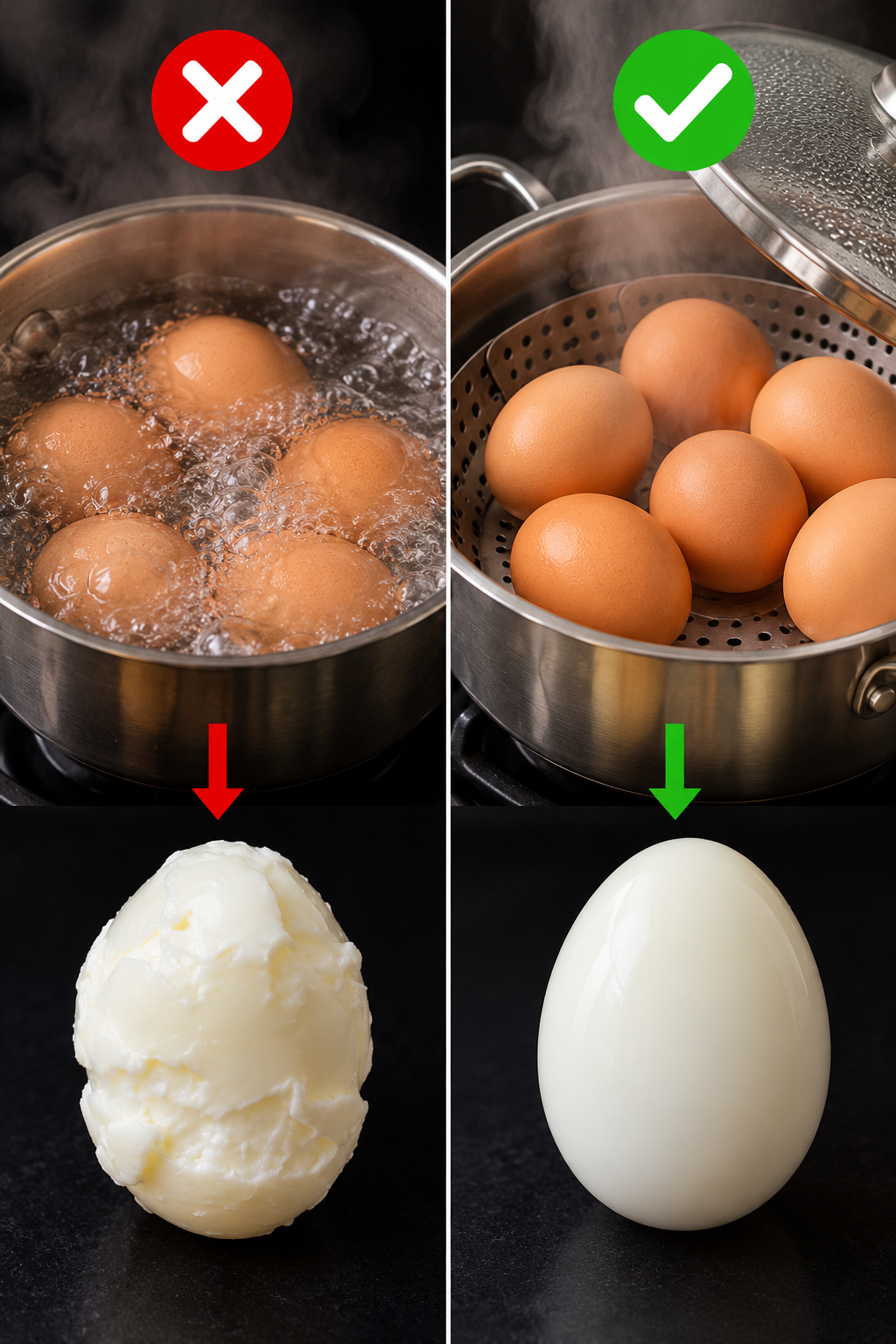
How to Steam Eggs for Even Cooking and Easier Peeling
vantage is that steaming requires relatively little water while providing a consistent cooking environment when the saucepan remains covered.
2. Start Timing When the Eggs Enter the Steamer
Timing plays an important role in determining the texture of cooked eggs.
For large eggs taken directly from the refrigerator, approximately 12 minutes of covered steaming is a useful starting point for hard-cooked results. The American Egg Board recommends approximately 13 minutes for extra-large eggs.
However, cooking times may vary depending on:
- Egg size.
- Initial egg temperature.
- Steamer design.
- Water temperature.
- Stove performance.
- The number of eggs being cooked.
Start your timer when the eggs are placed into the steamer over boiling water, and keep the lid closed as much as possible.
When trying this method for the first time, check one egg after cooking to determine whether the yolk is completely firm. Adjust the timing slightly for future batches if necessary.
3. Keep the Steam Consistent Throughout Cooking
Maintaining a steady supply of steam helps the eggs cook predictably.
After placing the eggs in the basket, adjust the burner to maintain active steaming without allowing the saucepan to boil dry.
Avoid repeatedly removing the lid to inspect the eggs. Every time the lid is lifted, heat and steam escape, temporarily changing the cooking conditions.
Instead, use a timer and check that the saucepan contains enough water before starting.
Helpful tip: If your saucepan has a transparent lid, you can observe the water activity without opening it.
4. Cool the Eggs Immediately After Steaming
Once the eggs finish cooking, remove them carefully using tongs or a slotted spoon.
Transfer them into a bowl of cold water, preferably with ice.
Rapid cooling helps prevent residual heat from continuing to cook the eggs. It also makes the shells more comfortable to handle.
For eggs that will be peeled immediately, allow them to cool sufficiently before handling.
Avoid leaving cooked eggs sitting in warm water for an extended period, particularly if you want tender whites and a firm but not overcooked yolk.
5. Use a Gentle Peeling Technique
Removing the shell without damaging the egg white can be frustrating, especially when preparing eggs for salads or sandwiches.
Steaming may make peeling easier, but the results are not guaranteed. The freshness of the eggs and the cooling process also influence how easily the shell separates.
For cleaner peeling:
- Begin by gently tapping the wider end of the egg against a clean surface.
- Continue cracking the shell lightly around the egg.
- Roll the egg gently to loosen the shell.
- Start peeling near the wider end, where an air pocket is often present.
- Remove stubborn shell fragments under cool running water if necessary.
Try to lift the thin membrane beneath the shell along with the shell fragments.
This reduces the chance of pulling away pieces of cooked egg white.
6. Choose Eggs Carefully for Better Peeling Results
Very fresh eggs can be more difficult to peel after cooking.
As eggs age under proper refrigeration, changes occur in the egg white and the relationship between the shell and its surrounding membranes.
These changes can make older eggs easier to peel than extremely fresh ones.
If you regularly prepare hard-cooked eggs, consider using eggs that have already spent several days in the refrigerator rather than the newest eggs available.
However, always respect storage guidance and never use eggs that show signs of spoilage or have been improperly stored.
Why These Egg-Steaming Tips Work
Understanding what happens during steaming helps explain why the method can produce dependable results.
Steam Transfers Heat Around the Egg
Steam transfers heat to the eggshell through condensation and contact with hot vapor.
Because the eggs sit above the water, they are heated without being fully submerged.
A covered saucepan helps maintain the steaming environment and reduces heat loss.
However, steaming does not automatically guarantee more even cooking than every boiling method. Both techniques can produce excellent eggs when temperature and timing are controlled.
Heat Changes the Structure of Egg Proteins
Egg whites and yolks contain proteins that change structure and firm up as they heat.
With sufficient cooking, the whites become opaque and the yolks become solid.
Excessive heating can make the egg whites rubbery and the yolks dry or crumbly.
Overcooking may also produce a greenish-gray ring around the yolk. This discoloration results from a reaction involving sulfur and iron compounds in the egg.
The ring is generally harmless, although careful cooking and prompt cooling can help minimize it.
Cooling Helps Control the Final Texture
Eggs retain heat after leaving the steamer.
If they remain hot, cooking can continue for a short period even after the saucepan is removed from the burner.
Cooling the eggs promptly limits this additional heating.
As the egg cools, slight contraction may also help loosen the cooked egg from the surrounding shell membrane.
Common Mistakes to Avoid When Steaming Eggs
Even a straightforward kitchen technique can produce disappointing results when certain details are overlooked.
1. Starting With Insufficient Water
A saucepan that runs dry can damage cookware and create a safety hazard.
Solution: Add enough water to maintain steam throughout cooking without allowing the water to touch the eggs.
2. Overcrowding the Steamer Basket
Stacking eggs tightly can interfere with steam circulation and make the cooking process less predictable.
Solution: Arrange eggs in a single layer whenever practical, leaving space for steam to circulate.
3. Removing the Lid Too Frequently
Repeatedly lifting the lid releases steam and lowers the temperature inside the saucepan.
Solution: Keep the saucepan covered and rely on a timer rather than constant visual checks.
4. Using the Same Cooking Time for Every Egg Size
An extra-large egg generally needs more cooking time than a smaller egg under similar conditions.
Solution: Adjust steaming time according to egg size and confirm that the yolk is fully cooked.
5. Skipping the Cooling Stage
Leaving eggs hot after steaming can result in continued cooking and firmer-than-desired whites.
Solution: Transfer the eggs promptly into cold water after they finish cooking.
6. Peeling Too Aggressively
Pulling off large pieces of shell without loosening the membrane can tear the egg white.
Solution: Crack the shell gently around the egg and remove it gradually.
Practical Kitchen Examples
Preparing Eggs for Sandwiches
When preparing egg sandwiches, fully cooked yolks and intact egg whites make slicing and chopping easier.
Steaming can be a convenient approach because several eggs can cook together in one covered saucepan.
After cooking, cool the eggs, remove their shells carefully, and refrigerate them promptly if they will not be used immediately.
Preparing Eggs for Salads
Hard-cooked eggs are commonly used in vegetable salads, potato salads, and egg salads.
For these dishes, a completely firm yolk is especially useful because it can be chopped or mashed without creating an unexpectedly runny texture.
Using a consistent steaming time and cooling method can help make repeated batches more predictable.
Preparing Eggs in Advance
Steaming is also useful when preparing eggs for several meals.
You can cook multiple eggs in the same batch, cool them quickly, and refrigerate them for later use.
Keeping the shells intact until needed may also help protect the egg surfaces during storage.
Extra Kitchen Tips for Better Results
A few additional details can make steaming more convenient.
Use a properly fitting lid. A lid that allows excessive steam to escape can make the cooking environment less consistent.
Handle eggs gently. Lower eggs carefully into the basket instead of dropping them, reducing the possibility of cracked shells.
Avoid piercing eggshells. Making holes in shells before cooking is unnecessary and can introduce contamination if the piercing tool is not properly sanitized.
Keep track of successful timing. Once you find a steaming time that works for your egg size and equipment, record it for future reference.
Choose the appropriate cooking method. Steaming is convenient for hard-cooked eggs, but conventional boiling also works well. Neither method is universally superior in every kitchen.
Food Safety and Storage Advice
Eggs are perishable foods and require proper handling before and after cooking.
According to the U.S. Food and Drug Administration (FDA), eggs should be cooked until both the whites and yolks are firm to reduce the risk of foodborne illness.
This is especially important when preparing eggs for pregnant women, young children, older adults, and people with weakened immune systems.
Refrigerate Cooked Eggs Properly
Follow these established storage recommendations:
- Keep eggs refrigerated at 40°F (4°C) or below.
- Refrigerate hard-cooked eggs within two hours after cooking.
- When the surrounding temperature exceeds 90°F (32°C), refrigerate cooked eggs within one hour.
- Use refrigerated hard-cooked eggs within one week, whether peeled or still in their shells.
- Store peeled eggs in a clean, covered container.
- Do not freeze whole hard-cooked eggs, as freezing can negatively affect their texture.
These storage guidelines apply to thoroughly cooked eggs prepared by steaming as well as boiling.
Prevent Cross-Contamination
Clean hands, utensils, countertops, and equipment before and after handling raw eggs.
Keep raw eggs away from ready-to-eat foods, and avoid using eggs with cracked or damaged shells.
If eggs have been left unrefrigerated beyond safe time limits, discard them rather than relying on their appearance or smell to judge safety.
Be Careful With Partially Cooked Eggs
Some people prefer soft or runny yolks, but partially cooked eggs carry a greater food-safety risk.
The FDA recommends using appropriately pasteurized eggs or egg products when preparing dishes intended to be served raw or undercooked.
For the safest general-purpose approach, steam eggs until both the whites and yolks are completely firm.
Conclusion
Steaming eggs is a practical alternative to traditional boiling, particularly when you want a controlled cooking process and potentially easier peeling. The most important details are maintaining steady steam, adjusting cooking time to egg size, and cooling eggs promptly.
With proper handling and refrigeration, this simple kitchen technique can make preparing hard-cooked eggs more convenient.
Sources
The following references provide additional information about egg-steaming techniques, peeling, and safe food handling.