How to Descale an Electric Kettle: 7 Safe Cleaning Tips
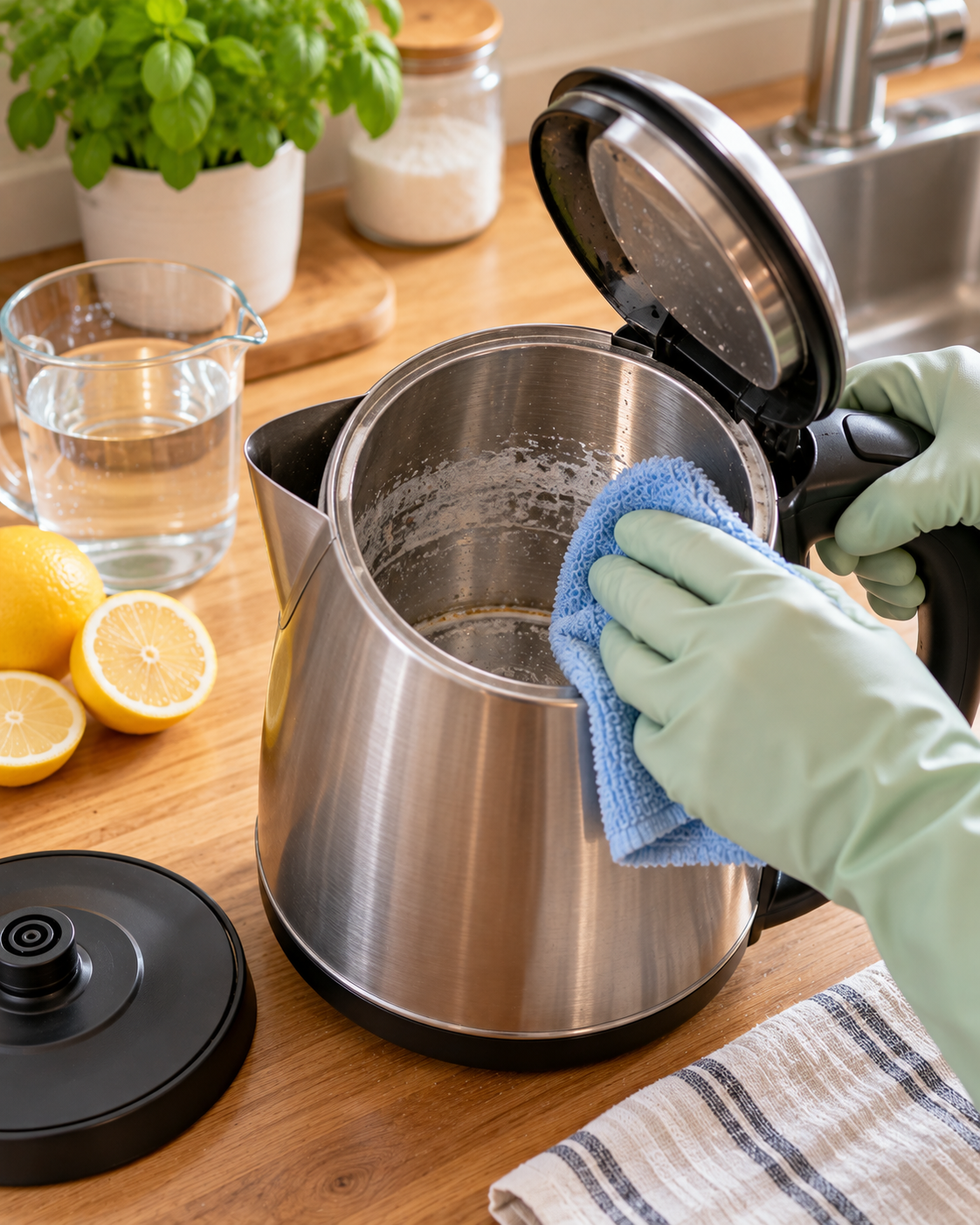
Learning how to descale an electric kettle is a useful kitchen maintenance skill, especially if you live in an area with hard water. Over time, white or chalky deposits can collect on the bottom and inside walls of your kettle, even when you use clean drinking water.
These deposits are commonly called limescale. They form when minerals naturally present in water accumulate during repeated heating.
Although limescale is usually a mineral buildup rather than ordinary food dirt, excessive deposits can affect your kettle’s performance and make it harder to keep clean.
Fortunately, you don’t need to scrub the inside aggressively or experiment with strong household chemicals.
These seven electric kettle cleaning tips explain how to identify limescale, choose a suitable descaling method, clean the removable filter, and prevent unnecessary mineral buildup.
The most important rule is to follow the cleaning instructions for your particular kettle model. Not every electric kettle is designed to tolerate the same products or procedures.
What Causes White Deposits Inside an Electric Kettle?
The white material you sometimes see inside an electric kettle is commonly caused by minerals dissolved in water.
Hard water contains relatively high concentrations of minerals, particularly calcium and magnesium.
When water is heated, some dissolved minerals can form solid deposits that stick to the kettle’s surfaces.
Calcium carbonate is a major component of typical limescale.
You may notice:
- White or chalky marks on the kettle bottom.
- Rough, crusty deposits around the heating plate.
- Small white particles floating in boiled water.
- Scale collecting around the pouring filter.
- A longer boiling time when buildup becomes substantial.
These symptoms do not automatically mean the kettle is defective.
However, unusual corrosion, damaged surfaces, electrical problems, or persistent strange odors should be investigated separately rather than treated as ordinary limescale.
7 Safe Tips for Descaling an Electric Kettle
1. Unplug the Kettle and Check the User Manual
Before cleaning your kettle, switch it off and unplug it from the electrical outlet.
Allow it to cool completely.
If the kettle is cordless, remove it from the power base and place it on a stable, dry surface.
Check the manufacturer’s instructions before choosing a cleaning product.
This is especially important for kettles with special interior coatings, temperature-control features, or removable filters.
Some manufacturers recommend white vinegar, while others provide instructions for citric acid or a commercial descaler.
Why this matters: Using an unsuitable cleaner or exposing electrical parts to water may damage the appliance.
Practical tip: If you no longer have the printed manual, search the manufacturer’s official support website using the model number printed on your kettle.
2. Identify Whether the Deposits Are Actually Limescale
Not every mark inside a kettle is caused by mineral buildup.
Typical limescale often looks white, cream-colored, or chalky.
It may form a thin film or a rough layer on the kettle’s interior.
In some regions, minerals such as iron may cause deposits with a different color.
Inspect the kettle carefully when it is empty, unplugged, and cool.
If the surface appears cracked, flaking, heavily corroded, or otherwise damaged, consult the manufacturer instead of attempting to remove the marks with abrasive tools.
Avoid using knives, metal scrapers, or steel wool to investigate the deposits.
Why this matters: Identifying ordinary scale helps you select an appropriate cleaning method without damaging the kettle.
Practical tip: Take a clear photo of an unusual mark and compare it with the troubleshooting guidance for your exact kettle model.
3. Use White Vinegar Only When the Manufacturer Allows It
White vinegar is a common household descaling option because it contains acetic acid.
Acid can help dissolve certain mineral deposits, including calcium carbonate.
However, the correct vinegar concentration, water ratio, heating procedure, and contact time differ between kettle models.
For example, Tefal publishes instructions for some kettles that use commercial white vinegar at approximately 8% acidity, with a specified soaking time and no heating.
Other manufacturers provide different procedures involving diluted vinegar.
These instructions are not interchangeable.
How to Choose a Safe Vinegar Method
- Check whether your kettle manufacturer permits vinegar.
- Confirm the type and acidity of vinegar recommended.
- Follow the exact amount and contact time specified.
- Do not exceed the kettle’s maximum fill line.
- Rinse thoroughly according to the manufacturer’s instructions.
Never assume stronger vinegar cleans better.
Highly concentrated cleaning vinegar may be unsuitable and can damage certain kettle materials.
Why this works: Acetic acid reacts with mineral scale, helping it dissolve so the residue can be rinsed away.
Practical tip: Use only the type of vinegar specifically allowed for your kettle, not industrial-strength or unspecified cleaning vinegar.
4. Consider Citric Acid as an Alternative
Citric acid is another common ingredient in descaling products.
It can help dissolve mineral buildup and is often preferred by people who dislike the smell of vinegar.
Some kettle manufacturers, including Tefal and Philips, describe citric-acid descaling methods.
However, the quantity and procedure depend on the particular kettle.
For example, Tefal describes a method for certain models using 25 g of citric acid with 500 ml of previously boiled water, followed by a specified contact period.
This is a manufacturer-specific example, not a universal cleaning formula.
How to Use Citric Acid Responsibly
Choose a citric-acid product suitable for kettle descaling.
Follow your kettle manufacturer’s instructions and the product label.
Do not guess the concentration.
Avoid prolonged soaking unless the instructions specifically recommend it.
Rinse the kettle thoroughly before using it again for drinking water.
Why this works: Citric acid can react with mineral deposits, making them easier to remove.
Practical tip: If your kettle manual recommends citric acid, use the exact procedure specified for your model rather than copying a random online mixture.
5. Choose a Kettle-Safe Commercial Descaler for Stubborn Buildup
When mineral deposits are thick or persistent, an appropriate commercial descaling product may be useful.
These products are formulated to dissolve scale, but not every descaler is suitable for every material or appliance.
Choose a product explicitly intended for electric kettles and compatible with your kettle’s construction.
For plastic-bodied appliances, check that the descaler is suitable for plastic components.
Read the safety warnings carefully.
Some concentrated descalers can irritate skin or eyes.
Follow the label’s instructions for the amount, dilution, contact time, protective equipment, and rinsing.
Never combine commercial descalers with household bleach, ammonia, or other cleaning products.
Why this helps: A compatible commercial descaler provides a controlled way to address mineral buildup using an established product procedure.
Practical tip: If the kettle manufacturer sells or recommends a particular descaler, that is a useful starting point.
6. Clean the Removable Scale Filter Separately
Many electric kettles include a small mesh filter near the pouring spout.
This component catches larger scale particles before they reach your cup.
However, the filter itself can gradually become covered with mineral deposits.
First, confirm that your kettle has a removable filter.
Do not pull or force a fixed component.
When the kettle is completely cool and unplugged, remove the filter according to the manufacturer’s instructions.
Some manufacturers permit gently rinsing the filter under water and removing loose deposits with a soft brush.
Others allow the filter to be descaled separately using a specified solution.
Always follow the directions for your model.
Rinse and dry the filter as instructed before reinstalling it securely.
Why this helps: Removing deposits from the filter can prevent accumulated scale from interfering with normal pouring.
Practical tip: Never use a sharp object to enlarge or scrape the filter openings.
7. Rinse Thoroughly and Maintain a Regular Descaling Routine
Once the approved descaling process is complete, empty the kettle carefully.
Rinse it thoroughly with fresh water according to the manufacturer’s instructions.
Some manufacturers recommend filling the kettle with clean water, boiling it, and discarding that water before normal use.
Others specify multiple rinses.
Follow the instructions for your appliance.
Make sure no cleaning solution remains.
Clean the outside with a soft, slightly damp cloth if needed, keeping electrical connections dry.
Reassemble the kettle only when its components are correctly positioned.
How Often Should You Descale?
The ideal frequency depends on water hardness and how often you use the kettle.
For example:
- Philips recommends approximately monthly descaling for certain kettles used in hard-water areas.
- The same manufacturer suggests less frequent cleaning, approximately every three months, under specified soft-water conditions.
- Some Tefal and Russell Hobbs guidance recommends descaling at least monthly.
These are manufacturer-specific recommendations rather than one universal schedule.
Why this helps: Regular maintenance prevents mineral deposits from becoming excessively thick and difficult to remove.
Practical tip: Inspect the bottom of the kettle periodically and follow the maintenance schedule for your model.
Why These Kettle Descaling Tips Work
The effectiveness of kettle descaling comes from understanding the difference between ordinary dirt and mineral buildup.
Mineral Scale Is Different from Grease
Dish soap is useful for removing oily food residue.
However, limescale is primarily a mineral deposit.
Ordinary dish soap may not dissolve heavy scale effectively.
Suitable Acids Can Dissolve Mineral Deposits
Descaling agents such as approved vinegar solutions or citric acid can react with calcium carbonate and help loosen it from kettle surfaces.
The correct concentration and contact time are important.
Gentle Cleaning Protects the Appliance
Electric kettles contain heating components, seals, and electrical connections.
Avoiding harsh scraping and unnecessary moisture helps reduce the risk of damage.
Regular Maintenance Limits Buildup
Removing relatively small deposits periodically is often easier than allowing thick layers to accumulate.
It can also help maintain normal heating performance.
Common Electric Kettle Cleaning Mistakes to Avoid
Mistake 1: Using Strong Vinegar Without Checking the Manual
Problem: Highly concentrated vinegar may damage certain surfaces or components.
Better approach: Follow the manufacturer’s approved concentration and method.
Mistake 2: Mixing Several Cleaning Products
Problem: Mixing household chemicals can create dangerous reactions or fumes.
Better approach: Use only one manufacturer-approved product and follow its instructions.
Never mix bleach with vinegar or other acidic cleaners.
Mistake 3: Scraping Mineral Deposits with a Knife
Problem: Sharp tools can scratch the heating plate or damage the kettle interior.
Better approach: Use a suitable descaling solution rather than forceful scraping.
Mistake 4: Submerging the Electric Kettle
Problem: Water may reach electrical connections, controls, or internal components.
Better approach: Never immerse the kettle, power base, cord, or plug unless a manufacturer explicitly provides a compatible procedure for a removable, non-electrical part.
Mistake 5: Overfilling During Descaling
Problem: Liquid may overflow during heating or foaming.
Better approach: Respect the maximum fill mark and the quantities specified in the instructions.
Mistake 6: Leaving Cleaning Solution Inside Too Long
Problem: Excessive contact time may damage certain materials.
Better approach: Follow the recommended treatment duration.
Mistake 7: Skipping the Final Rinse
Problem: Cleaner residue may remain inside the kettle.
Better approach: Rinse thoroughly and perform any required fresh-water boiling cycles before preparing drinks.
Practical Examples
Example 1: A Few White Spots on the Kettle Bottom
If the kettle operates normally but has small chalky marks, check whether its manufacturer identifies them as mineral scale.
Follow the recommended descaling method.
Avoid abrasive scrubbing.
Example 2: Thick White Buildup Around the Heating Plate
If scale has accumulated after months of use, check the manual for a suitable descaler.
Use the specified procedure and repeat only if permitted.
Do not scrape the surface with metal tools.
Example 3: White Particles Appearing in Boiled Water
Inspect the interior and removable pouring filter.
Mineral flakes may come from scale buildup.
Clean the filter and descale the kettle according to the manufacturer’s instructions.
If unusual particles persist, contact the manufacturer or seek appropriate water-quality advice.
Example 4: The Kettle Takes Longer to Boil
Mineral buildup may be one possible cause.
Check for scale and follow the approved cleaning procedure.
If the kettle still heats abnormally or develops electrical problems, stop using it and seek appropriate service assistance.
Can You Prevent Limescale from Forming?
Some mineral buildup may be difficult to avoid when using hard water.
However, simple maintenance habits can reduce unnecessary accumulation.
Empty Unused Water When Appropriate
Some manufacturers recommend emptying leftover water after use.
Follow your kettle’s maintenance guidance.
Use Suitable Drinking Water
Water hardness varies by location and water source.
If your household uses a water filtration system, follow its maintenance instructions.
Not every household filter removes hardness minerals.
Descale Regularly
Inspect your kettle and clean it at the intervals recommended by the manufacturer.
Avoid Using the Kettle for Other Liquids
Most electric kettles are designed to heat water.
Do not use them to cook milk, soup, or other liquids unless the manufacturer specifically permits that use.
Doing so can create additional residue and may damage the appliance.
Electric Kettle Cleaning and Safety
Electric kettles are electrical appliances, so ordinary kitchen cleaning precautions are not enough on their own.
Before manually cleaning your kettle, unplug it and let it cool completely.
Keep the power base, cord, plug, and electrical contacts dry.
Do not spray cleaning products directly into controls or openings.
If a kettle has a damaged cord, leaking body, faulty switch, or unusual burning smell, stop using it and contact the manufacturer or a qualified repair professional.
Cleaning is not a repair for electrical faults.
For broader kitchen cleaning advice, explore our 4 Simple Steps to Food Safety: Clean, Separate, Cook, and Chill.
Frequently Asked Questions
What Are the White Deposits Inside My Electric Kettle?
They are often limescale, a mineral buildup associated with calcium and other minerals in water.
How Do You Descale an Electric Kettle Safely?
Unplug and cool the kettle, identify the cleaning method recommended by its manufacturer, follow the approved procedure, and rinse thoroughly.
Can I Use White Vinegar to Descale a Kettle?
Some manufacturers allow white vinegar, but concentrations and instructions vary by model.
Check the user manual before using it.
Is Citric Acid Good for Electric Kettles?
Citric acid is used in many descaling products and is recommended by some manufacturers.
Use only an approved concentration and procedure.
Can I Use Lemon Juice Instead of Citric Acid?
Do not assume lemon juice is a suitable substitute.
Its acidity varies, and it may leave pulp or other residue.
Use the product specified in your kettle’s instructions.
Can I Clean Kettle Limescale with Baking Soda?
Baking soda is not usually the most appropriate choice for dissolving calcium carbonate scale.
Use a recommended descaling method instead.
How Often Should I Descale My Kettle?
The frequency depends on water hardness, usage, and the manufacturer’s advice.
Some models require monthly maintenance in hard-water areas.
Is Limescale Dangerous?
Ordinary limescale is generally a mineral deposit rather than a sign of harmful contamination.
However, unusual deposits, damaged surfaces, or concerns about drinking-water quality should be assessed separately.
Can I Put an Electric Kettle in the Dishwasher?
Do not place an electric kettle or its power base in the dishwasher unless the manufacturer explicitly states that the relevant component is dishwasher-safe.
Why Does My Kettle Still Smell Like Vinegar?
The kettle may need additional rinsing or fresh-water boiling cycles, depending on the manufacturer’s cleaning procedure.
Do not use it for drinks until cleaning residue has been removed.
Can Limescale Affect How Fast a Kettle Boils?
Heavy scale buildup can interfere with normal heating performance.
Descaling may help restore performance when mineral buildup is the cause.
What Should I Do If Descaling Doesn’t Work?
Consult the manufacturer’s troubleshooting instructions.
If the appliance continues to malfunction, contact the manufacturer or a qualified service professional.
Final Thoughts
Learning how to descale an electric kettle can help you maintain a cleaner appliance and manage the white mineral deposits that often develop in hard-water areas.
The safest approach is to identify the scale, check the manufacturer’s instructions, and choose a compatible descaling product.
White vinegar and citric acid can be useful for certain models, but the correct quantities and procedures are not the same for every kettle.
Avoid abrasive scraping, never immerse electrical components in water, and rinse thoroughly after cleaning.
With regular maintenance and the correct method for your appliance, you can keep mineral buildup under control without relying on risky cleaning shortcuts.