Why Your Homemade Fries Turn Soggy—and How to Make Them Crispy
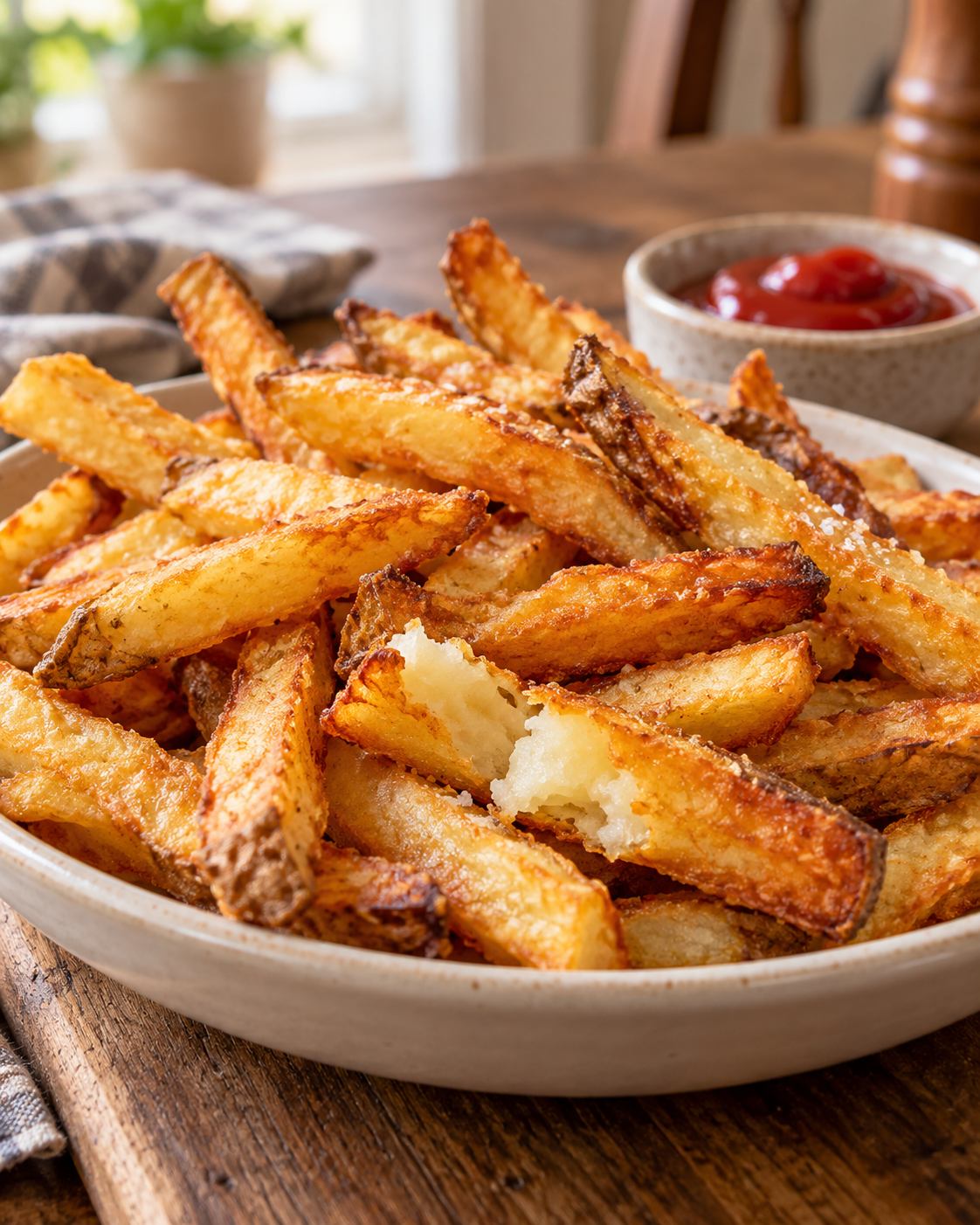
Homemade fries can look golden in the pan and still turn soft before they reach the table. Sometimes they feel greasy; other times, the outside browns while the center stays firm.
The problem usually comes down to moisture, uneven cooking, or heat that drops too much during frying. A few practical changes can help you get a crisp exterior with a fluffy middle—and keep that texture long enough to enjoy it.
Why Homemade Fries Turn Soggy
Potatoes contain water, and cooking needs to remove enough moisture from the surface for a crisp crust to develop.
When wet potatoes enter the oil, an overcrowded batch cools it down, or cooked fries sit in a covered bowl, moisture becomes harder to manage. Even fries that start crisp can soften when steam gets trapped around them.
The solution begins before you turn on the stove.
1. Choose Potatoes That Suit Frying
For fluffy centers and crisp edges, russet potatoes are a useful starting point. Their relatively high starch content makes them well suited to classic fries.
Other varieties can work, but the texture may be creamier or firmer. If your results vary despite using the same method, check whether you have changed potato varieties.
Choose firm potatoes without green areas or extensive sprouting.
2. Cut the Fries to a Similar Thickness
A handful of thin pieces mixed with thick wedges will not cook evenly. Small pieces can become dark before larger ones soften inside.
Aim for sticks of roughly equal thickness. Around ⅜ inch, or approximately 1 centimeter, is a practical starting point for medium-cut fries.
You do not need perfect shapes. Consistent thickness matters more than matching every fry’s length.
3. Rinse or Soak, Then Dry Thoroughly
Rinsing removes loose starch from the cut surfaces. A cold-water soak can also help reduce surface starch and prevent pieces from sticking together.
For everyday preparation, try soaking the cut potatoes for about 20–30 minutes. Drain and rinse them afterward.
The essential next step is thorough drying. Spread the potatoes over a clean kitchen towel, pat them dry, and check for moisture between overlapping pieces.
Soaking alone will not make fries crispy. Putting wet potatoes into hot oil also causes dangerous splattering.
4. Give Each Batch Enough Space
Adding too many potatoes at once can sharply lower the oil temperature. The fries then take longer to cook and may develop a disappointing texture.
Use smaller batches and let the oil return to the intended temperature before adding more potatoes. A suitable frying thermometer makes this easier to judge than watching the bubbles alone.
If you repeatedly get good results with the first batch and soft fries afterward, temperature recovery may be the missing step.
5. Consider Cooking Them in Two Stages
For deep-fried potatoes, two-stage cooking helps separate two jobs: softening the center and crisping the surface.
The first fry uses a lower temperature to cook the potatoes through while keeping them relatively pale. After draining and resting, a hotter second fry develops the golden exterior.
Follow a reliable double-fry method for your chosen cut, using a thermometer to maintain its specified temperatures. Thick fries need different timing from thin shoestring fries.
This approach offers more control than trying to cook the center and brown the outside in one uninterrupted fry.
6. Let Steam Escape After Cooking
Do not pile freshly cooked fries into a deep bowl and cover them. Trapped steam can quickly soften the crust.
Instead, drain them briefly on a wire rack set over a tray. Keep the layer loose so moisture can escape.
Season while they are still hot, then serve promptly. Put ketchup, mayonnaise, or other sauces on the side until you are ready to eat.
What About Oven or Air-Fryer Fries?
Spacing matters just as much with these methods.
Dry the potatoes carefully, coat them lightly and evenly with oil, and arrange them in a single layer. Turn oven fries or shake the air-fryer basket as needed for more even cooking.
Avoid packing the tray or basket tightly. If the fries overlap heavily, divide them into batches.
Follow your appliance’s guidance for temperature and capacity. Air-fryer fries and deep-fried fries can both be enjoyable, but their textures will differ.
Common Mistakes to Avoid
- Frying damp potatoes: Dry them thoroughly after rinsing or soaking.
- Mixing thick and thin cuts: Keep the thickness reasonably consistent.
- Adding another batch immediately: Allow the oil temperature to recover.
- Covering hot fries: Give steam a way to escape.
- Adding sauce too early: Keep sauces separate until serving.
- Chasing a darker color: Aim for golden fries instead of deeply browned edges.
Can You Make Soft Fries Crispy Again?
If cooked fries soften while waiting, spread them in a single layer and reheat them in a preheated oven or air fryer. Check frequently and remove them once hot and crisp at the edges.
A microwave generally makes fries hot without restoring much crispness.
Reheating can improve the surface, but it cannot fully correct fries that were undercooked inside.
A Quick Safety Note
Use a stable, deep pot suitable for frying, leave plenty of room for oil to bubble, and never leave hot oil unattended. Keep water away from the pot and never use water on an oil fire.
The next time your fries turn soggy, check three things first: Were they dry? Did they have enough space? Could steam escape afterward? Those details often explain more than an extra minute of cooking.