How to Serve Vegetables to Picky Eaters — Simple Tips for Parents
If you’re wondering how to serve vegetables to picky eaters, you’re not alone. A child might enjoy carrots one day and refuse them the next, or turn away from a vegetable simply because it looks unfamiliar.
The good news is that mealtimes don’t have to become a battle. Small portions, familiar flavors, and a relaxed approach can help children explore vegetables at their own pace. The following ideas are practical ways to introduce variety without putting pressure on your child to take a bite.
Start with a Small Portion
A large pile of an unfamiliar vegetable can feel overwhelming. Try placing a small spoonful of cooked carrots, a little broccoli floret, or a few peas alongside the rest of the meal.
Your child doesn’t have to finish the portion—or even taste it right away. Seeing the vegetable on the plate, touching it, or smelling it can be a first step toward becoming familiar with it.
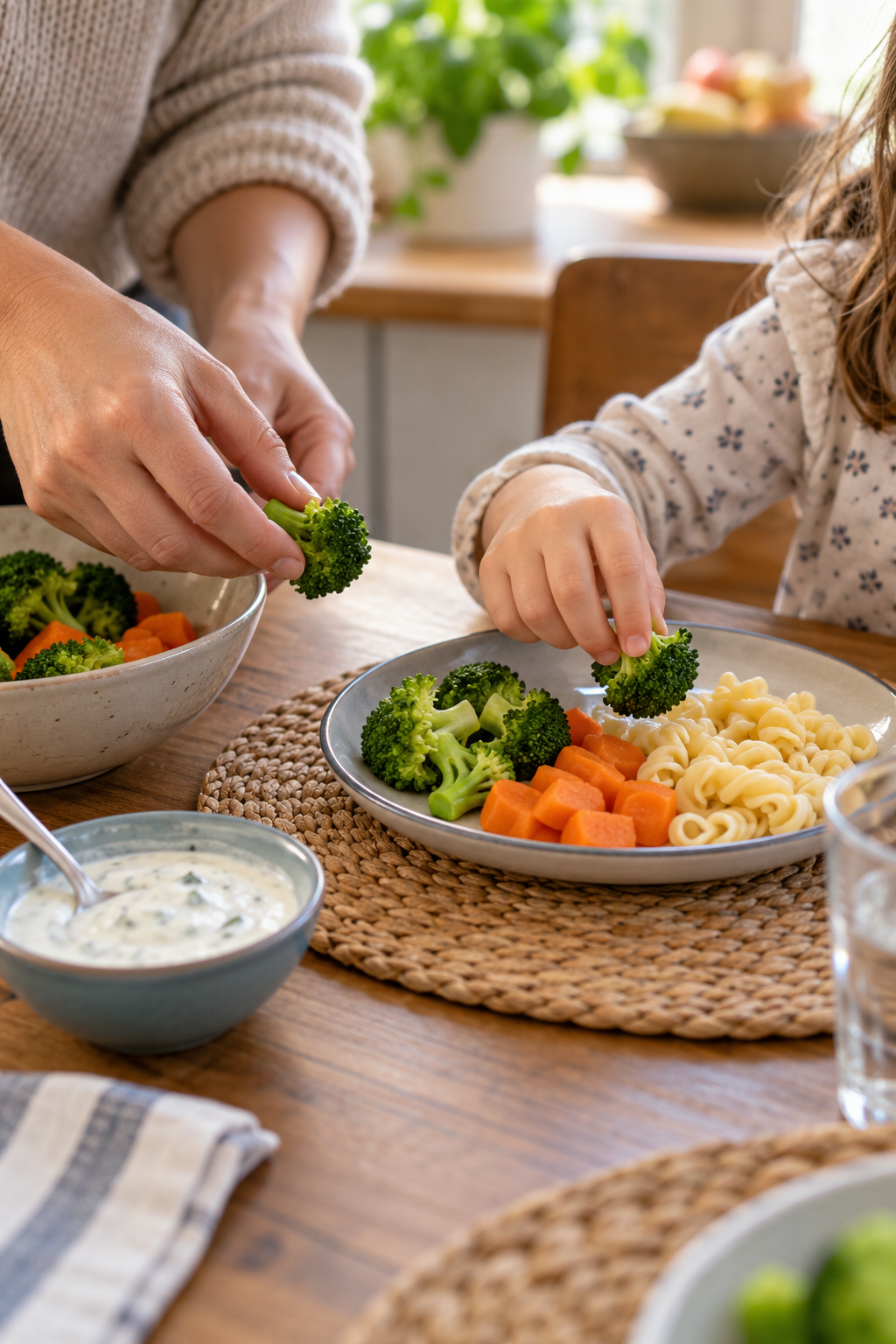
Try this: Serve a small piece of tender broccoli next to pasta your child already enjoys. Keep the foods separate if that makes the plate feel more comfortable.
Pair Vegetables with Familiar Foods
A new vegetable may feel less intimidating when it appears next to a favorite food. The familiar food gives your child something they recognize while allowing them to explore the vegetable if they choose.
For example, you could serve:
- Soft cooked carrots alongside a familiar sandwich.
- A small spoonful of peas next to rice.
- Tender cauliflower with a baked potato.
- Cooked zucchini beside pasta.
Keep portions appropriate for your child’s age and eating abilities.
Offer a Dip or Sauce on the Side
Some children enjoy the chance to dip their food. A mild yogurt dip, hummus, or a little homemade cheese sauce can add a familiar flavor and make vegetables more interesting.
Serve the dip in a small bowl and let your child decide whether to use it. Check ingredients for any allergies, and choose dips appropriate for your child’s age.
If you already have a cheese sauce recipe your family enjoys, you can offer it with tender broccoli or cauliflower. Start with a small amount so the vegetable’s flavor is still easy to recognize.
Try a Different Cooking Method
A child who refuses a vegetable prepared one way may be more comfortable with it prepared another way. Cooking can change its texture, aroma, and flavor.
For example:
- Steaming can make carrots or broccoli tender.
- Roasting can bring out a different flavor in cauliflower, carrots, and zucchini.
- Mashing can give vegetables such as sweet potatoes a softer texture.
- Adding vegetables to familiar dishes can introduce them in a different setting. Tell your child what’s in the dish rather than hiding ingredients from them.
You don’t need to change everything at once. Try one small adjustment and see how your child responds.
Let Your Child Explore Without Pressure
Tasting isn’t the only way to get familiar with food. A child can look at a vegetable, smell it, touch it, or help place it on a plate. These small interactions can make the food feel less unfamiliar over time.
Try a neutral invitation such as, “Would you like some on your plate?” If the answer is no, keep the meal calm and move on. Avoid forcing bites or turning dessert into a reward for eating vegetables.
Invite Children to Help in the Kitchen
Children may enjoy learning about vegetables when they have a small role in preparing them. Depending on their age and abilities, they can:
- Choose between two vegetables at the store.
- Rinse vegetables under adult supervision.
- Stir a cool dip.
- Arrange cooked vegetable pieces on a plate.
- Pick a serving bowl for the table.
An adult should handle sharp knives, hot pans, and other kitchen hazards. Helping doesn’t guarantee that a child will eat the food, but it can make vegetables feel more familiar.
Offer Vegetables Again Another Day
It’s understandable to feel discouraged when a vegetable is refused. But a “no” today doesn’t necessarily mean a “no” forever.
Offer the vegetable again another time, perhaps in a small portion or with a different familiar meal. Keep the experience relaxed and allow your child to decide whether to eat it.
Give Simple Choices
A small choice can help children feel involved without making you prepare several separate meals. You might ask:
- “Would you like carrots or broccoli with dinner?”
- “Would you like the dip on your plate or in a little bowl?”
- “Would you like your vegetables next to the rice or on a separate plate?”
Offer choices that work for the meal you’re already preparing, and remember that your child may still choose not to eat the vegetable.
Make the Plate Colorful and Comfortable
A few colors can make a plate enjoyable to look at, but it doesn’t need to be a work of art. Try arranging familiar foods and a small portion of vegetables in a way your child finds comfortable.
Some children prefer foods not to touch, while others enjoy everything mixed together. Notice what works for your child and adjust the presentation when practical.
Common Mistakes to Avoid
- Serving a large portion of a new food: Start small to reduce waste and make the plate feel approachable.
- Pressuring a child to eat: Calm invitations leave room for children to explore at their own pace.
- Assuming one refusal is permanent: Preferences can change, so you can offer the food again another day.
- Changing several things at once: Try one new vegetable or preparation alongside foods your child knows.
- Hiding ingredients without telling your child: Be open about what’s in the meal, especially when allergies are involved.
Keep Food Safety in Mind
Prepare vegetables in a size and texture appropriate for your child’s age and development. Hard raw vegetables can be a choking hazard for young children; cook them until soft and cut them into suitable pieces when needed.
Have children sit upright while eating and supervise them during meals. If you’re unsure how to serve a food safely for your child’s age, ask their pediatrician.
When to Ask for Extra Support
Every child’s eating habits are different. Talk with your child’s pediatrician if you’re concerned about their growth or nutrition, if they regularly cough or choke while eating, or if their range of accepted foods is very limited and becoming more restricted.
A pediatrician can help you decide whether additional support, such as advice from a registered dietitian or feeding specialist, would be useful.
Frequently Asked Questions
What if my child refuses every vegetable?
Continue offering small amounts without pressure and include other foods your child accepts. If you’re concerned about their overall diet or growth, talk with their pediatrician.
Should I make my child finish their vegetables?
It’s more helpful to offer the food and allow your child to decide whether and how much to eat. Keep mealtimes calm and try again another day.
Are sauces and dips a good idea?
They can be a useful way to add a familiar flavor. Offer a small amount on the side, check for allergies, and let your child decide whether to use it.
Can I add vegetables to pasta or soup?
Yes. Vegetables can be served in familiar dishes, as long as they’re prepared safely for your child. Let your child know what’s in the meal and consider serving a small portion on the side as well.
What if my child only likes vegetables prepared one way?
That’s a useful starting point. Continue offering the preparation they enjoy, and occasionally provide a small amount prepared differently without expecting them to eat it.