How to Keep Bananas Fresh Longer: 7 Storage Tips
Learning how to keep bananas fresh longer can help you enjoy this everyday fruit at the right stage of ripeness while reducing unnecessary food waste. Bananas are convenient for breakfast, snacks, smoothies, and baking, but their color and texture can change surprisingly quickly after you bring them home.
You might buy a beautiful bunch of yellow bananas, only to find dark spots appearing a few days later. Or you might place green bananas in the refrigerator and discover that they never develop the texture you expected.
The solution is not a miracle storage trick. It is understanding how bananas ripen and choosing the right storage conditions at each stage.
These seven practical banana storage tips explain how to slow ripening, prevent bruising, use refrigeration correctly, and freeze extra bananas before they go to waste.
Why Do Bananas Turn Brown So Quickly?
Bananas continue ripening after they are harvested.
During this process, the fruit produces and responds to ethylene, a naturally occurring plant hormone involved in ripening.
As bananas mature, their starches are converted into sugars, their texture becomes softer, and their peels change from green to yellow.
Brown spots often appear as ripening progresses.
Temperature, handling, and exposure to other ripening fruits can all influence how quickly these changes occur.
However, not every brown banana is spoiled. A spotted peel often indicates advanced ripeness rather than a food-safety problem.
It is also important to distinguish between the browning of an unpeeled banana and the discoloration of freshly cut banana slices. They involve different processes and may require different solutions.
7 Tips to Keep Bananas Fresh Longer
1. Buy Bananas at Different Stages of Ripeness
One of the simplest ways to avoid having an entire bunch become overripe at once is to choose bananas with different peel colors.
If you plan to eat them immediately, select ripe yellow bananas.
For later in the week, choose bananas that still have a little green near their stems.
This gives you more flexibility because the fruit will not necessarily ripen at the same time.
Practical example: If you normally eat one banana each morning, buy a few ripe bananas for the next day or two and a few less-ripe bananas for later.
Avoid buying fruit that is badly crushed, leaking, or visibly moldy.
Why this works: Starting with different ripeness levels spreads out the period when your bananas are ready to eat.
2. Store Unripe Bananas at Room Temperature
Green or partially green bananas usually need time at room temperature to finish ripening properly.
Choose a reasonably cool, dry place away from direct sunlight and major heat sources.
Do not place bananas beside a hot oven, radiator, or other appliance that regularly warms the surrounding area.
Avoid leaving them in a sunny window where temperatures may rise considerably.
Should You Refrigerate Green Bananas?
Generally, no.
Bananas are tropical fruits that can experience chilling injury when exposed to low temperatures before they have finished ripening.
Refrigerating unripe bananas may interfere with their normal color and texture development.
Practical tip: Let bananas reach your preferred stage of ripeness on the counter before considering refrigeration.
3. Keep Bananas Away from Other Ripening Fruits
Bananas produce ethylene, and their ripening can also be influenced by ethylene released by nearby fruit.
Ripe apples, avocados, and other ethylene-producing fruits can affect the ripening environment.
If you want bananas to ripen more slowly, avoid placing them directly beside a pile of very ripe fruit.
You do not need to store bananas in another room. Simply giving them a separate space in your kitchen may help.
When Is Storing Fruit Together Useful?
If you actually want green bananas to ripen faster, keeping them near ripe fruit or placing them in a paper bag can encourage ripening.
That is useful when you need ripe bananas soon, but it is the opposite of what you want for longer storage.
Practical tip: Keep slower-ripening bananas separate from a fruit bowl filled with ripe apples and avocados.
4. Protect Bananas from Bruising
Bruising is a common reason bananas develop unattractive dark patches.
The soft fruit can become damaged when heavy objects press against it or when bananas are repeatedly dropped or handled roughly.
Choose a storage position that does not squeeze the fruit.
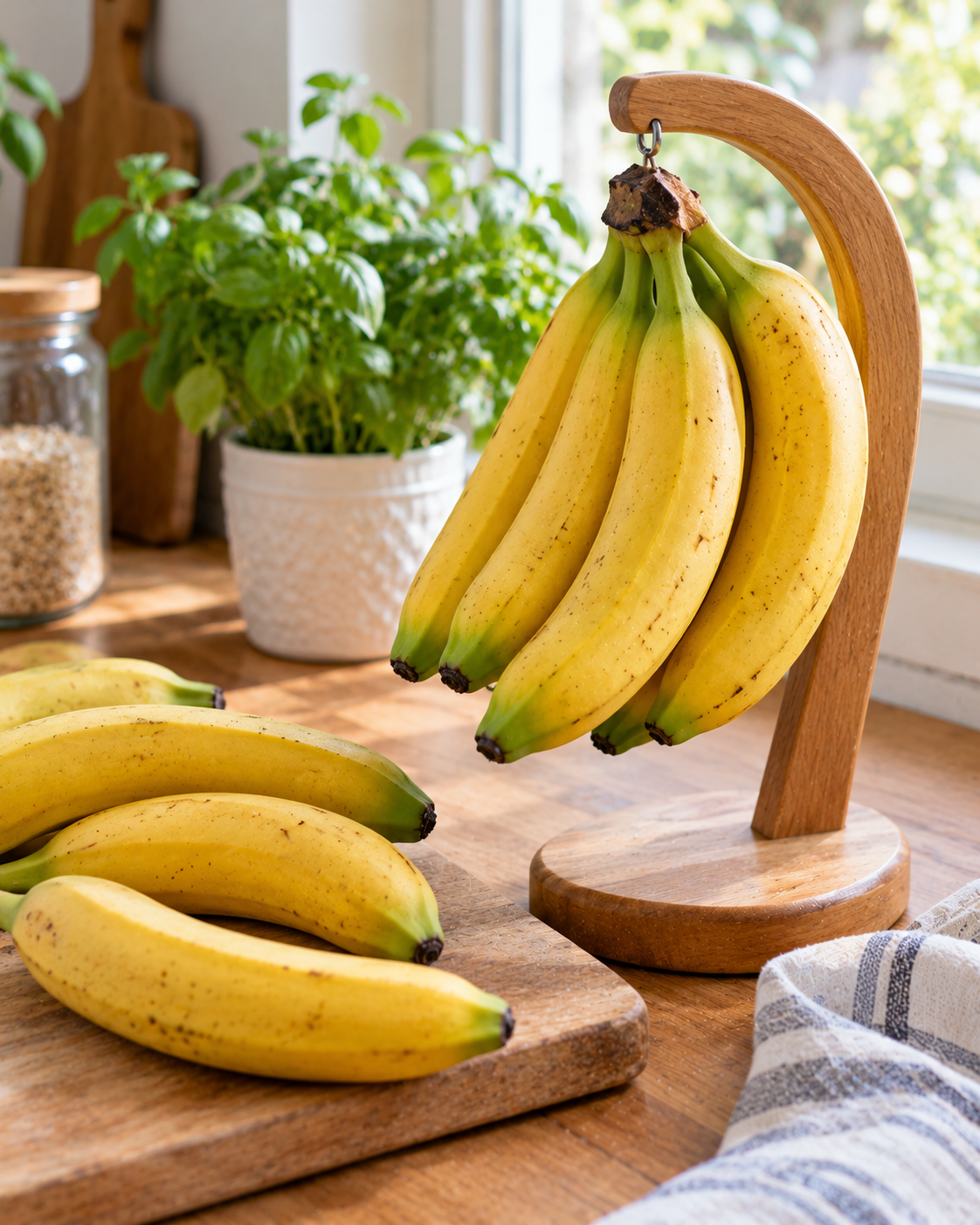
A banana hanger can help keep the bunch suspended instead of resting under its own weight.
However, you do not need to buy a special stand.
A clean counter or fruit basket with enough space can also work.
Helpful habits:
- Avoid piling heavy fruit on top of bananas.
- Handle the bunch gently.
- Keep bananas away from sharp edges.
- Check for damaged fruit when unpacking groceries.
- Use badly bruised but otherwise wholesome bananas sooner.
Why this works: Preventing physical damage helps maintain the fruit’s appearance and texture.
5. Avoid Sealing Whole Bananas in Plastic Bags
Whole, unpeeled bananas generally do not benefit from being stored in a tightly sealed plastic bag while ripening on the counter.
Plastic packaging can trap moisture around the fruit.
It may also reduce airflow and encourage undesirable storage conditions.
After bringing bananas home, remove unnecessary plastic wrapping and place them in a suitable open storage area.
What About Wrapping Banana Stems?
You may have seen advice recommending plastic wrap or foil around the banana stems.
Some extension guidance mentions this technique as a way to potentially slow ripening.
However, it should be treated as an optional experiment rather than a guaranteed solution.
The more reliable habits are choosing the right ripeness, avoiding unnecessary heat, and refrigerating once the fruit has ripened.
Practical tip: Don’t confuse storing whole bananas on the counter with freezing prepared bananas. Freezer-safe packaging is important once bananas have been peeled and prepared for freezing.
6. Refrigerate Bananas After They Become Ripe
This is one of the most useful tips for extending the eating quality of ripe bananas.
Once the peel has reached the yellow color and softness you prefer, you can move the bananas into the refrigerator.
Cool temperatures slow further ripening.
But Won’t the Peel Turn Black?
It often will.
The banana skin may become dark brown or nearly black in the refrigerator, even while the flesh inside remains suitable to eat.
That change in peel color alone is not a reliable sign that the banana has spoiled.
Check the inside when peeling.
If the flesh looks normal and there are no signs of mold, leaking, or unusual spoilage, the banana may still be enjoyable.
How Long Will Refrigerated Bananas Last?
The exact time varies with ripeness and storage conditions.
Refrigeration can extend their usable quality by several days. Some guidance suggests a longer period under favorable conditions, but there is no guaranteed shelf life for every banana.
Practical tip: Move bananas to the refrigerator when they reach your preferred ripeness, not while they are still green.
7. Freeze Extra Ripe Bananas Before They Go to Waste
If you have several ripe bananas that you cannot eat soon, freezing is a practical alternative.
Frozen bananas are particularly useful in smoothies, banana bread, pancakes, and other preparations where the fruit will be blended or mashed.
How to Freeze Bananas for Later Use
- Select ripe bananas that are still wholesome and free from spoilage.
- Rinse the peel under cool running water before peeling.
- Remove the peel.
- Slice the bananas into manageable pieces, if desired.
- Arrange the slices in a single layer on a parchment-lined tray.
- Freeze until firm.
- Transfer the frozen pieces into a suitable freezer-safe bag or airtight container.
- Label the package with the date and return it to the freezer.
Freezing individual slices before packaging helps prevent them from forming one solid block.
What Happens to the Texture?
Frozen bananas often become softer after thawing.
This is normal and makes them more suitable for blended or baked preparations than for serving as firm fresh slices.
Practical tip: Freeze bananas when they are ripe rather than waiting until they develop signs of spoilage. Freezing does not make spoiled food safe again.
How to Prevent Sliced Bananas from Turning Brown
Whole bananas and cut bananas behave differently.
Once you peel and slice a banana, the exposed fruit comes into contact with oxygen.
This can cause enzymatic browning, a natural process that changes the surface color.
A brown cut surface does not automatically mean the fruit has spoiled, although fresh-cut fruit still needs appropriate handling.
Cut Bananas Close to Serving Time
If you’re preparing banana slices for breakfast, yogurt, or a fruit salad, slice them shortly before serving whenever possible.
This reduces the time the exposed flesh spends in contact with air.
Use a Little Citrus Juice
A light coating of lemon, orange, or pineapple juice can help slow browning.
The acidity affects the reactions responsible for discoloration.
Use a small amount so the juice does not overpower the banana’s natural sweetness.
Cover and Refrigerate Cut Bananas
If you need to prepare banana slices in advance, place them in a clean, covered food-safe container and refrigerate promptly.
Keep cut fruit at 40°F (4°C) or below.
Do not leave cut bananas at room temperature for more than two hours, or more than one hour when temperatures exceed 90°F (32°C).
For the best color and texture, prepare sliced bananas as close to serving time as practical.
Why These Banana Storage Tips Work
Understanding a few basic principles makes it easier to choose the correct storage method.
Ethylene Influences Ripening
Ethylene is a natural plant hormone that helps regulate ripening.
Keeping bananas away from heavily ripening fruit can help manage their exposure.
Temperature Changes Ripening Speed
Warm environments generally encourage ripening.
Refrigeration slows further ripening in bananas that are already ripe, but cold storage too early can disrupt normal development.
Gentle Handling Protects the Fruit
Bananas have soft flesh that bruises relatively easily.
Reducing pressure and impacts helps maintain their appearance.
Freezing Preserves Fruit for Different Uses
Freezing slows deterioration and gives you more time to use ripe bananas in suitable dishes.
However, the texture changes after freezing and thawing.
Acidic Juice Helps Control Cut-Surface Browning
Citrus juice can slow enzymatic browning on freshly cut bananas, although it will not prevent every color change indefinitely.
Common Banana Storage Mistakes to Avoid
Mistake 1: Refrigerating Bananas While They’re Green
Problem: Cold temperatures may disrupt proper ripening.
Better approach: Ripen them at room temperature first.
Mistake 2: Keeping Bananas Beside a Heat Source
Problem: Excessive warmth can encourage rapid ripening.
Better approach: Choose a location away from sunlight and major heat sources.
Mistake 3: Storing Bananas with Lots of Ripe Fruit
Problem: Other ethylene-producing fruits may encourage faster ripening.
Better approach: Give your bananas a separate space if you want to slow the process.
Mistake 4: Assuming a Black Refrigerator Peel Means Spoilage
Problem: Cold storage can darken the peel even when the flesh remains usable.
Better approach: Check the inside and assess the fruit’s overall condition.
Mistake 5: Waiting Too Long Before Freezing
Problem: Bananas can become excessively soft or spoiled.
Better approach: Freeze ripe, wholesome bananas before they deteriorate.
Mistake 6: Leaving Cut Bananas Uncovered
Problem: Exposed slices brown more quickly and may dry out.
Better approach: Cut near serving time or cover and refrigerate promptly.
Practical Storage Examples
If Your Bananas Are Still Green
Keep them at room temperature in a suitable open storage area.
Avoid refrigerating them.
Check their ripeness daily so you can use or refrigerate them at the right time.
If Your Bananas Are Yellow and Ready to Eat
Enjoy them soon, or refrigerate them if you need to slow further ripening.
Expect the peel to darken during cold storage.
If Your Bananas Have Brown Spots
They may simply be very ripe.
If the fruit is otherwise wholesome, consider using it in oatmeal, pancakes, smoothies, or baking.
If You Have Too Many Ripe Bananas
Peel and freeze the extras in convenient portions.
This can reduce food waste and make future meal preparation easier.
If You Need Banana Slices for a Dessert
Prepare the slices close to serving time.
For a short delay, a small amount of suitable citrus juice and proper refrigeration can help manage browning.
Frequently Asked Questions
How Can I Keep Bananas Fresh Longer?
Buy bananas at different ripeness stages, store unripe ones at room temperature, avoid heat and bruising, and refrigerate once ripe. Freeze extras before they spoil.
Should Bananas Be Refrigerated?
Ripe bananas can be refrigerated to slow further ripening. Green bananas should generally be allowed to ripen at room temperature first.
Why Do Banana Peels Turn Black in the Fridge?
Bananas are sensitive to cold temperatures, which can darken their peels. The fruit inside may still be suitable to eat.
Does Hanging Bananas Make Them Last Longer?
Hanging can help reduce pressure and bruising. It is a practical storage option, although it does not stop natural ripening.
Does Wrapping Banana Stems Really Work?
It is sometimes suggested as a way to slow ripening, but it should not be considered a guaranteed method. Proper temperature management is more important.
Can I Store Bananas in a Plastic Bag?
For whole bananas ripening at room temperature, tightly sealed plastic bags are generally not recommended because they can trap moisture.
For prepared bananas stored in the freezer, suitable airtight freezer packaging is useful.
How Do I Stop Cut Bananas from Turning Brown?
Slice them close to serving time, consider a light coating of citrus juice, and keep prepared fruit covered and refrigerated.
Can I Freeze Bananas with Their Peels On?
It is possible, but removing frozen peels can be inconvenient. Peeling the bananas before freezing is usually more practical.
Are Brown Bananas Safe to Eat?
Brown spots can be a normal sign of ripening. However, discard bananas showing visible mold or other clear spoilage. Do not rely on peel color alone.
Can I Use Overripe Bananas for Baking?
Yes, if they are still wholesome. Very ripe bananas are often suitable for banana bread, muffins, pancakes, and blended desserts.
Final Thoughts
Knowing how to keep bananas fresh longer starts with understanding their natural ripening process.
Choose bananas at different stages of ripeness, keep unripe fruit away from unnecessary heat, avoid bruising, and refrigerate bananas only after they are ripe.
For extra bananas that you cannot eat in time, freezing provides a practical way to reduce food waste.
And if you want attractive banana slices for breakfast or desserts, prepare them shortly before serving to limit browning.
With these simple habits, you can manage banana ripeness more effectively and make better use of the fruit you buy.