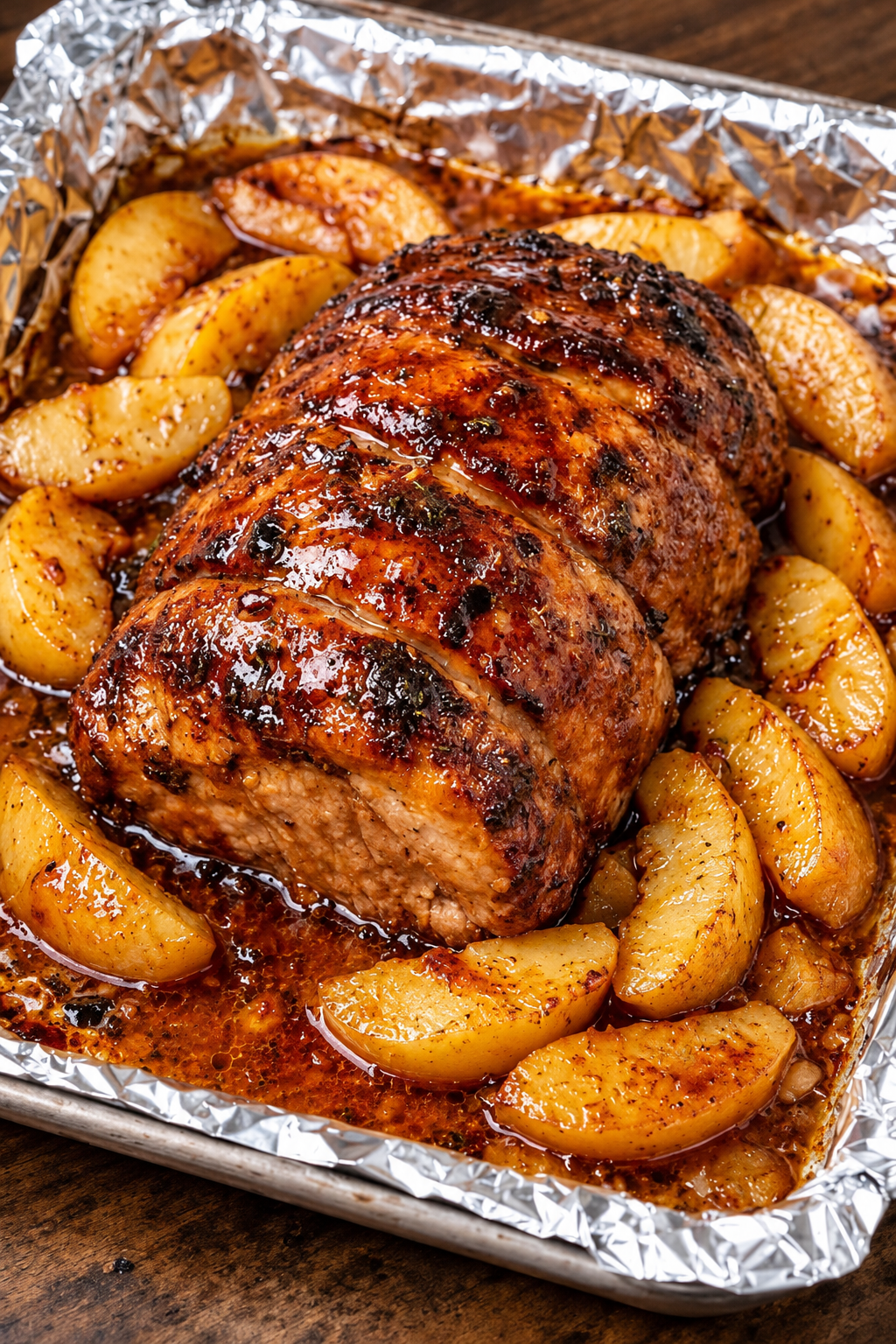
Slow-Braised Beef with Caramelized Onions and Carrots
Slow-braised beef with caramelized onions and carrots is a comforting homemade dinner made with tender beef, sweet golden onions, soft carrots, and baby potatoes in a rich, savory gravy.
The secret to this dish is slow, gentle cooking. A well-marbled beef chuck roast becomes tender as it braises in broth with garlic and fresh herbs, while caramelized onions add a deep, naturally sweet flavor to the sauce.
This meal is especially suitable for a weekend family dinner. Most of the cooking takes place in a covered Dutch oven, allowing the beef to become tender without constant attention.
For the best texture, the carrots and potatoes are added toward the end of cooking. This helps them retain their shape while the beef finishes braising.
Why You’ll Love This Slow-Braised Beef Recipe
- Tender, flavorful beef: Slow cooking helps soften the connective tissue in beef chuck.
- Rich homemade gravy: Beef broth, caramelized onions, garlic, and herbs create a savory sauce.
- Simple ingredients: Made with familiar vegetables, broth, and seasonings.
- One-pot cooking: The beef and vegetables finish cooking together.
- Perfect for family dinners: A complete meal with beef, potatoes, and carrots.
- Convenient leftovers: Properly stored portions can be enjoyed another day.
Recipe Overview
- Preparation Time: Approximately 25 minutes
- Stovetop Cooking Time: Approximately 35–45 minutes
- Oven Cooking Time: Approximately 3–4 hours
- Resting Time: Approximately 10 minutes
- Total Time: Approximately 4 hours 10 minutes to 5 hours 20 minutes
- Servings: 6
- Course: Main Course
- Cuisine: European-Inspired Comfort Food
- Cooking Method: Searing and Slow Oven Braising
- Difficulty: Intermediate
These cooking times are estimates. The exact duration depends on the size and shape of the beef, your Dutch oven, and the actual oven temperature.
Ingredients
For the Beef
- 1.4 kg (approximately 3 lb) boneless beef chuck roast
- 3 tablespoons olive oil, divided
- 1 teaspoon fine salt, or to taste
- 1/2 teaspoon freshly ground black pepper
For the Vegetables
- 2 large yellow onions, thickly sliced
- 4 large carrots, peeled and cut into large pieces
- 450 g (1 lb) baby potatoes, halved if necessary
- 4 garlic cloves, lightly crushed
For the Braising Liquid
- 480 ml (2 cups) low-sodium beef broth, plus additional broth if needed
- 2 fresh rosemary sprigs
- 3 fresh thyme sprigs
Optional Additions
- 120 ml (1/2 cup) dry red wine, replacing the same amount of beef broth
- 1 tablespoon cornstarch mixed with 1 tablespoon cold water, for thickening
- 1 teaspoon balsamic vinegar, for finishing
- Fresh parsley, for garnish
The recipe can be prepared entirely with beef broth. Wine is optional and is not necessary for a flavorful result.
Important Ingredient Notes
Beef Chuck Roast
Beef chuck roast is an excellent choice for slow braising because it contains connective tissue and fat that respond well to prolonged moist cooking.
Choose a boneless roast with visible marbling.
Very lean cuts may not produce the same tender, rich texture.
Use a whole piece of beef rather than ground beef.
Yellow Onions
Yellow onions become naturally sweeter as they cook and brown.
Cooking them slowly helps create the deep flavor that makes this gravy special.
Avoid rushing the process with excessively high heat.
Carrots
Choose firm carrots with a fresh appearance.
Cutting them into large pieces helps them hold their shape during the final stage of braising.
Baby Potatoes
Small waxy or all-purpose potatoes work well because they tend to hold together during cooking.
If the potatoes are particularly large, cut them in half.
Beef Broth
Low-sodium beef broth provides flavor while allowing better control over seasoning.
The amount of liquid may need a small adjustment depending on the shape and size of your Dutch oven.
Fresh Herbs
Rosemary and thyme contribute an earthy aroma that complements the beef.
The whole sprigs can be removed before serving.
Equipment You’ll Need
- Large oven-safe Dutch oven with a tight-fitting lid
- Sharp kitchen knife
- Cutting board
- Kitchen tongs
- Wooden spoon
- Measuring jug
- Measuring spoons
- Food thermometer
- Oven mitts
- Serving platter
A heavy Dutch oven is especially useful because it holds heat well and supports even cooking.
How to Make Slow-Braised Beef with Caramelized Onions and Carrots
Step 1: Preheat the Oven
Preheat your oven to 160°C (320°F).
Position a rack near the middle of the oven.
Make sure your Dutch oven and its lid are suitable for oven use at this temperature.
Step 2: Prepare the Beef
Remove the beef from its packaging.
Pat the surface dry with clean paper towels.
Season all sides with salt and freshly ground black pepper.
Do not wash raw beef under running water, as splashing can spread contamination around the kitchen.
Keep the raw beef separate from ready-to-eat ingredients.
Step 3: Brown the Beef
Place the Dutch oven over medium-high heat.
Add approximately 2 tablespoons of olive oil.
When the oil is hot, carefully place the beef inside.
Brown the meat on its main surfaces until a deep golden-brown crust develops.
This may take approximately 8–12 minutes in total, depending on the roast.
Turn the beef carefully using kitchen tongs.
The meat does not need to be fully cooked at this stage because it will immediately continue cooking in the oven.
Transfer the browned beef to a clean plate.
Step 4: Caramelize the Onions
Reduce the heat to medium-low.
Add the remaining tablespoon of olive oil.
Place the sliced onions in the Dutch oven.
Cook slowly for approximately 25–35 minutes, stirring regularly.
The onions should gradually soften, release moisture, and develop a rich golden-brown color.
If browned bits begin sticking excessively, add a small splash of water or broth and scrape the bottom gently.
Avoid burning the onions.
Slow caramelization creates the natural sweetness that gives the finished gravy its distinctive flavor.
Step 5: Add the Garlic
Add the crushed garlic cloves to the caramelized onions.
Stir for approximately 30–60 seconds until fragrant.
Avoid cooking the garlic for too long at high heat because it may become bitter.
Step 6: Deglaze the Dutch Oven
Pour a small amount of beef broth into the pot.
Use a wooden spoon to scrape up the flavorful browned bits from the bottom.
Add the remaining broth and stir gently.
If using the optional wine, replace 120 ml of the broth with an equal quantity of wine.
Step 7: Return the Beef to the Pot
Place the browned beef back into the Dutch oven.
Add the rosemary and thyme.
Arrange the meat among the onions and braising liquid.
Ideally, the liquid should reach approximately one-third to halfway up the sides of the beef.
Add a little extra broth if your pot is unusually wide.
The roast does not need to be fully submerged.
Step 8: Begin Slow Braising
Bring the braising liquid to a gentle simmer on the stovetop.
Cover the Dutch oven with its lid.
Carefully transfer it to the preheated oven.
Allow the beef to cook for approximately 2–2½ hours before adding the vegetables.
The liquid should simmer gently rather than boil aggressively.
Avoid opening the lid repeatedly because this allows heat and steam to escape.
Step 9: Prepare the Carrots and Potatoes
While the beef is cooking, wash the carrots and potatoes.
Peel the carrots and cut them into large pieces, approximately 5 cm (2 inches) long.
Halve any unusually large baby potatoes.
Keep the prepared vegetables refrigerated until you’re ready to add them.
Step 10: Add the Vegetables
After approximately 2–2½ hours, carefully remove the Dutch oven from the oven.
Open the lid away from your face to avoid hot steam.
Arrange the carrots and potatoes around the beef.
Gently push the vegetables into the hot cooking liquid.
If the pot appears unusually dry, add a small amount of hot broth.
Cover the pot and return it to the oven.
Step 11: Continue Cooking Until Tender
Continue braising for approximately 60–90 minutes.
The carrots and potatoes should become tender.
The beef should also become soft enough to pull apart or pierce easily with a fork.
If the meat remains tough, continue cooking in 20–30 minute intervals.
The total oven cooking time will generally be approximately 3–4 hours.
The exact duration depends on the beef cut and thickness.
Step 12: Check the Beef and Vegetables
Use a food thermometer to verify safe cooking.
U.S. food-safety guidance specifies a minimum internal temperature of 145°F (63°C), followed by a 3-minute rest, for whole beef roasts.
However, beef chuck intended for slow braising usually needs considerably more cooking time to become tender.
Check the potatoes and carrots with a fork.
If the vegetables are ready before the beef, transfer them to a covered dish and continue braising the meat.
Step 13: Adjust the Gravy
Carefully remove the fully cooked beef and vegetables from the pot.
Keep them warm.
Discard the rosemary and thyme stems.
If the gravy is too thin, simmer it gently on the stovetop for a short period.
For a thicker sauce, mix 1 tablespoon cornstarch with 1 tablespoon cold water.
Stir the mixture into the simmering gravy.
Continue stirring until thickened.
Use only as much thickener as necessary.
Taste the finished sauce and adjust the seasoning.
Step 14: Rest the Beef
Allow the beef to rest for approximately 10 minutes.
This makes it easier to handle and portion.
Depending on how tender the roast becomes, you can slice it or separate it into large pieces using two forks.
Step 15: Serve Warm
Arrange the slow-braised beef on a serving platter.
Add the carrots and baby potatoes.
Spoon the caramelized onion gravy generously over the meat.
Sprinkle with freshly chopped parsley if desired.
Serve while warm.
Tips for Perfect Slow-Braised Beef
1. Choose a Well-Marbled Cut
Chuck roast works especially well because its connective tissue softens during prolonged moist cooking.
Avoid assuming that every lean beef cut will produce the same texture.
2. Dry the Meat Before Browning
Excess moisture encourages steaming instead of browning.
Patting the beef dry helps develop a flavorful crust.
3. Don’t Rush the Onions
Caramelized onions need time.
Cooking them slowly allows moisture to evaporate and deeper flavors to develop.
If the heat is too high, the onions may burn instead of caramelizing evenly.
4. Use Enough Braising Liquid
A moderate quantity of liquid keeps the cooking environment moist.
However, the beef does not need to be completely submerged.
5. Keep the Pot Covered
A tight-fitting lid helps prevent excessive moisture loss.
Open the pot only when necessary.
6. Add the Root Vegetables Later
Carrots and potatoes usually require less cooking time than a whole beef chuck roast.
Adding them during the final stage helps prevent them from becoming overly soft.
7. Cook Until Fork-Tender
The minimum safe temperature for beef is not necessarily the temperature at which chuck roast becomes tender.
Allow enough time for the connective tissue to soften.
8. Let the Meat Rest Before Serving
A short resting period makes the finished roast easier to handle and portion.
Why Slow Braising Makes Beef Tender
Beef chuck contains connective tissue, including collagen.
During prolonged moist cooking, collagen gradually softens and converts into gelatin.
This contributes to the tender texture of the meat and the richness of the gravy.
Browning the beef before braising also develops savory flavors through reactions that occur when the meat’s surface is exposed to heat.
Slowly caramelized onions provide sweetness and depth.
Beef broth, garlic, rosemary, and thyme bring these flavors together.
The result is a comforting dish with tender meat and a flavorful homemade sauce.
Common Mistakes to Avoid
Using Very Lean Beef
Problem: The finished meat may become dry or less tender.
Solution: Choose chuck roast or another cut suitable for slow braising.
Skipping the Browning Step
Problem: The finished gravy may lack some of its roasted flavor.
Solution: Brown the beef before adding the braising liquid.
Burning the Onions
Problem: The gravy develops an unpleasant bitter flavor.
Solution: Cook the onions gradually over medium-low heat.
Cooking at Excessively High Heat
Problem: The liquid may boil rapidly and the beef may cook unevenly.
Solution: Maintain a gentle simmer inside a covered Dutch oven.
Adding Potatoes Too Early
Problem: The potatoes may break apart before the meat becomes tender.
Solution: Add them during the final 60–90 minutes of braising.
Removing the Beef Too Soon
Problem: The roast remains chewy or difficult to pull apart.
Solution: Continue gentle cooking until fork-tender.
Easy Variations and Substitutions
Mushroom and Garlic Braised Beef
Add approximately 225 g of sliced mushrooms during the final hour of cooking.
Mushrooms provide an earthy flavor that complements the onion gravy.
Balsamic Braised Beef
Add 1–2 teaspoons of balsamic vinegar near the end of cooking.
Taste before adding more because its acidity can become noticeable.
Herb-Rich Braised Beef
Add a bay leaf or a little extra thyme during braising.
Remove whole herb stems and bay leaves before serving.
Wine-Free Beef
Use beef broth instead of wine.
The onions, garlic, and herbs provide plenty of flavor.
Thick Caramelized Onion Gravy
For a thicker sauce, use the optional cornstarch mixture once the beef has finished cooking.
Avoid adding too much because the gravy can become overly thick.
What to Serve with Slow-Braised Beef
Homemade Skillet Flatbread
Warm bread works well for enjoying the rich gravy.
Try our Easy 3-Ingredient Skillet Flatbread.
Steamed Green Vegetables
Green beans, broccoli, or another simple vegetable side provide freshness and color.
Lemon-Garlic Skillet Zucchini
For a lighter vegetable accompaniment, try our Lemon-Garlic Skillet Zucchini.
Its lemon flavor balances the richness of the beef gravy.
Fresh Green Salad
A salad made with lettuce, cucumber, and a light vinaigrette creates a refreshing contrast.
How to Store and Reheat Leftovers
Refrigeration
Beef stew and braised beef are perishable foods.
After serving, transfer leftovers to shallow, covered containers.
Refrigerate promptly at 40°F (4°C) or below.
Properly refrigerated cooked leftovers can generally be stored for 3–4 days.
Do not leave the dish at room temperature for more than 2 hours, or more than 1 hour when the temperature exceeds 90°F (32°C).
Freezing
Cooked beef and gravy can be frozen in suitable airtight containers.
For the best quality, aim to use frozen portions within approximately 2–3 months.
Potatoes may become softer after freezing and thawing.
If possible, freeze the beef and gravy separately from the potatoes.
Reheating
Reheat leftovers gently in a saucepan or suitable ovenproof dish.
Add a little broth if the gravy becomes too thick.
Heat leftovers thoroughly to 165°F (74°C).
Avoid prolonged reheating after the food is thoroughly hot.
For additional guidance, see the USDA’s Leftovers and Food Safety recommendations.
Frequently Asked Questions
What Cut of Beef Is Best for Slow Braising?
Boneless beef chuck roast is a practical choice because it contains connective tissue that becomes tender during slow, moist cooking.
How Long Should Beef Braise in the Oven?
For a roast weighing approximately 1.4 kg, 3–4 hours at around 160°C (320°F) is a useful estimate.
The actual time depends on the meat, cooking pot, and oven.
Why Is My Braised Beef Still Tough?
The connective tissue may need more time to soften.
Continue braising gently with the lid on until the meat becomes fork-tender.
Can I Make This Recipe Without Wine?
Yes.
Replace the optional wine with beef broth.
Can I Add Potatoes at the Beginning?
You can, but they may become too soft during a long braise.
Adding them toward the end helps preserve their shape.
Can I Make Braised Beef a Day Ahead?
Yes.
Cook the beef completely, refrigerate it promptly in shallow containers, and reheat thoroughly before serving.
Can I Use a Slow Cooker?
A slow cooker may be suitable for an adapted version.
However, oven cooking times should not be copied directly.
Follow the appliance manufacturer’s guidance and a suitable slow-cooker method.
How Do I Thicken the Gravy?
Simmer the liquid gently to reduce it, or use a small cornstarch-and-cold-water mixture.
Stir until thickened.
Can I Freeze Leftover Braised Beef?
Yes.
Cool and freeze the cooked beef promptly in appropriate freezer-safe containers.
What Is the Difference Between Beef Stew and Pot Roast?
Pot roast generally begins with a large piece of beef cooked slowly in liquid.
Beef stew typically uses smaller pieces of meat.
This recipe uses a whole chuck roast that can be sliced or pulled apart after cooking.
Final Thoughts
Slow-braised beef with caramelized onions and carrots is a comforting family meal that rewards patience.
Browning the beef, slowly caramelizing the onions, and braising the roast with beef broth, garlic, and fresh herbs create rich flavor without complicated techniques.
Adding the carrots and potatoes during the final stage helps preserve their texture while the beef becomes tender.
For the best results, choose a suitable beef cut, control the cooking temperature, and allow enough time for the meat to become fork-tender.
Serve warm with its homemade caramelized onion gravy for a satisfying dinner made with familiar ingredients.