Crispy Cheesy Cauliflower Bites with Parmesan and Mozzarella
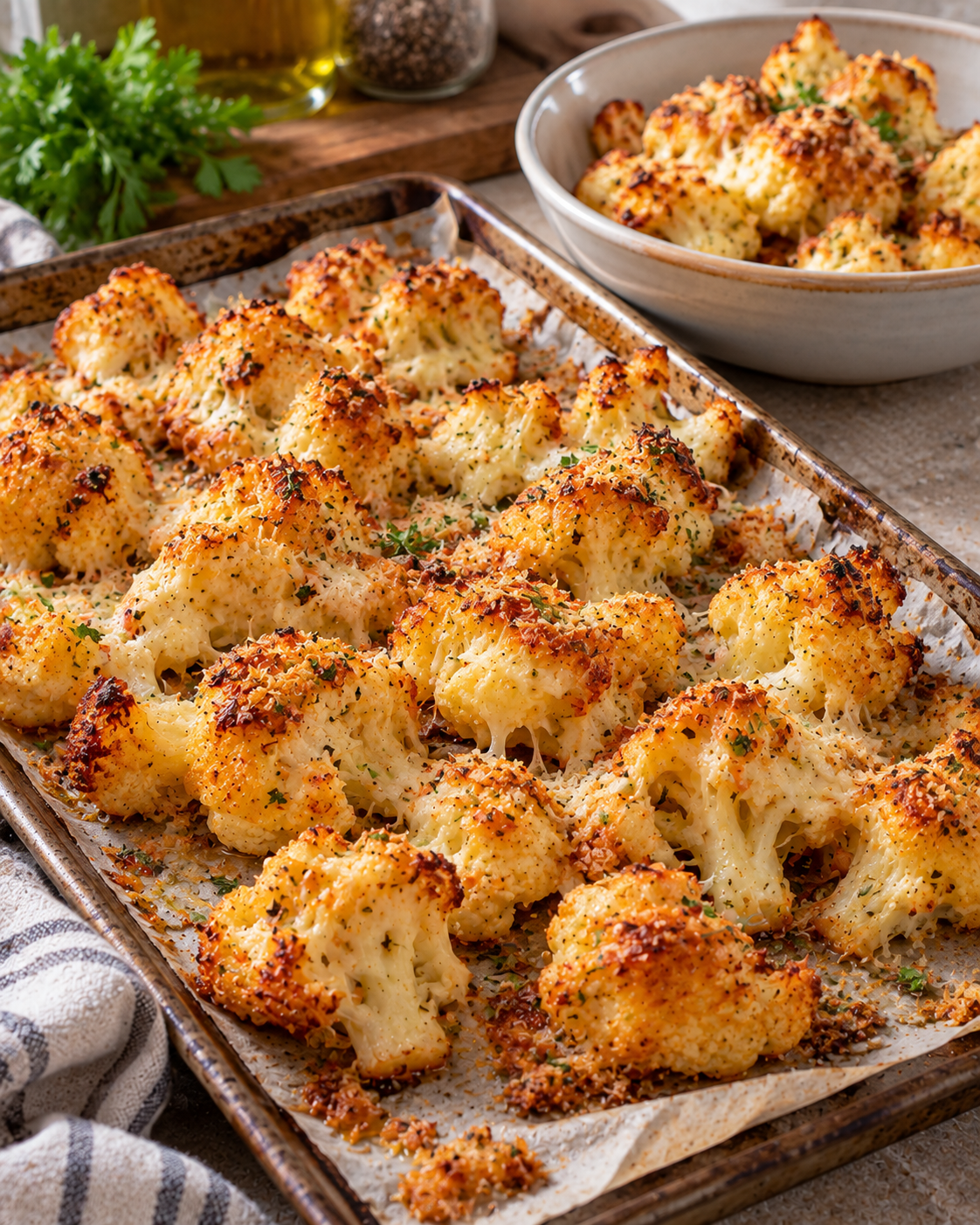
Crispy cheesy cauliflower bites are a delicious way to turn a simple vegetable into a golden, savory snack. Fresh cauliflower florets are seasoned with garlic, paprika, and herbs, then baked with Parmesan, mozzarella, and a light coating of crunchy breadcrumbs.
The result is tender cauliflower with lightly crisp edges, melted cheese, and a flavorful coating that makes every bite satisfying. These oven-baked cauliflower bites are ideal for sharing as an appetizer, serving alongside dinner, or enjoying with a creamy dipping sauce.
Unlike deep-fried snacks, this recipe uses the oven to develop its golden exterior. The secret is removing excess moisture, roasting the cauliflower before adding the cheese, and giving each floret enough space on the baking tray.
With straightforward preparation and a few practical techniques, you can make homemade cheesy cauliflower bites using familiar ingredients.
Why You’ll Love These Cheesy Cauliflower Bites
- Golden, cheesy coating: Parmesan and mozzarella create a delicious savory finish.
- Oven-baked: No deep-frying or large amounts of cooking oil required.
- Simple ingredients: Made with fresh cauliflower, cheese, eggs, and pantry seasonings.
- Customizable flavor: Adjust the paprika, garlic, or herbs to your taste.
- Perfect for sharing: Serve as an appetizer, snack, or vegetable side dish.
- Easy dipping options: Pair with garlic yogurt sauce, tomato dip, or your favorite dressing.
Recipe Overview
- Preparation Time: Approximately 15 minutes
- Cooking Time: Approximately 20–25 minutes
- Resting Time: 5 minutes
- Total Time: Approximately 40–45 minutes
- Servings: 4
- Course: Appetizer, Snack, or Side Dish
- Cooking Method: Oven-Baked
- Difficulty: Easy
Times are estimates. Cooking results depend on the size of the cauliflower florets, the baking tray, and the oven.
Ingredients
For the Cauliflower
- 1 large cauliflower head, approximately 900 g (2 lb) before trimming
- 2 tablespoons olive oil
- 1 teaspoon garlic powder
- 1 teaspoon onion powder
- 1/2 teaspoon sweet or smoked paprika
- 1/4 teaspoon fine salt, or to taste
- 1/4 teaspoon freshly ground black pepper
For the Cheesy Coating
- 50 g (approximately 1/2 cup) finely grated Parmesan cheese
- 55 g (approximately 1/2 cup) grated low-moisture mozzarella
- 15 g (approximately 1/4 cup) panko breadcrumbs, optional but recommended for extra crunch
- 1 teaspoon dried Italian seasoning
- 1 large egg, lightly beaten
Optional Garnish
- Freshly chopped parsley
- A pinch of chili flakes
- Extra grated Parmesan
- Lemon wedges
Important Ingredient Notes
Cauliflower
Choose a fresh cauliflower with firm, compact florets and fresh-looking leaves.
Avoid heads with extensive discoloration, slimy surfaces, or signs of spoilage.
A large cauliflower typically provides enough florets for approximately four appetizer portions.
Parmesan Cheese
Parmesan adds a savory, nutty flavor and helps create golden edges during baking.
Finely grated cheese adheres better to the irregular surfaces of the cauliflower.
If preparing a vegetarian meal, select a suitable vegetarian hard cheese because traditional Parmesan may contain animal-derived rennet.
Mozzarella
Low-moisture mozzarella melts well and creates a soft, cheesy coating.
Avoid fresh mozzarella packed in water because its higher moisture content can affect crispness.
Panko Breadcrumbs
Panko breadcrumbs add a light, crunchy texture.
They are optional, but the coating may be less crisp without them.
For gluten-free preparation, use suitable gluten-free breadcrumbs and check the labels of the other ingredients.
Egg
The beaten egg acts as a binder, helping the cheese mixture adhere to the cauliflower.
Only a light coating is needed.
Avoid leaving large pools of egg on the baking tray.
Seasonings
Garlic powder, onion powder, paprika, and Italian herbs provide balanced savory flavor.
You can adjust the quantities slightly without changing the basic cooking method.
Equipment You’ll Need
- Large baking tray
- Parchment paper suitable for the oven temperature
- Sharp knife
- Cutting board
- Mixing bowl
- Small bowl
- Silicone pastry brush
- Measuring spoons
- Kitchen tongs or spatula
- Oven mitts
Using a large tray is important because crowded cauliflower florets may steam rather than brown.
How to Make Crispy Cheesy Cauliflower Bites
Step 1: Preheat the Oven
Preheat your oven to 220°C (425°F).
Line a large baking tray with parchment paper rated for this temperature.
If your parchment isn’t suitable for high temperatures, use an appropriate lightly oiled baking surface instead.
Position an oven rack near the middle.
Step 2: Prepare the Cauliflower
Remove the outer leaves and trim the thick central stem.
Cut the cauliflower into medium-sized florets.
Aim for pieces approximately 3–4 cm (1–1 1/2 inches) wide.
Try to keep the pieces reasonably similar in size so they cook evenly.
Avoid making the florets extremely small because they may become overly soft before the coating develops.
Step 3: Wash and Dry Thoroughly
Rinse the cauliflower florets under clean running water.
Drain them in a colander.
Spread the pieces over a clean kitchen towel and pat them dry.
This step is important.
Excess moisture can interfere with browning and make the cheese coating less crisp.
The florets should be as dry as reasonably possible before seasoning.
Step 4: Season the Cauliflower
Place the dried cauliflower florets in a large mixing bowl.
Add the olive oil, garlic powder, onion powder, paprika, salt, and black pepper.
Toss gently until the florets are evenly coated.
Make sure the oil and seasonings reach the irregular surfaces of the cauliflower.
Avoid adding excessive oil, which can create a greasy coating.
Step 5: Arrange on the Baking Tray
Spread the cauliflower in a single layer on the prepared tray.
Leave a little space between the florets.
If the tray is too small, use two trays or cook in batches.
Crowding the florets can trap moisture and reduce browning.
Step 6: Roast the Cauliflower First
Place the tray in the preheated oven.
Roast for approximately 10–12 minutes.
The cauliflower should begin softening and may develop a little color.
It does not need to be completely tender at this stage because it will return to the oven.
This first roasting step helps remove some moisture before the cheese is added.
Step 7: Prepare the Cheese Mixture
While the cauliflower is roasting, combine the Parmesan, mozzarella, panko breadcrumbs, and Italian seasoning in a small bowl.
Mix gently to distribute the ingredients.
In a separate bowl, beat the egg until the yolk and white are combined.
Keep the egg separate from the cheese mixture until you’re ready to coat the cauliflower.
Step 8: Add the Egg Coating
Carefully remove the hot baking tray from the oven.
Place it on a heat-resistant surface.
Using a silicone pastry brush, lightly brush the exposed surfaces of the cauliflower with the beaten egg.
Work carefully because the florets and tray are hot.
Use just enough egg to create a thin coating.
Do not pour all the beaten egg directly onto the tray.
Step 9: Add the Cheese and Breadcrumbs
Sprinkle or gently press the cheese mixture over the cauliflower florets.
Try to cover the upper surfaces evenly.
Some cheese may fall onto the baking tray, which is normal.
Avoid piling large amounts onto individual pieces.
A thin, relatively even coating provides better results than thick clumps of cheese.
Step 10: Bake Until Golden
Return the tray to the oven.
Bake for another 8–12 minutes, checking regularly.
The cauliflower should become tender when pierced with a fork.
The egg coating should be fully cooked, and the cheese should melt and develop lightly golden edges.
If the cheese begins browning too quickly, reduce the heat slightly.
The goal is a golden finish rather than a dark, burnt crust.
Step 11: Add Extra Browning If Desired
If the cauliflower is tender but you’d like a little more color, use the oven’s broiler or grill briefly.
Watch carefully.
One or two minutes may be enough, depending on the oven.
Do not leave the tray unattended because cheese and breadcrumbs can burn quickly.
Step 12: Rest Before Serving
Remove the cauliflower from the oven.
Allow it to rest for approximately 5 minutes.
This helps the melted cheese firm slightly and makes the bites easier to transfer.
Use a spatula to lift the cauliflower from the baking tray.
Serve warm with your favorite dip.
Tips for Extra-Crispy Cheesy Cauliflower
1. Dry the Cauliflower Thoroughly
Wet vegetables produce steam during cooking.
Steam makes it harder to achieve golden surfaces.
Drying the cauliflower helps the oil and seasonings coat the florets more evenly.
2. Roast Before Adding Cheese
Cheese can brown faster than cauliflower becomes tender.
Roasting the vegetable first gives it a head start.
The cheese can then melt and brown during the final cooking stage.
3. Use Freshly Grated Parmesan
Finely grated Parmesan spreads easily across the florets.
It also contributes a rich, savory flavor.
4. Choose Low-Moisture Mozzarella
Fresh mozzarella contains more water.
For this recipe, a firmer, low-moisture variety is a more practical choice.
5. Don’t Overcrowd the Tray
Leave space between the cauliflower pieces.
Proper spacing helps moisture escape and encourages more even roasting.
6. Keep the Breadcrumb Coating Light
Too many breadcrumbs can produce a dry, heavy coating.
A modest amount of panko adds crunch without overwhelming the cauliflower.
7. Serve Freshly Baked
The bites are generally crispiest shortly after leaving the oven.
The coating naturally softens as the dish cools.
Why This Recipe Works
High Heat Encourages Browning
Roasting at a sufficiently high temperature helps evaporate moisture and create golden surfaces.
Parmesan Adds Savory Flavor
Parmesan provides a concentrated cheese flavor that complements the mild taste of cauliflower.
Mozzarella Creates a Melted Coating
Mozzarella softens and melts during baking, creating a rich texture around the florets.
Panko Adds Crunch
Panko breadcrumbs have a light, flaky structure that can develop crisp edges in the oven.
The Egg Helps the Coating Stick
A thin layer of egg helps the cheese and breadcrumb mixture adhere to the cauliflower during the final roasting stage.
Common Mistakes to Avoid
The Cauliflower Becomes Soggy
Possible causes: Excess moisture, overcrowding, or insufficient roasting.
Solution: Dry the florets thoroughly, spread them in a single layer, and use an appropriately heated oven.
The Cheese Burns
Possible cause: The coating was added too early or the oven is too hot.
Solution: Roast the cauliflower first, then add the cheese for the final stage.
The Breadcrumbs Don’t Stick
Possible cause: The cauliflower wasn’t coated evenly with egg.
Solution: Brush a thin layer of beaten egg onto the exposed surfaces before adding the cheese mixture.
The Cauliflower Is Still Hard Inside
Possible cause: The florets are too large or weren’t roasted long enough.
Solution: Cut them into similar-sized pieces and extend cooking until fork-tender.
The Cheese Coating Is Too Thick
Possible cause: Too much topping was added to individual pieces.
Solution: Distribute the mixture evenly and avoid heavy clumps.
The Bites Are Too Salty
Possible cause: Parmesan already contains salt.
Solution: Begin with a small amount of added salt and adjust after cooking.
Easy Variations
Spicy Cheesy Cauliflower Bites
Add a small pinch of chili flakes or cayenne pepper to the seasoning mixture.
Start with a modest quantity.
Garlic and Herb Cauliflower
Increase the Italian seasoning slightly or finish with fresh parsley.
Smoky Paprika Cauliflower
Use smoked paprika for a deeper, roasted flavor.
Cheddar Cauliflower Bites
Replace some of the mozzarella with grated cheddar.
The melting characteristics and flavor will change.
Breadcrumb-Free Cauliflower
Omit the panko breadcrumbs.
The cauliflower will still have a melted cheese coating, but the exterior may not be as crunchy.
What to Serve with Cheesy Cauliflower Bites
Garlic Yogurt Dip
A cool, tangy yogurt dip pairs well with the warm cheese coating.
Combine plain yogurt with a little lemon juice, garlic, and chopped parsley.
Keep the dip refrigerated until serving.
Tomato Dipping Sauce
A tomato-based dip provides acidity that balances the richness of the cheese.
Fresh Green Salad
Serve the bites alongside crisp lettuce, tomatoes, and cucumbers for a refreshing contrast.
Homemade Potato and Cheese Sticks
For another savory snack, explore our Crispy Potato and Cheese Sticks.
Lemon-Garlic Zucchini
If you’re preparing a vegetable-focused meal, pair the cauliflower with our Lemon-Garlic Skillet Zucchini.
How to Store Cheesy Cauliflower Bites
These bites are best served fresh, but leftovers can be refrigerated safely.
Refrigeration
Allow the cooked cauliflower to cool briefly.
Transfer it to a shallow, airtight container.
Refrigerate promptly at 40°F (4°C) or below.
Properly refrigerated cooked leftovers can generally be kept for 3–4 days, although the cheesy coating may lose its crispness sooner.
Do not leave the bites at room temperature for more than 2 hours, or more than 1 hour when the temperature exceeds 90°F (32°C).
Freezing
Freezing is possible, although the coating may become softer after thawing.
For the best eating quality, aim to use frozen portions within approximately 1–2 months.
Store them in suitable freezer-safe packaging.
Reheating
For the best texture, reheat the cauliflower in an oven or air fryer.
Arrange the pieces in a single layer.
Heat until thoroughly hot.
For food safety, reheat leftovers to 165°F (74°C).
Avoid overcooking because the cheese can become excessively dark or dry.
For more information, see the USDA’s Leftovers and Food Safety guidance.
Frequently Asked Questions
How Do You Make Cheesy Cauliflower Crispy?
Dry the florets thoroughly, roast them in a single layer, and add the cheese mixture during the final stage of baking.
Using a little panko also helps create a crisp coating.
Can I Make Cauliflower Bites Without Frying?
Yes. This recipe is baked entirely in the oven.
No deep-frying is required.
What Cheese Is Best for Cauliflower Bites?
Parmesan provides strong savory flavor, while low-moisture mozzarella melts well.
Using both creates a balanced topping.
Can I Use Frozen Cauliflower?
Frozen cauliflower releases more moisture during cooking.
It can be used in some roasted dishes, but the texture may be softer.
For the crispiest result with this method, fresh cauliflower is recommended.
Do I Need Breadcrumbs?
No. Panko is optional.
However, it adds an extra crunchy element to the topping.
Can I Make These Cauliflower Bites Gluten-Free?
Yes, if you omit the panko or use suitable gluten-free breadcrumbs.
Check the labels of the remaining packaged ingredients as well.
Can I Make the Recipe Without Egg?
An egg-free variation is possible, but the cheese coating may not adhere as well.
A different binding method would require testing rather than assuming identical results.
Why Isn’t My Cauliflower Crispy?
Excess moisture, an overcrowded tray, or a thick coating may prevent the desired texture.
Dry the cauliflower and give the florets enough room during roasting.
Can I Prepare the Cauliflower Ahead of Time?
You can wash and cut the cauliflower ahead of time.
Keep it refrigerated and dry it thoroughly before cooking.
For the best texture, add the cheese coating shortly before the final baking stage.
How Long Should Cauliflower Bites Bake?
A practical estimate is approximately 20–25 minutes total at 220°C (425°F), divided into two stages.
The exact time depends on the size of the florets and the oven.
Can I Reheat Leftover Cauliflower Bites?
Yes. Reheating in the oven or air fryer may restore some crispness.
Heat leftovers thoroughly to 165°F (74°C).
Final Thoughts
Crispy cheesy cauliflower bites are a simple and flavorful way to enjoy oven-roasted vegetables.
The combination of Parmesan, mozzarella, garlic, herbs, and an optional panko coating creates golden edges around tender cauliflower.
For the best results, dry the florets thoroughly, avoid overcrowding the baking tray, and add the cheese during the final roasting stage.
Serve the bites warm with a favorite dipping sauce for a delicious homemade appetizer or snack.