Easy Thai Coconut Chicken Soup with Rice Noodles
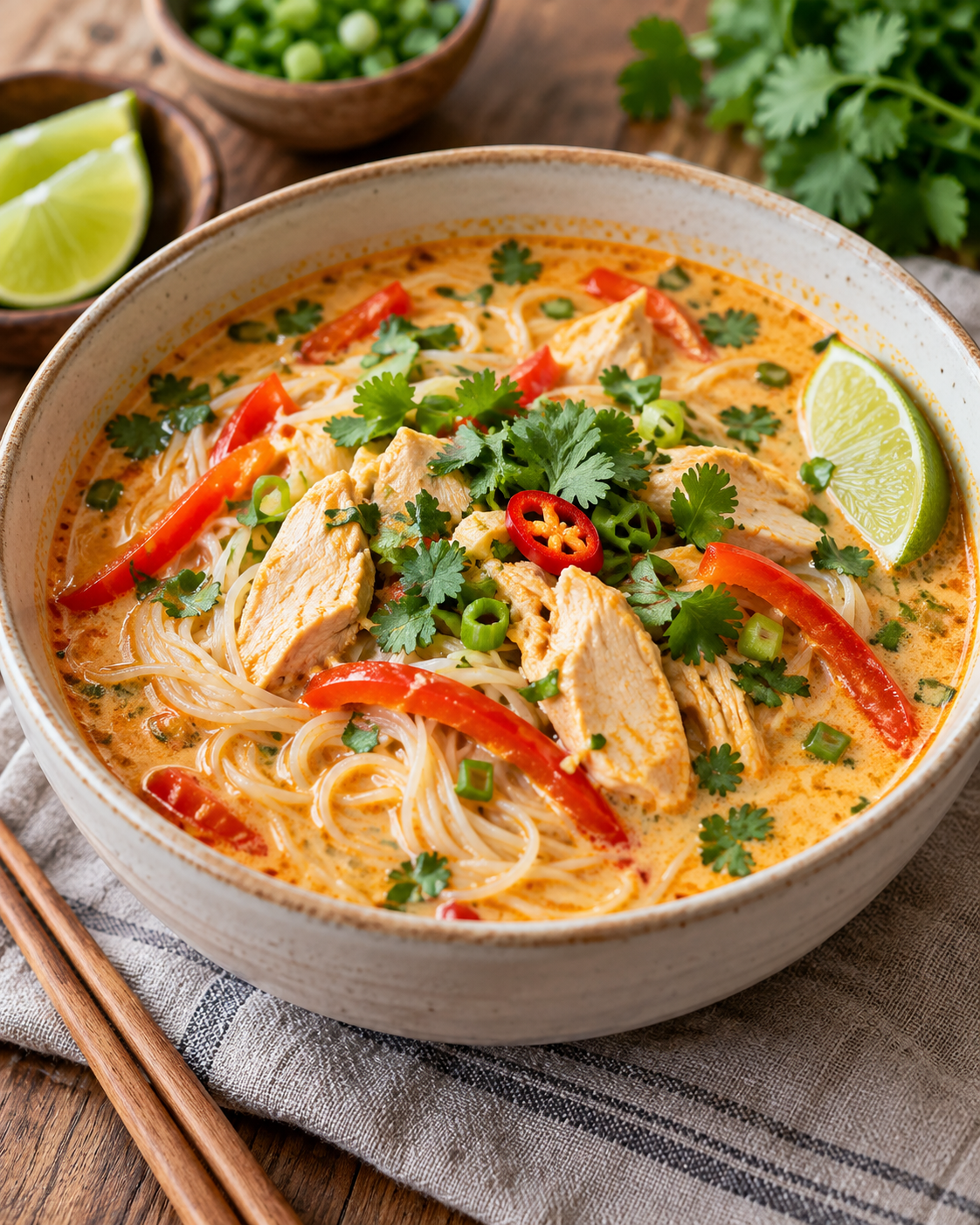
Thai Coconut Chicken Soup is a warming, flavorful dinner that brings together tender chicken, creamy coconut milk, Thai red curry paste, fresh ginger, vegetables, and delicate rice noodles.
The coconut broth has a pleasant balance of savory, mildly spicy, sweet, and tangy flavors. Red curry paste adds depth, while fresh lime juice brightens the finished soup. Rice vermicelli makes it satisfying enough to enjoy as a complete meal.
This Thai-inspired coconut chicken soup is designed for busy evenings. With a little preparation and thinly sliced chicken, it can be ready in approximately 35 minutes.
The key is to cook the aromatics first, simmer the chicken gently, and add the rice noodles near the end so they do not become overly soft.
Why You’ll Love This Thai Coconut Chicken Soup
- Quick dinner: Approximately 35 minutes from preparation to serving.
- Creamy coconut broth: Unsweetened coconut milk adds richness without dairy cream.
- Tender chicken: Thinly sliced chicken cooks quickly in the fragrant broth.
- Balanced flavor: Red curry, ginger, fish sauce, brown sugar, and lime work together.
- One-pot preparation: Most of the cooking happens in one saucepan.
- Adjustable spice level: Start with less curry paste and increase it to taste.
- Complete meal: Rice noodles and vegetables make the soup filling and satisfying.
Recipe Overview
- Preparation Time: Approximately 15 minutes
- Cooking Time: Approximately 20 minutes
- Total Time: Approximately 35 minutes
- Servings: 4
- Course: Main Course, Soup
- Cuisine: Thai-Inspired
- Cooking Method: Stovetop Simmering
- Difficulty: Easy
- Best Served: Hot, immediately after cooking
The time is an estimate based on thinly sliced chicken and quick-cooking rice vermicelli. Some noodle brands or larger chicken pieces may require extra cooking time.
Ingredients for Thai Coconut Chicken Soup
For the Chicken and Vegetables
- 450 g (1 lb) boneless, skinless chicken breast, sliced into thin, bite-sized pieces
- 1 tablespoon (15 ml) neutral cooking oil
- 1 small yellow onion, finely chopped
- 1 medium red bell pepper, thinly sliced
- 2 garlic cloves, finely minced
- 1 tablespoon freshly grated ginger
For the Coconut Curry Broth
- 1 tablespoon Thai red curry paste, plus more to taste
- 1 liter (approximately 4 cups) low-sodium chicken broth
- 400 ml (approximately 13.5 fl oz) unsweetened coconut milk
- 1 tablespoon fish sauce
- 2 teaspoons light brown sugar
- 2 tablespoons freshly squeezed lime juice
For the Noodles
- 100 g (approximately 3.5 oz) thin dried rice vermicelli
For Serving
- 2 green onions, thinly sliced
- 2–3 tablespoons chopped fresh cilantro
- Lime wedges
- Thinly sliced fresh red chili, optional
Important Ingredient Notes
Chicken Breast
Boneless chicken breast is convenient for a quick soup because it cooks relatively fast when cut into thin pieces.
Slice the chicken into similar-sized pieces so they cook evenly.
Boneless chicken thighs can also be used, although the cooking time may need adjustment.
Coconut Milk
Use unsweetened canned coconut milk rather than sweetened coconut beverages.
Full-fat coconut milk gives the broth a richer mouthfeel.
Light coconut milk can be used for a less rich version, but the soup will have a thinner consistency.
Thai Red Curry Paste
Red curry paste is an important source of flavor in this recipe.
It commonly contains chili peppers, aromatics, and spices, although ingredients and spice levels vary between brands.
Some products contain shrimp paste. Check the label if you have a shellfish allergy or need a vegetarian alternative.
Start with 1 tablespoon and add more only after tasting.
Fresh Ginger
Fresh ginger contributes warmth and aroma.
It works especially well with coconut milk and red curry.
Peel the ginger if needed, then grate it finely.
Rice Vermicelli
Thin rice vermicelli cooks quickly and absorbs the flavorful broth.
Cooking times vary by brand, so follow the package directions.
Some varieties require soaking rather than prolonged boiling.
Fish Sauce
Fish sauce adds a savory, salty flavor.
Because it is already salty, use low-sodium chicken broth and taste the soup before adding extra salt.
Fish sauce contains fish and is unsuitable for people with fish allergies.
Fresh Lime Juice
Fresh lime juice helps balance the creamy coconut milk.
Add it near the end of cooking to preserve its bright flavor.
Equipment You’ll Need
- Large saucepan or soup pot
- Sharp kitchen knife
- Cutting board
- Measuring cups and spoons
- Wooden spoon
- Ladle
- Fine grater for ginger
- Food thermometer
- Serving bowls
Use separate utensils or properly clean surfaces after handling raw chicken to prevent cross-contamination.
How to Make Thai Coconut Chicken Soup
Step 1: Prepare the Ingredients
Wash the vegetables and fresh herbs.
Finely chop the onion, slice the red bell pepper, and mince the garlic.
Peel and grate the ginger.
Cut the chicken breast into thin, bite-sized pieces.
Keep the raw chicken separate from vegetables and ready-to-eat ingredients.
Measure the coconut milk, broth, curry paste, fish sauce, brown sugar, and lime juice.
Having the ingredients ready helps keep the cooking process efficient.
Step 2: Heat the Oil
Place a large saucepan over medium heat.
Add 1 tablespoon of neutral cooking oil.
Allow it to warm briefly, but do not let it smoke.
Step 3: Soften the Onion and Bell Pepper
Add the chopped onion and sliced red bell pepper.
Cook for approximately 3–4 minutes, stirring occasionally.
The onion should begin to soften, and the bell pepper should lose some of its firmness.
Avoid browning the vegetables excessively.
Step 4: Add the Garlic and Ginger
Add the minced garlic and grated ginger.
Stir for approximately 30 seconds.
The mixture should become fragrant without burning.
Reduce the heat slightly if the garlic starts browning too quickly.
Step 5: Cook the Red Curry Paste
Add 1 tablespoon Thai red curry paste.
Stir it into the vegetables for approximately 30–60 seconds.
This brief cooking step helps distribute the paste through the oil and release its aroma.
Do not leave the curry paste unattended because it can stick to the bottom of the pan.
Step 6: Pour in the Chicken Broth
Gradually add the chicken broth while stirring.
Scrape the bottom of the pot gently to loosen any flavorful bits.
Bring the broth toward a gentle simmer over medium heat.
Step 7: Add the Chicken
Carefully add the thinly sliced chicken to the simmering broth.
Stir gently to separate the pieces.
Maintain a gentle simmer.
Cook for approximately 7–10 minutes, depending on the thickness of the chicken.
The chicken must reach a safe internal temperature of 165°F (74°C), measured with a food thermometer.
Do not rely on color alone to determine whether poultry is fully cooked.
Step 8: Add the Coconut Milk
Pour in the unsweetened coconut milk.
Stir gently until the broth becomes evenly creamy.
Keep the soup at a gentle simmer rather than a vigorous boil.
A strong boil may cause the coconut milk to separate and can make the chicken less tender.
Step 9: Cook the Rice Vermicelli
Add the thin rice vermicelli according to the package instructions.
For varieties designed to cook in hot liquid, gently submerge the noodles and simmer for the recommended time, often approximately 2–5 minutes.
If the noodles require soaking before use, prepare them as directed by the manufacturer.
Stir gently to prevent clumping.
Do not overcook the noodles because they will continue absorbing liquid while the soup stands.
Step 10: Season the Soup
Stir in the fish sauce and brown sugar.
Taste a small spoonful of the hot broth carefully.
If you prefer a stronger curry flavor, add a little more red curry paste and simmer briefly to incorporate it.
Avoid adding extra salt until you have tasted the seasoned broth.
Step 11: Finish with Lime Juice
Remove the pot from the heat.
Add the freshly squeezed lime juice.
Stir gently and taste.
The finished soup should have a balanced combination of creamy, savory, spicy, and tangy flavors.
If it tastes too sharp, a small additional pinch of brown sugar may help.
If it tastes too rich, a little extra lime juice can brighten it.
Step 12: Garnish and Serve
Ladle the hot soup into serving bowls.
Divide the chicken, vegetables, and noodles evenly.
Top with sliced green onions and fresh cilantro.
Add a few slices of red chili if desired.
Serve immediately with lime wedges.
Tips for the Best Thai Coconut Chicken Soup
1. Slice the Chicken Thinly
Thin, evenly sized pieces cook faster and more consistently.
Large chunks may need extra time, which can affect the texture of the noodles.
2. Start with Less Curry Paste
Different brands of Thai red curry paste vary in heat and saltiness.
Begin with a moderate amount and adjust after tasting.
3. Use Unsweetened Coconut Milk
Sweetened coconut beverages are not suitable substitutes.
Choose canned coconut milk intended for savory cooking.
4. Avoid Boiling the Coconut Milk Aggressively
Gentle simmering helps maintain a smoother broth.
Stir occasionally rather than whisking vigorously.
5. Add the Noodles Near the End
Rice vermicelli can soften quickly.
Adding it too early may lead to a mushy texture.
6. Balance the Flavor Before Serving
Thai-inspired coconut soups benefit from a balance of salty, sour, sweet, and spicy elements.
Adjust the fish sauce, lime juice, sugar, and curry gradually.
7. Finish with Fresh Herbs
Green onions and cilantro provide freshness.
Add them just before serving rather than cooking them for a long time.
Why This Thai Coconut Chicken Soup Works
The flavor of this soup comes from several ingredients working together.
Red Curry Paste Builds the Savory Base
Cooking red curry paste briefly with oil, garlic, and ginger helps release its aroma and distribute its flavor through the broth.
Coconut Milk Adds Richness
Coconut milk softens the sharpness of the spices and creates a creamy consistency.
It also gives the soup its characteristic coconut flavor.
Fish Sauce Adds Savory Depth
Fish sauce contributes saltiness and umami.
Using a measured quantity helps avoid overpowering the other ingredients.
Lime Juice Balances the Coconut Milk
The acidity of fresh lime juice balances the richness of the coconut broth.
Adding it near the end preserves its fresh taste.
Rice Noodles Make the Soup More Filling
Thin vermicelli adds texture without requiring a long cooking time.
It absorbs some broth, making each spoonful flavorful.
Common Mistakes to Avoid
Using Too Much Curry Paste
Problem: The soup becomes excessively spicy or salty.
Solution: Start with 1 tablespoon and adjust gradually.
Overcooking the Chicken
Problem: The chicken becomes dry or tough.
Solution: Use similarly sized thin slices and cook until they reach 165°F (74°C), without unnecessarily extending the cooking time.
Overcooking the Rice Noodles
Problem: The noodles become soft and break apart.
Solution: Add them near the end and follow package directions.
Boiling Coconut Milk Too Hard
Problem: The broth may separate or develop an uneven texture.
Solution: Maintain a gentle simmer after adding the coconut milk.
Adding Too Much Salt
Problem: The soup becomes overly salty because curry paste, broth, and fish sauce may already contain sodium.
Solution: Taste the finished broth before adding any extra salt.
Adding Lime Juice Too Early
Problem: Some of its fresh, bright flavor becomes less noticeable.
Solution: Stir the lime juice into the soup after removing it from the heat.
Variations and Substitutions
Thai Coconut Chicken Soup with Mushrooms
Add approximately 150 g of sliced mushrooms during the chicken-cooking stage.
Button mushrooms or shiitake mushrooms are practical choices.
Cook them until tender.
Extra-Vegetable Coconut Chicken Soup
Add a small handful of sugar snap peas or thinly sliced carrots.
Vegetables that require longer cooking should be added earlier.
Spicier Coconut Curry Soup
Add fresh red chili or a little additional curry paste.
Taste before increasing the heat.
Chicken Thigh Variation
Boneless, skinless chicken thighs can replace chicken breast.
Cut them into small pieces and adjust the cooking time as needed.
Always verify the safe internal temperature.
Coconut Chicken Soup Without Rice Noodles
Omit the vermicelli for a lighter soup.
Serve it alongside steamed jasmine rice if desired.
Fish-Sauce-Free Version
If avoiding fish sauce, a little soy sauce or a suitable fish-free seasoning may provide saltiness and savoriness, but the flavor will change.
Check the red curry paste label as well, since some varieties contain shrimp.
What to Serve with Thai Coconut Chicken Soup
This soup contains chicken, vegetables, and rice noodles, so it can be served as a complete meal.
For a side dish, consider warm homemade flatbread.
Try our Easy 3-Ingredient Skillet Flatbread.
You can also serve the soup with a simple cucumber salad or additional fresh vegetables.
For more information about safely handling raw chicken, see our 4 Simple Steps to Food Safety.
How to Store and Reheat Leftovers
Refrigeration
Allow the soup to cool safely and transfer it to shallow, covered containers.
Refrigerate within two hours of cooking, or within one hour if the surrounding temperature exceeds 90°F (32°C).
Keep the refrigerator at 40°F (4°C) or below.
Properly refrigerated chicken soup leftovers can generally be stored for 3–4 days.
Store the Noodles Separately
If you expect leftovers, consider cooking the noodles separately and adding them to individual bowls.
Rice noodles continue absorbing broth during storage.
Keeping them separate helps preserve their texture.
Freezing
The chicken and coconut broth can be frozen in suitable freezer-safe containers.
For better texture, freeze the broth without the rice noodles.
Use within approximately 2–3 months for the best quality.
Coconut milk may separate slightly after thawing, so stir the soup gently while reheating.
Reheating
Reheat leftovers thoroughly to 165°F (74°C).
Stir occasionally to distribute the heat evenly.
Add a small amount of chicken broth if the soup has thickened during storage.
Prepare fresh rice noodles if necessary.
For additional food-safety advice, consult the USDA’s Food Safety Basics.
Frequently Asked Questions
Can I Make Thai Coconut Chicken Soup in 35 Minutes?
Yes, approximately, when using thinly sliced chicken and quick-cooking rice vermicelli.
Preparation speed, stove performance, and noodle instructions can affect the total time.
Is This Soup Very Spicy?
It can be mild or spicy, depending on the curry paste and the quantity used.
Start with a smaller amount if you prefer a gentle flavor.
Can I Use Chicken Thighs Instead of Chicken Breast?
Yes.
Boneless chicken thighs work well in coconut soups.
Adjust the cooking time and verify that the chicken reaches 165°F (74°C).
Can I Use Light Coconut Milk?
Yes, but the broth will be less rich and may have a thinner consistency.
Can I Make the Soup Without Fish Sauce?
Yes, although the flavor will change.
Use a suitable alternative and check the ingredients of the curry paste if avoiding seafood.
Can I Add Mushrooms?
Yes.
Sliced mushrooms are a good addition and can be cooked with the chicken until tender.
Can I Use Different Noodles?
Yes.
Choose noodles suitable for soup and follow their package instructions.
The cooking time may change.
Why Did My Coconut Soup Separate?
Excessively vigorous boiling may cause coconut milk to separate.
Maintain gentle heat and stir occasionally.
Can I Make This Soup Ahead of Time?
Yes.
Prepare the chicken and broth, cool and refrigerate safely, and add freshly cooked rice noodles when serving for the best texture.
How Long Does Thai Coconut Chicken Soup Last?
Properly refrigerated leftovers generally keep for 3–4 days.
Reheat thoroughly before serving.
Final Thoughts
Thai Coconut Chicken Soup is a flavorful option for a quick homemade dinner.
Tender chicken, creamy coconut milk, fragrant red curry, fresh ginger, and rice noodles come together in a comforting bowl with a balance of savory, tangy, and mildly spicy flavors.
For the best results, prepare the ingredients before cooking, use gentle heat after adding the coconut milk, and cook the rice noodles only as long as needed.
Finish with fresh lime juice, cilantro, and green onions for a simple Thai-inspired meal that can be prepared in approximately 35 minutes.