How to Use Cloves in Tea Without Overpowering the Flavor
Cloves in tea add a warm, aromatic flavor, but a little goes a long way. Too much can overwhelm the tea itself, leaving you with a cup that tastes more like spice than your favorite brew.
The easiest way to keep the flavor balanced is to start with one whole clove, control the steeping time, and taste before adding more. These practical tips will help you give your tea a gentle spiced note while keeping its familiar character.
What Do Cloves Add to Tea?
Cloves bring an intense aroma and a warm, slightly peppery flavor with a sweet-smelling quality. They do not actually sweeten the drink, so adding cloves will not replace sugar if you prefer sweet tea.
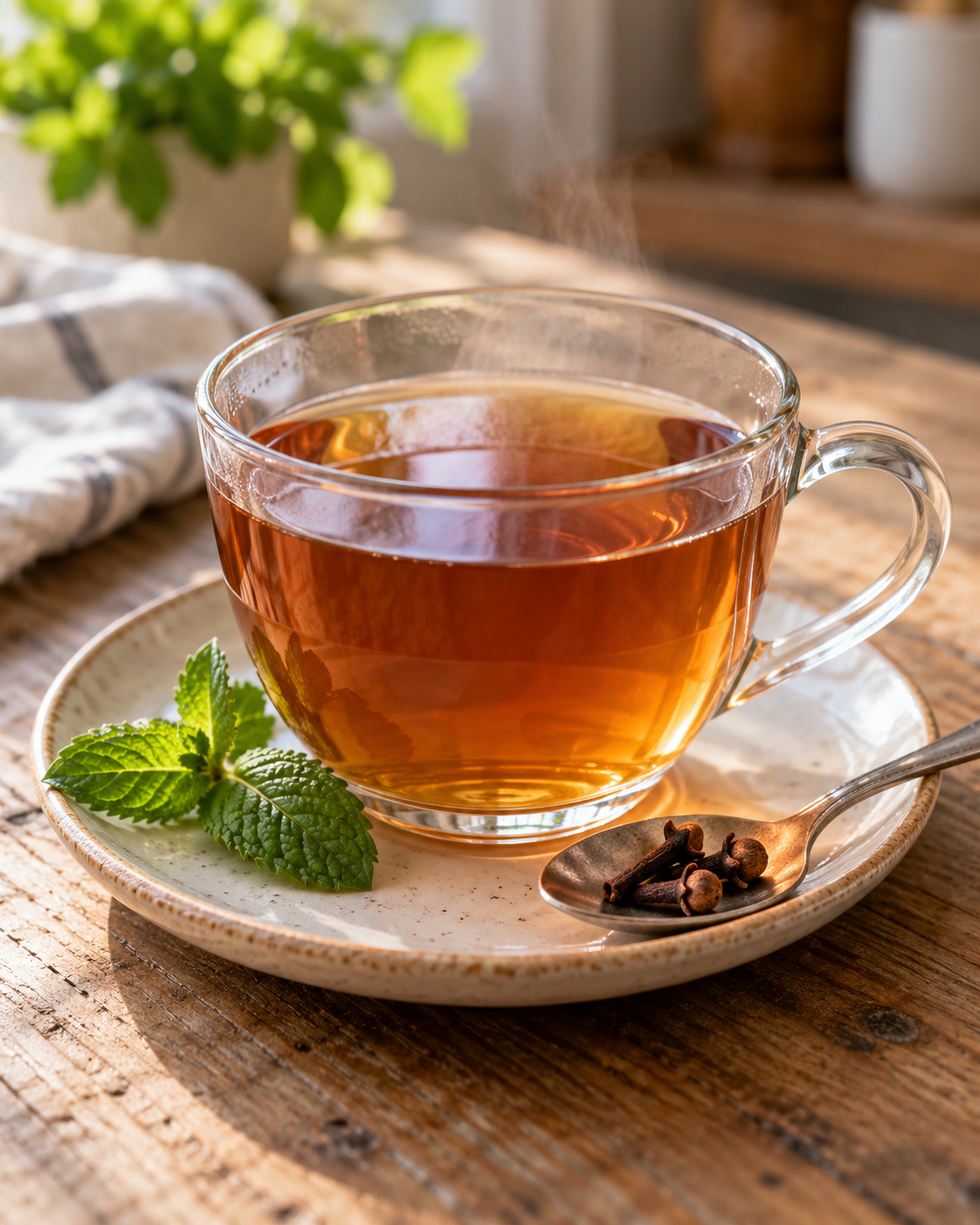
Their role is mainly to add another layer of flavor. In black tea, they create a fuller spiced character. In mint tea, a small amount can add warmth alongside the fresh herbal notes.
The aim is balance: you should still be able to taste the tea underneath the spice.
1. Choose Whole Cloves for Better Control
Whole cloves are easier to use in tea than ground cloves. You can count them, remove them when the flavor is strong enough, and strain them out before drinking.
Ground cloves are harder to measure in tiny quantities and can leave sediment at the bottom of the cup. A fine powder also cannot be removed as easily once it has been stirred in.
For your first attempt, leave the whole clove intact. Crushing it exposes more of the spice and can make the flavor develop more quickly.
2. Start Small and Taste Before Adding More
For a mild first cup, try one whole clove in about 8 ounces, or 240 milliliters, of water. Treat this as a starting point for flavor, not a fixed rule: clove size, freshness, tea strength, and personal preference all affect the result.
For a small two-cup pot, start with two whole cloves. If the flavor is too gentle, adjust the next batch gradually instead of adding a large handful.
Remember that a small Moroccan tea glass holds much less than a standard mug. Measure the water in your pot rather than adding one clove for every small serving glass.
3. Control the Tea and Spice Separately
If your tea becomes bitter before the clove flavor is strong enough, give the clove a short head start.
Steep one whole clove in freshly boiled water for around three to five minutes as an initial trial. Then brew your tea in that water, following the tea package’s recommended temperature and steeping time.
For green tea, allow the water to cool to the recommended brewing temperature before adding the leaves.
Taste the finished drink and remove the clove when the spice is noticeable but not dominant. If you want more clove flavor next time, lengthen the spice infusion slightly rather than leaving the tea leaves in for too long.
4. Keep Other Flavors Simple
Cloves have a strong personality, so start with just one additional flavor.
- Fresh mint: Use a few leaves for a fresh contrast to the warm spice.
- Orange peel: Add a small strip of washed peel, avoiding too much of the white pith.
- Fresh ginger: Try a thin slice if you enjoy a sharper, spicier cup.
Taste before adding sugar or honey. Sweetness can change how you perceive the spice, but it will not remove an excessive clove flavor.
If you are adapting your usual mint tea, keep the tea and mint quantities familiar and change only the amount of clove. That makes it easier to judge what works.
5. Fix Strong Tea by Diluting It
If the clove flavor is too powerful, remove the cloves immediately.
Add a little plain brewed tea of the same type to reduce the spice intensity without losing too much tea flavor. Hot water also works, although it will make the entire drink lighter.
Avoid adding more sugar as the first solution. You may end up with tea that is both overly sweet and overly spiced.
For your next cup, use fewer cloves or shorten their contact with the water.
6. Store Cloves Away from Steam
Keep dried cloves in a tightly closed container in a cool, dry cupboard, away from direct sunlight and the stove.
Use a dry spoon when measuring them. Avoid holding the open container over a steaming kettle, where moisture can enter.
Cloves should have a noticeable aroma. If yours smell faint, they may contribute less flavor, so assess their condition before automatically increasing the quantity.
Common Mistakes to Avoid
Adding too many cloves at once: Start small so you can adjust the flavor gradually.
Boiling the tea leaves to strengthen the spice: Infuse the cloves separately if they need more time.
Leaving cloves in the serving pot: The flavor can continue to intensify while the tea sits. Strain once it tastes balanced.
Using ground cloves as an equal substitute: Whole and ground cloves behave differently in a drink. Whole cloves are the simpler choice for a clear, easy-to-strain cup.
Serving Notes
Use culinary whole cloves and strain out the hard pieces before serving. Let the tea cool to a comfortable drinking temperature.
This guide focuses on cloves as a flavoring ingredient. A well-balanced cup does not need a strong concentration of spice—just enough aroma to complement the tea you enjoy.