Moroccan Lamb Tagine with Prunes and Almonds
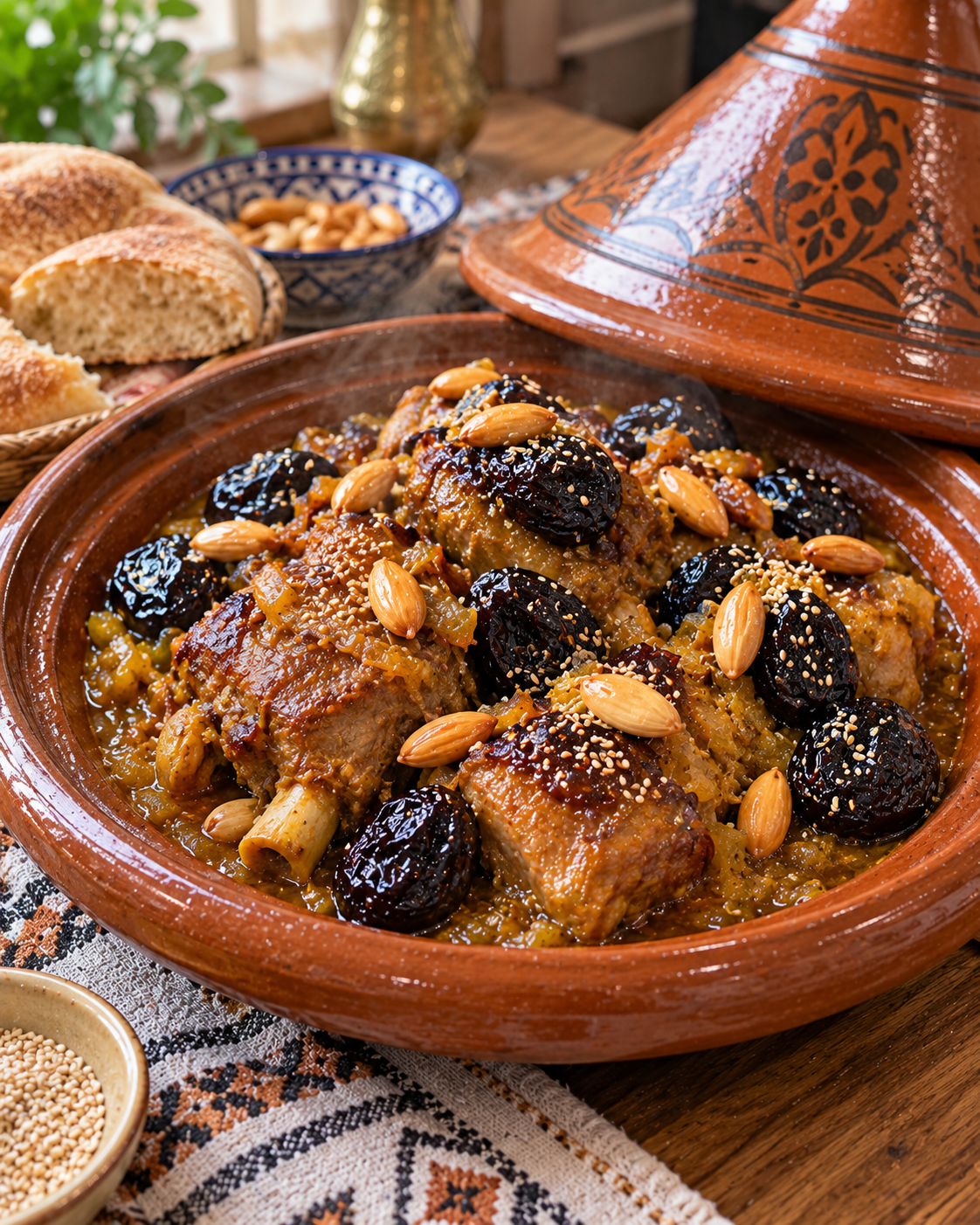
Moroccan Lamb Tagine with Prunes is a comforting sweet-and-savory dish featuring slow-cooked lamb, tender onions, fragrant spices, and soft prunes coated in a lightly sweetened cinnamon sauce. Toasted almonds add a pleasant crunch that contrasts with the tender meat and fruit.
Known in Morocco as lham bel barkouk, this dish is often prepared for family gatherings, celebrations, and meals shared with guests. Its distinctive flavor comes from combining savory lamb and spices with the natural sweetness of dried prunes.
The key to a good lamb tagine is gentle cooking. The lamb needs enough time to become tender, while the prunes are best prepared separately and added near serving time so they retain their shape.
This version uses a heavy pot or a suitable traditional tagine and includes straightforward steps for balancing the sauce, preparing the prunes, and finishing the dish with toasted almonds.
Why You’ll Love This Moroccan Lamb Tagine with Prunes
- Tender slow-cooked lamb: Gentle simmering softens the meat and develops a rich sauce.
- Sweet and savory flavors: Honeyed prunes balance the onions, ginger, saffron, and cinnamon.
- Beautiful presentation: Dark prunes and golden almonds make an attractive garnish.
- Simple ingredients: Most ingredients are pantry staples or easy to find.
- Great for gatherings: The dish can be prepared ahead and reheated before serving.
- Flexible cooking equipment: A heavy Dutch oven or suitable tagine pot can both work.
Recipe Overview
- Preparation Time: Approximately 20 minutes
- Cooking Time: Approximately 2 hours to 2 hours 45 minutes
- Total Time: Approximately 2 hours 20 minutes to 3 hours 5 minutes
- Servings: 6
- Course: Main Course
- Cuisine: Moroccan
- Cooking Method: Slow Stovetop Braising
- Difficulty: Intermediate
The cooking times are estimates. Lamb shoulder may become tender sooner or take longer depending on the cut, size of the pieces, and intensity of the simmer.
Ingredients
For the Lamb and Onion Sauce
- 1.2 kg (approximately 2.6 lb) bone-in lamb shoulder, cut into large pieces
- 400 g (approximately 3 medium) yellow onions, finely sliced
- 3 garlic cloves, finely chopped
- 3 tablespoons olive oil
- 1 teaspoon ground ginger
- 1/2 teaspoon ground turmeric
- 1 cinnamon stick
- A generous pinch of saffron threads, optional
- 1/2 teaspoon freshly ground black pepper
- 1 teaspoon fine salt, or to taste
- Approximately 350 ml (1 1/2 cups) hot water, plus more as needed
- A small tied bundle of fresh cilantro and parsley, optional
For the Honey-Glazed Prunes
- 250 g (approximately 9 oz) pitted dried prunes
- 2 tablespoons honey
- 1/2 teaspoon ground cinnamon
- Approximately 120 ml (1/2 cup) of the lamb cooking liquid
- Warm water for soaking the prunes, if needed
For the Garnish
- 80 g (approximately 1/2 cup) blanched almonds
- 1 tablespoon toasted sesame seeds, optional
Ingredient note: The amount of honey can be adjusted slightly depending on the sweetness of your prunes. Begin with less if you prefer a more savory sauce.
Important Ingredient Notes
Lamb Shoulder
Lamb shoulder is a practical cut for this dish because its connective tissue softens during prolonged, moist cooking.
Bone-in pieces add richness to the cooking liquid.
If using boneless lamb shoulder, choose pieces that are large enough to remain juicy during braising.
Avoid very lean, quick-cooking lamb cuts because they may not develop the same texture.
Dried Prunes
Choose soft, pitted prunes without added flavoring.
If they feel very dry or firm, soaking them briefly in warm water can help soften them.
The prunes are prepared separately because cooking them with the meat for the entire braising time may cause them to break apart.
Yellow Onions
Onions form an important part of the savory sauce.
As they cook gently, they soften and contribute natural sweetness.
Slice them relatively thinly so they blend into the sauce.
Honey
Honey adds sweetness and a glossy finish to the prunes.
You do not need a large amount because dried prunes are already naturally sweet.
Cinnamon and Ginger
Ground ginger adds warmth, while cinnamon complements both the lamb and the prunes.
A cinnamon stick flavors the meat during braising.
Ground cinnamon is used separately for the prune topping.
Saffron
A small pinch of saffron adds aroma and color.
It is optional, but contributes a distinctive note when available.
Almonds
Blanched almonds provide a crunchy contrast.
Toast them shortly before serving so they retain their texture.
For guests with a tree-nut allergy, omit the almonds and avoid cross-contact with allergens.
Equipment You’ll Need
- Heavy-bottomed Dutch oven or a suitable Moroccan tagine pot
- Small saucepan
- Frying pan for the almonds
- Sharp kitchen knife
- Cutting board
- Wooden spoon
- Kitchen tongs
- Measuring spoons
- Food thermometer
- Large serving platter
If using a traditional clay tagine, follow its manufacturer’s instructions for the correct heat source and whether a heat diffuser is required. Not all clay tagines are designed for direct stovetop heat.
How to Make Moroccan Lamb Tagine with Prunes
Step 1: Prepare the Ingredients
Pat the lamb dry with paper towels.
Cut the meat into large serving pieces if it has not already been prepared by the butcher.
Peel and slice the onions.
Chop the garlic and measure the spices.
If using saffron, you may soak it in a spoonful of warm water to help release its color and aroma.
Keep raw lamb separate from ingredients that will be served without further cooking.
Step 2: Soften the Onions
Place a heavy-bottomed pot over medium heat.
Add the olive oil and sliced onions.
Cook gently for approximately 8–10 minutes, stirring occasionally.
The onions should begin softening without becoming dark or burnt.
Add the chopped garlic and stir for another 30 seconds.
Step 3: Add and Lightly Brown the Lamb
Add the lamb pieces to the pot.
Turn them carefully so they become coated in the onions and oil.
Cook for approximately 5–8 minutes, turning as needed.
Allow the meat to develop a little color without scorching the onions.
Step 4: Add the Moroccan Spices
Sprinkle in the ground ginger, turmeric, black pepper, and salt.
Add the cinnamon stick and saffron, if using.
Stir gently to distribute the spices over the meat.
Cook briefly until fragrant.
Avoid allowing the spices to burn against the bottom of the pot.
Step 5: Add the Water and Begin Braising
Pour in approximately 350 ml of hot water.
The liquid should reach partway up the lamb pieces without completely covering them.
Add the tied herb bundle if using.
Bring the liquid to a gentle simmer.
Cover the pot, reduce the heat to low, and allow the lamb to cook slowly.
Step 6: Cook Until the Lamb Is Tender
Simmer the lamb gently for approximately 1 hour 30 minutes to 2 hours 30 minutes, depending on the cut and thickness.
Turn the pieces occasionally if necessary.
Check the level of liquid periodically.
If the sauce becomes too dry, add a small amount of hot water.
Avoid using so much liquid that the dish becomes a thin soup.
The lamb is ready for the finishing stage when a fork can pierce it easily and the meat is tender.
Whole lamb cuts have a USDA minimum safe cooking temperature of 145°F (63°C) followed by a 3-minute rest. Braised lamb shoulder typically needs considerably more cooking than this minimum to become fork-tender.
Step 7: Prepare the Prunes
While the lamb finishes cooking, inspect the dried prunes.
If they are firm, cover them with warm water for approximately 10–15 minutes.
Drain them gently.
Place the prunes in a small saucepan.
Add the honey, ground cinnamon, and approximately 120 ml of cooking liquid taken from the lamb pot.
Stir carefully.
Step 8: Simmer the Prunes Gently
Place the saucepan over low heat.
Allow the prunes to simmer gently for approximately 8–12 minutes.
They should become plump and glossy while remaining mostly whole.
The liquid should thicken slightly into a light syrup.
If the pan becomes dry before the prunes soften, add a small splash of water.
Avoid boiling aggressively or stirring so much that the fruit breaks apart.
Step 9: Toast the Almonds
Place the blanched almonds in a dry frying pan over medium-low heat.
Toast for approximately 4–6 minutes, stirring frequently.
Remove them as soon as they become lightly golden and fragrant.
Almonds can burn quickly, so watch them carefully.
Transfer to a plate to cool.
You may also use almonds toasted in the oven according to an appropriate method.
Step 10: Reduce the Lamb Sauce
Once the lamb is tender, remove the herb bundle and cinnamon stick.
Check the consistency of the onion sauce.
If it seems too watery, remove the lid and simmer gently for approximately 5–10 minutes, or until the sauce thickens.
Stir carefully to prevent sticking.
The finished sauce should coat the lamb rather than resemble broth.
Taste and adjust the seasoning if needed.
Step 11: Assemble the Tagine
Transfer the tender lamb and onion sauce to a suitable serving tagine or platter.
Arrange the honey-glazed prunes around and over the meat.
Spoon a little of their cinnamon syrup over the top.
Scatter the toasted almonds across the dish.
Sprinkle with toasted sesame seeds if desired.
Step 12: Serve Warm
Allow the dish to settle briefly, then serve while hot.
Moroccan bread is a natural accompaniment for enjoying the rich onion sauce.
You can also offer couscous on the side if preferred.
Tips for the Best Lamb Tagine with Prunes
1. Use a Cut Suitable for Slow Cooking
Lamb shoulder or another braising cut works better than very lean meat.
The slow cooking process allows connective tissue to soften.
2. Keep the Heat Low
A gentle simmer produces a more controlled result than vigorous boiling.
Check the pot occasionally to make sure there is enough liquid.
3. Don’t Add the Prunes Too Early
Prunes soften much faster than lamb shoulder.
Preparing them separately helps preserve their shape and prevents the sauce from becoming excessively sweet during the long braise.
4. Balance the Sweetness
Dried prunes contain natural sugars.
Taste the fruit syrup before increasing the honey.
The best flavor depends on a balance of sweet fruit, savory onions, and warm spices.
5. Toast Almonds Just Before Serving
Freshly toasted almonds provide better crunch.
If added too early, they may absorb moisture from the sauce.
6. Reduce the Sauce Gradually
If the tagine contains too much liquid, simmer it uncovered for a short period.
Avoid adding large amounts of flour or cornstarch.
The softened onions and reduced cooking liquid can create a pleasantly rich sauce without additional thickeners.
Why This Moroccan Tagine Recipe Works
The flavor comes from combining slow-braised meat with a separately prepared fruit topping.
Slow Cooking Makes the Lamb Tender
Lamb shoulder contains connective tissue that softens with prolonged moist cooking.
This makes it a useful choice for braised dishes.
Onions Create a Rich Sauce
As the onions cook, they soften and blend into the liquid.
Their natural sweetness complements the lamb and spices.
Honey and Prunes Provide Contrast
The prunes add fruit flavor and a gentle sweetness.
Preparing them separately keeps the dish from becoming overly sweet throughout.
Almonds Add Texture
The toasted almonds bring crunch to an otherwise soft, slow-cooked dish.
Common Mistakes to Avoid
The Lamb Is Still Tough
Possible cause: The meat hasn’t cooked long enough.
Solution: Continue simmering gently until fork-tender. Check the liquid level and avoid excessive heat.
The Prunes Break Apart
Possible cause: They were boiled too vigorously or cooked for too long.
Solution: Simmer them separately over low heat and handle them gently.
The Sauce Is Too Watery
Possible cause: Too much water was added during cooking.
Solution: Reduce the sauce uncovered after the lamb becomes tender.
The Dish Is Too Sweet
Possible cause: Too much honey or an excessive quantity of sweetened prunes.
Solution: Start with a moderate amount of honey and adjust the sweetness at the end.
The Almonds Taste Bitter
Possible cause: They were toasted for too long.
Solution: Use medium-low heat, stir frequently, and remove them when lightly golden.
Variations and Substitutions
Lamb Tagine with Dried Apricots
Replace some of the prunes with dried apricots for a slightly different sweet-and-tart flavor.
Watch the fruit closely because different dried fruits soften at different rates.
Lamb Tagine with Figs
Use a mixture of prunes and dried figs.
The final sweetness may change, so reduce the honey if necessary.
Beef Tagine with Prunes
Beef chuck can be used as an alternative to lamb.
Choose a braising cut and adjust the cooking time until the meat is tender.
Almond-Free Moroccan Tagine
Omit the almonds for guests who cannot eat them.
The dish will still have a rich balance of meat, fruit, and spices.
Tagine with Orange Blossom Water
A very small amount of food-grade orange blossom water may be added to the prune topping for an aromatic variation.
Use sparingly because its flavor can become overpowering.
What to Serve with Moroccan Lamb Tagine
Moroccan Bread
Fresh Moroccan bread is a traditional way to enjoy the sauce.
Its soft interior works well with the rich onion gravy.
Couscous
Plain steamed couscous offers a simple accompaniment for guests who prefer a grain side dish.
Fresh Salad
A small cucumber and tomato salad provides contrast to the rich, sweet-and-savory lamb.
Light Vegetable Sides
Simply cooked vegetables can round out the meal without competing with the spices.
How to Store and Reheat Leftovers
Refrigeration
Allow the tagine to cool safely.
Transfer the meat and sauce into shallow, covered containers.
Refrigerate within two hours of cooking, or within one hour when the surrounding temperature exceeds 90°F (32°C).
Keep the refrigerator at 40°F (4°C) or below.
Properly refrigerated cooked lamb leftovers can generally be stored for 3–4 days.
Freezing
Freeze cooled portions of lamb and sauce in appropriate airtight containers.
For the best quality, plan to use them within approximately 2–3 months.
The prunes may become softer after freezing and thawing.
If possible, store the toasted almonds separately so they retain their crunch.
Reheating
Reheat the lamb and sauce thoroughly to 165°F (74°C).
Add a small splash of water if the sauce becomes too thick during reheating.
Warm the prunes gently and add the almonds shortly before serving.
For detailed food-safety information, see the USDA’s Lamb from Farm to Table guidance.
Frequently Asked Questions
What Is Moroccan Lamb Tagine with Prunes?
It is a Moroccan sweet-and-savory dish made with slow-cooked lamb, onions, warm spices, and dried prunes. Almonds are a common garnish.
What Cut of Lamb Is Best for Tagine?
Lamb shoulder is a practical choice because it becomes tender during slow, moist cooking.
Can I Make Lamb Tagine Without a Traditional Tagine Pot?
Yes. A heavy Dutch oven or another suitable covered pot works well.
A traditional tagine pot is not essential.
How Long Does Lamb Tagine Take to Cook?
Depending on the cut and size of the pieces, slow braising may take approximately 2 hours or longer.
The meat should be tender before serving.
Should the Prunes Cook with the Lamb?
For this version, the prunes are cooked separately and added at the end.
This helps preserve their shape and gives you more control over the sweetness.
Can I Make Lamb Tagine the Day Before?
Yes. Cook the lamb completely, cool and refrigerate it promptly, and reheat thoroughly before serving.
Prepare or refresh the prune topping and toasted almonds when serving for the best texture.
Can I Replace the Lamb with Beef?
Yes. Use a suitable beef braising cut and adjust the cooking time.
Is Honey Necessary?
Honey provides sweetness and a glossy finish, but the amount can be reduced.
The prunes are naturally sweet.
Can I Freeze Leftover Lamb Tagine?
Yes. Properly cooled and packaged lamb tagine can be frozen.
The texture of the fruit may change after thawing.
Final Thoughts
Moroccan Lamb Tagine with Prunes is a satisfying combination of tender lamb, aromatic spices, sweet fruit, and crunchy almonds.
Its appeal lies in the balance between the savory onion sauce and the lightly sweetened prunes.
For the best results, choose lamb suitable for slow cooking, keep the heat gentle, and prepare the prunes separately so they hold their shape.
Serve the dish warm with Moroccan bread or a simple side for a comforting family meal or a special gathering.