No-Bake Raspberry Charlotte Dessert Cups
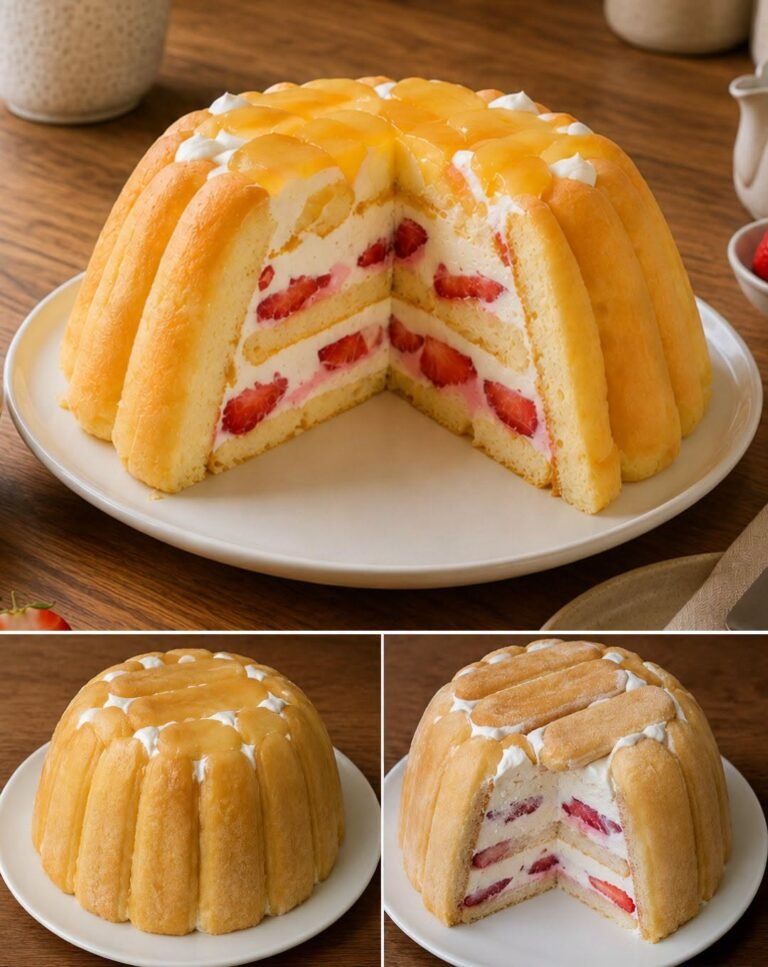
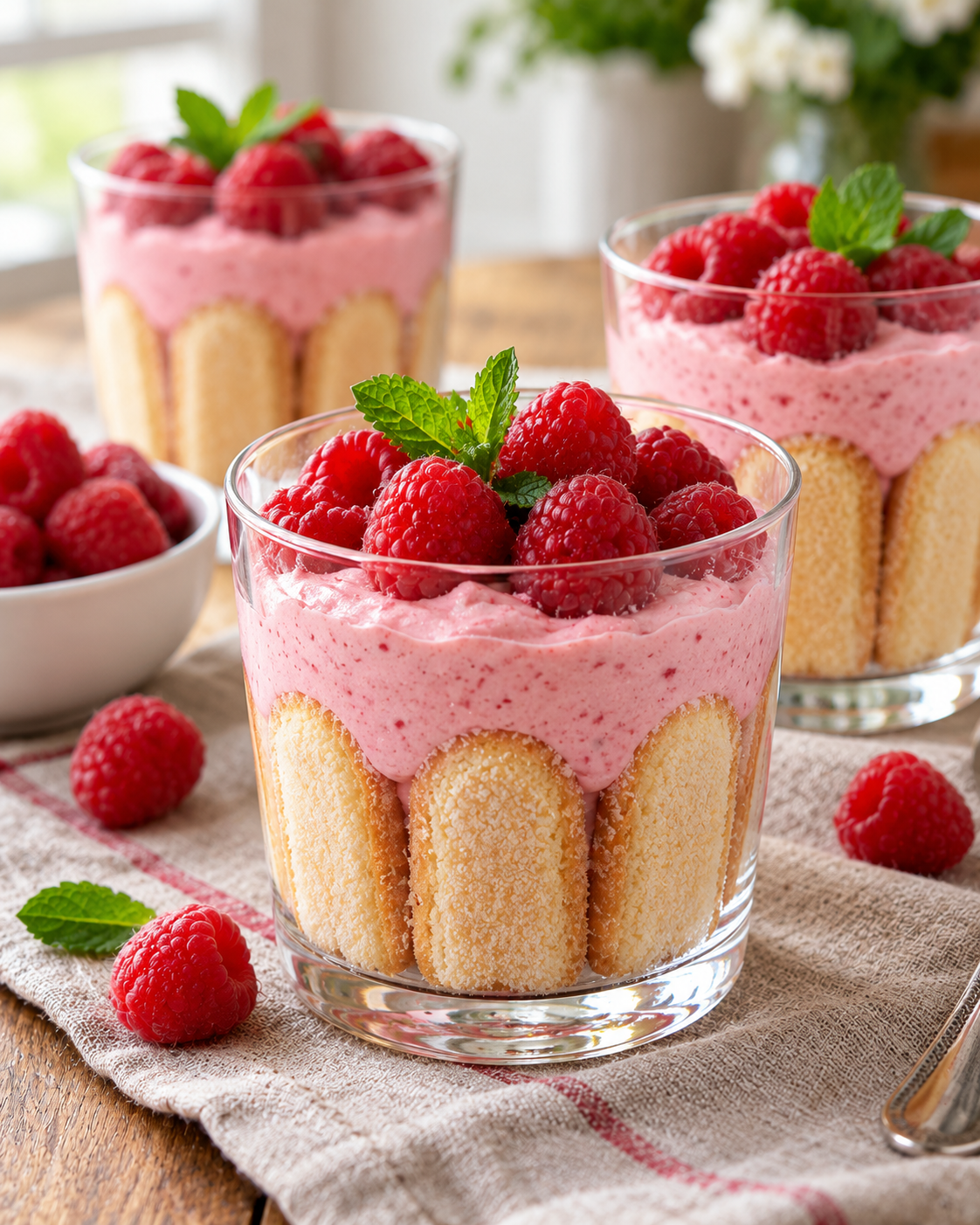
Raspberry Charlotte Dessert Cups are an elegant no-bake treat made with delicate ladyfinger biscuits, fluffy raspberry mousse, and fresh berries. Inspired by the classic French charlotte, this individual version brings together soft biscuits and creamy fruit filling in beautiful serving glasses.
The raspberry mousse combines fresh raspberries, lightly sweetened whipped cream, and a small amount of gelatin to create a smooth texture that holds its shape after chilling. Ladyfingers dipped briefly in homemade syrup add a soft, cake-like layer.
These dessert cups are ideal for family gatherings, summer celebrations, or a make-ahead treat. The preparation is relatively simple, and the individual portions make serving convenient.
Although assembly takes less than an hour, the desserts need at least two hours in the refrigerator to set properly. Preparing them in advance gives the mousse time to become pleasantly firm and allows the biscuit layers to soften.
Why You’ll Love These Raspberry Charlotte Dessert Cups
- No oven required: The dessert sets in the refrigerator.
- Fresh raspberry flavor: Real raspberries provide a naturally fruity, slightly tart taste.
- Light, airy texture: Whipped cream creates a soft mousse.
- Elegant individual servings: Clear glasses reveal the layers of biscuits and pink raspberry cream.
- Easy to prepare ahead: The dessert can be assembled several hours before serving.
- Simple decoration: Fresh raspberries and mint make a beautiful finishing touch.
Recipe Overview
- Preparation Time: Approximately 30 minutes
- Stovetop Cooking Time: Approximately 5 minutes
- Chilling Time: At least 2 hours, preferably 3 hours
- Total Time: Approximately 2 hours 35 minutes to 3 hours 35 minutes
- Servings: 4 dessert cups
- Course: Dessert
- Cuisine: French-Inspired
- Cooking Method: No-Bake, with brief stovetop preparation
- Difficulty: Easy to Intermediate
These times are estimates. The exact preparation and setting time depend on the gelatin product, serving-glass size, and refrigerator temperature.
Ingredients
For the Raspberry Mousse
- 150 g (5.3 oz) fresh or thawed raspberries
- 20 g (approximately 1 1/2 tablespoons) granulated sugar
- 2 standard gelatin sheets, approximately 4 g total, subject to the manufacturer’s specifications
- 200 ml (approximately 3/4 cup plus 1 tablespoon) cold heavy whipping cream, preferably 35% fat or higher
- 30 g (approximately 1/4 cup) powdered sugar
For the Biscuit Syrup
- 120 ml (1/2 cup) water
- 35 g (approximately 3 tablespoons) granulated sugar
For Assembly and Decoration
- 16 ladyfinger biscuits, also called sponge fingers or biscuits à la cuillère
- 100 g (3.5 oz) fresh raspberries
- A few small fresh mint leaves, optional
Gelatin note: Gelatin sheets differ in weight and setting strength between brands. The quantities above assume two standard sheets of approximately 2 g each. Check the package and follow its hydration and conversion instructions. An equivalent unflavored powdered gelatin product may be used according to the manufacturer’s guidance, but a direct gram-for-gram substitution is not always exact.
Important Ingredient Notes
Raspberries
Fresh raspberries provide vibrant color and a slightly tart flavor that balances the sweetness of the cream.
Choose berries that are fresh, firm, and free from visible mold.
Frozen raspberries may be used for the mousse after thawing and draining any excess liquid. Fresh raspberries are preferable for the final decoration.
Heavy Whipping Cream
Use cold cream with enough fat to whip properly.
Cream with approximately 35% fat or more is a reliable choice for a stable, airy mousse.
Low-fat cooking cream generally will not provide the same whipped texture.
Gelatin
Gelatin helps stabilize the raspberry mousse as it chills.
It must be properly hydrated and dissolved before being incorporated into the cream.
Using too much gelatin can create a rubbery texture, while too little may produce a filling that does not hold its shape.
Follow the gelatin manufacturer’s instructions carefully.
Ladyfinger Biscuits
Ladyfingers are light sponge biscuits commonly used in charlotte desserts and tiramisu.
Their porous texture allows them to absorb syrup quickly.
They should be dipped briefly rather than soaked until saturated.
Powdered Sugar
Powdered sugar dissolves easily in whipped cream.
It adds sweetness without creating a noticeably grainy texture.
Equipment You’ll Need
- Four clear dessert glasses, approximately 200–250 ml each
- Small saucepan
- Mixing bowls
- Electric hand mixer or stand mixer
- Blender or food processor
- Fine-mesh sieve, optional
- Rubber spatula
- Measuring jug
- Kitchen scale
- Spoon
- Refrigerator
Transparent glasses work especially well because they show the contrast between the golden ladyfingers and the raspberry mousse.
How to Make No-Bake Raspberry Charlotte Dessert Cups
Step 1: Prepare the Serving Glasses
Choose four clean, dry dessert glasses.
Set them on a tray that fits comfortably inside your refrigerator.
Using a tray makes it easier to move the assembled desserts without disturbing the mousse.
Step 2: Prepare the Biscuit Syrup
Pour the water and granulated sugar into a small saucepan.
Place it over medium heat.
Stir until the sugar dissolves completely.
This should take approximately 2–3 minutes.
Remove the saucepan from the heat and allow the syrup to cool.
The syrup should be cool before it touches the biscuits.
Step 3: Hydrate the Gelatin
Place the gelatin sheets in a bowl of cold water.
Allow them to soften according to the package instructions, usually for approximately 5 minutes.
The sheets should become flexible and fully hydrated.
Remove them from the water and gently squeeze out excess liquid.
If using powdered gelatin, hydrate it separately according to the manufacturer’s instructions rather than treating it exactly like gelatin sheets.
Step 4: Prepare the Raspberry Purée
Gently rinse and drain the raspberries if using fresh fruit.
Place 150 g of raspberries in a blender or food processor.
Blend until smooth.
For a finer mousse, pass the purée through a fine-mesh sieve to remove the seeds.
Transfer the purée to a small saucepan.
Step 5: Warm the Raspberry Mixture
Add the 20 g of granulated sugar to the raspberry purée.
Warm gently over low heat, stirring until the sugar dissolves.
The mixture should become hot enough to dissolve the gelatin, but it does not need to boil.
Remove it from the heat.
Step 6: Dissolve the Gelatin
Add the softened, drained gelatin sheets to the warm raspberry purée.
Stir carefully until they dissolve completely.
Check that no visible pieces of gelatin remain.
Allow the mixture to cool until it is just lukewarm and still fluid.
Do not combine hot raspberry purée with whipped cream, because excessive heat can reduce the cream’s volume.
However, do not allow the gelatin mixture to become firm before folding it into the cream.
Step 7: Whip the Cream
Pour the cold heavy whipping cream into a clean mixing bowl.
Add the powdered sugar.
Beat with an electric mixer until soft-to-medium peaks form.
The cream should hold its shape while remaining smooth.
Avoid overwhipping it until grainy or buttery.
Step 8: Combine the Raspberry Purée and Whipped Cream
Add a small portion of whipped cream to the cooled raspberry mixture.
Stir gently to lighten the purée.
Then gradually fold the raspberry mixture into the remaining whipped cream.
Use a rubber spatula and gentle movements.
Continue until the mousse has an even pink color.
Avoid vigorous mixing, which can remove the air incorporated into the whipped cream.
Step 9: Prepare the Ladyfinger Biscuits
Pour the cooled syrup into a shallow dish.
Dip each ladyfinger very briefly into the syrup.
The biscuits should absorb a little moisture but still hold their shape.
If the ladyfingers are too tall for your glasses, trim them carefully before dipping.
Step 10: Arrange the Biscuits
Place approximately four ladyfinger biscuits around the inside edge of each glass.
Position them vertically to create the appearance of a miniature charlotte.
If necessary, adjust the size or number of biscuits to fit the glass.
You may place a few small biscuit pieces at the bottom to create an additional sponge layer.
Avoid compressing the biscuits too tightly.
Step 11: Add the Raspberry Mousse
Spoon or pipe the raspberry mousse into the center of each glass.
Fill the space between the ladyfingers.
Gently tap the glasses on the work surface to reduce large air gaps.
Smooth the top with the back of a spoon.
Leave a little room for the raspberry garnish.
Step 12: Refrigerate Until Set
Cover the dessert cups and place them in the refrigerator.
Chill for at least 2 hours.
For a more reliable, firmer mousse, allow approximately 3 hours or longer.
The mousse should become softly set and hold its shape when served with a spoon.
The exact setting time depends on the gelatin’s strength and the refrigerator temperature.
Step 13: Decorate with Fresh Raspberries
Just before serving, divide the remaining 100 g of raspberries among the four glasses.
Arrange them over the mousse.
Add a small mint leaf to each dessert if desired.
Keep the decoration simple so the raspberry color remains the main feature.
Step 14: Serve Chilled
Serve the Raspberry Charlotte Dessert Cups directly in their glasses.
Use a dessert spoon to enjoy the mousse and softened ladyfinger layers together.
Keep any remaining portions refrigerated.
Tips for Perfect Raspberry Charlotte Dessert Cups
1. Use Cold Whipping Cream
Cold cream whips more reliably than warm cream.
For especially warm kitchens, chilling the mixing bowl briefly can help.
2. Check Your Gelatin Product
Gelatin sheets vary in strength and weight.
Follow the manufacturer’s directions rather than assuming every brand uses the same quantity.
3. Cool the Raspberry Purée Before Folding
If the purée is too hot, it can deflate the whipped cream.
If it cools until the gelatin begins setting, it may form small lumps.
Aim for a fluid mixture that is only slightly warm.
4. Don’t Overwhip the Cream
Overwhipped cream can develop a grainy texture.
Stop when the cream holds soft-to-medium peaks.
5. Dip Ladyfingers Quickly
A short dip is usually enough.
Overly wet biscuits may collapse or release excess liquid into the mousse.
6. Use a Fine-Mesh Sieve for a Smoother Texture
Raspberry seeds are edible, but removing them creates a more refined mousse.
This step is optional.
7. Chill Before Decorating
For the neatest presentation, allow the mousse to set before adding fresh berries.
This helps prevent heavier toppings from sinking.
Why This Raspberry Charlotte Recipe Works
The dessert combines three complementary textures.
Light Raspberry Mousse
Whipped cream incorporates air into the filling.
Raspberry purée adds fruit flavor and color, while gelatin helps the mixture retain its shape after chilling.
Softened Ladyfinger Biscuits
Ladyfingers absorb a small amount of syrup and gradually become softer as they rest beside the mousse.
This creates a cake-like contrast without requiring baking.
Fresh Raspberry Garnish
Fresh berries add a slightly tart flavor and a different texture from the mousse.
Their acidity helps balance the sweetness of the dessert.
Common Mistakes to Avoid
The Mousse Doesn’t Set
Possible causes: Incorrect gelatin quantity, gelatin that was not fully dissolved, or insufficient chilling time.
Better approach: Follow the gelatin package directions carefully and allow enough refrigeration time.
The Mousse Contains Gelatin Lumps
Possible cause: The gelatin mixture began setting before it was fully incorporated into the whipped cream.
Better approach: Fold the raspberry mixture into the cream while the purée remains fluid and just lukewarm.
The Biscuits Are Too Soft
Possible cause: They were soaked in syrup for too long.
Better approach: Use a quick dip and allow them to soften gradually during chilling.
The Cream Becomes Grainy
Possible cause: The whipping cream was beaten for too long.
Better approach: Stop at soft-to-medium peaks and fold gently.
The Dessert Is Too Sweet
Possible cause: Excess sugar in the mousse or syrup.
Better approach: Use the specified quantities initially and select naturally flavorful raspberries. Adjust sweetness modestly in future batches rather than making large changes to the mousse formulation.
Variations and Substitutions
Mixed Berry Charlotte Cups
Replace part of the raspberries with strawberries or blueberries.
The fruit’s water content and acidity may affect the mousse slightly, so significant substitutions should be tested before serving for a special occasion.
Raspberry and Lemon
Add a little finely grated lemon zest to the raspberry purée for extra fragrance.
Avoid adding large amounts of lemon juice without adjusting the recipe.
White Chocolate Decoration
Add a few fine white chocolate shavings over the chilled mousse.
This provides sweetness and a decorative contrast.
Mascarpone Raspberry Dessert
A mascarpone variation can create a thicker, richer filling.
However, replacing whipped cream with mascarpone changes the texture and requires adjusting the method, so it should be treated as a separate variation rather than an identical substitution.
Vegetarian Gelatin Alternative
Agar-agar is sometimes used to set fruit desserts.
However, it does not behave exactly like gelatin and should not be substituted sheet-for-sheet.
Use a specifically tested agar-based mousse method if preparing a vegetarian version.
How to Store Raspberry Charlotte Dessert Cups
Refrigeration
These desserts contain whipped dairy cream and fresh fruit, so they must remain refrigerated.
Keep them covered at 40°F (4°C) or below.
For the best texture and appearance, enjoy them within approximately 1–2 days.
The ladyfingers will continue softening during storage, and fresh raspberries may release moisture.
Can You Make Them Ahead?
Yes.
Prepare the dessert cups several hours before serving or the evening before.
Cover and refrigerate them, then add the fresh raspberries shortly before serving.
Can You Freeze Them?
Freezing is not recommended for the best texture.
Gelatin-set mousse can release moisture or change consistency after thawing, and the ladyfingers may become overly soft.
Food Safety
Do not leave these dairy-based desserts at room temperature for more than 2 hours, or more than 1 hour when the temperature exceeds 90°F (32°C).
See FoodSafety.gov’s Four Steps to Food Safety for general refrigeration and food-handling guidance.
Frequently Asked Questions
Can I Make Raspberry Charlotte Dessert Cups Without an Oven?
Yes. The ladyfinger biscuits are already baked, and the mousse sets in the refrigerator.
How Long Do Raspberry Charlotte Cups Need to Chill?
Allow at least 2 hours. Approximately 3 hours or longer may give a firmer result.
Can I Use Frozen Raspberries?
Frozen raspberries can be used for the mousse after thawing and draining excess moisture.
Fresh raspberries are preferable for decorating.
Can I Prepare the Dessert the Night Before?
Yes. Keep the glasses covered and refrigerated, and add fresh raspberry toppings before serving.
Can I Make the Dessert Without Gelatin?
A different mousse method would be needed. Omitting gelatin from this specific formulation will produce a softer filling that may not set as intended.
Why Is My Raspberry Mousse Runny?
Possible causes include inadequate gelatin hydration, incorrect gelatin strength, overly warm cream, or insufficient chilling.
Can I Use Other Biscuits?
You can use suitable sponge biscuits, but their shape and absorbency may differ from traditional ladyfingers.
How Many Servings Does This Recipe Make?
The recipe is designed for four individual dessert glasses.
Final Thoughts
No-Bake Raspberry Charlotte Dessert Cups are a beautiful way to serve a classic French-inspired dessert in individual portions.
The combination of delicate ladyfingers, fluffy raspberry mousse, and fresh berries creates a dessert with a pleasant balance of sweetness and fruit flavor.
For the best result, use cold whipping cream, properly prepared gelatin, and lightly dipped biscuits. Give the mousse enough time to set before decorating and serving.
These little raspberry desserts are especially convenient when you want something elegant that can be prepared ahead without using the oven.