How to Remove Refrigerator Odors: 7 Safe Cleaning Tips
Knowing how to remove refrigerator odors can make everyday kitchen cleaning easier and help you maintain a fresher space for storing food. Unpleasant smells may come from spoiled leftovers, leaking containers, forgotten vegetables, or food residue hidden beneath refrigerator drawers.
While an open box of baking soda can help absorb some lingering odors, it cannot replace proper cleaning. The first step is always to identify and remove the source of the smell.
With a few simple cleaning habits, you can tackle common refrigerator odors without relying on strong fragrances or unnecessary chemical products.
These seven practical tips explain how to clean your refrigerator safely, reduce unpleasant smells, and prevent them from returning.
Why Does a Refrigerator Develop Bad Odors?
Even when a refrigerator is operating at the correct temperature, food can eventually spoil.
Certain spoilage microorganisms break down food and produce unpleasant smells. Liquids from leaking packages can also collect on shelves or inside drawers.
Common causes of refrigerator odors include:
- Forgotten leftovers.
- Spoiled fruits or vegetables.
- Leaking meat or fish packages.
- Spilled milk or sauces.
- Food stored without a lid.
- Residue trapped in refrigerator drawers or door seals.
- Inadequate refrigerator temperature control.
A bad smell does not necessarily mean that the appliance itself is damaged.
However, persistent odors should be investigated rather than covered up with perfumes.
7 Ways to Remove Refrigerator Odors Safely
1. Find and Remove the Source of the Odor
Before using any cleaning product, inspect the food inside your refrigerator.
Look for forgotten containers, spoiled produce, leaking packages, and old leftovers.
Check the back of the shelves and the produce drawers, where food can remain unnoticed.
Discard spoiled or questionable food safely.
If a container has leaked, inspect nearby packages for contamination.
Do not taste suspicious food to determine whether it is safe.
Why this works: Removing the source prevents the smell from continuing to spread through the refrigerator.
Practical tip: Check your refrigerator contents regularly so older food does not become hidden behind newly purchased items.
2. Empty the Refrigerator Without Leaving Food Warm
For a thorough cleaning, remove the items from the refrigerator so you can access the shelves and drawers.
However, perishable food must remain cold.
Place dairy products, meat, seafood, eggs, and other refrigerated foods in a suitable cooler with ice packs if cleaning will take more than a few minutes.
The CDC advises against leaving perishable foods outside refrigeration for more than two hours.
During very hot conditions above 90°F (32°C), the limit is one hour.
If food has already been stored at unsafe temperatures, follow official food-safety guidance rather than assuming it is safe to return to the refrigerator.
Why this works: Removing items makes it easier to find hidden spills while protecting foods that must stay refrigerated.
Practical tip: Organize the refrigerator contents before cleaning so you can return everything quickly.
3. Wash Removable Shelves and Drawers Carefully
Refrigerator drawers and shelves can hold small spills that are difficult to see during routine cleaning.
Remove the components that your appliance manufacturer identifies as removable.
Wash them with warm, soapy water using a soft sponge or cloth.
Rinse away soap residue and dry with a clean towel.
Be careful with glass shelves.
Do not place a cold glass shelf directly into hot water. Sudden temperature changes can cause glass to crack.
Allow cold glass components to reach a suitable temperature before washing, following the manufacturer’s guidance.
Avoid steel wool or sharp scraping tools that may damage plastic and glass surfaces.
Why this works: Cleaning removable parts helps remove food residue that may continue producing unpleasant odors.
Practical tip: Check the underside of refrigerator drawers, where sticky residue sometimes collects.
4. Clean the Interior with Mild Soapy Water
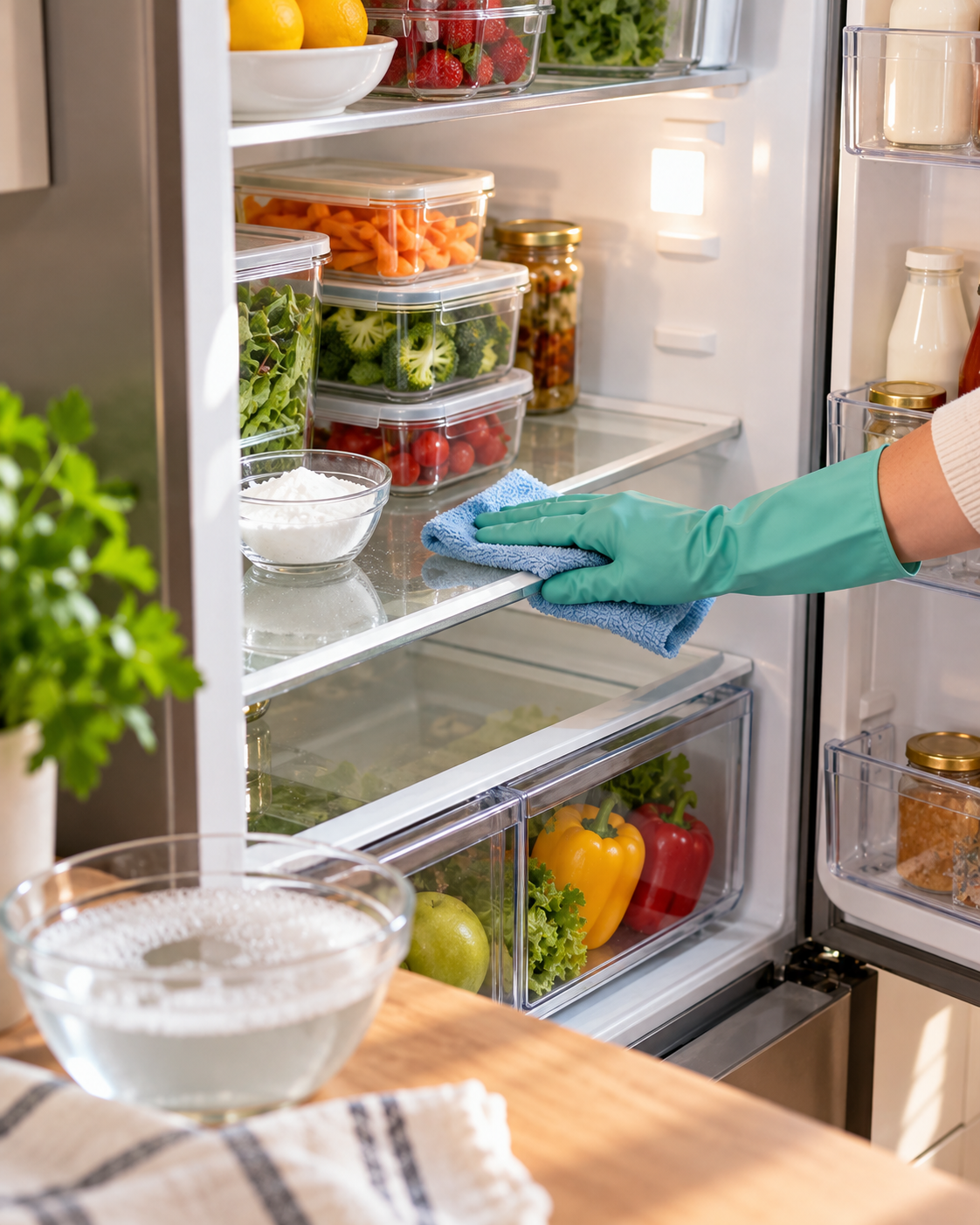
Once the refrigerator is empty, wipe the interior surfaces using an appliance-approved cleaning method.
For many refrigerators, warm water and mild dish soap are suitable for routine cleaning.
Dampen a soft cloth rather than pouring water directly onto the shelves.
Wipe the refrigerator walls, shelves, and accessible corners.
Pay attention to areas where sauces or drinks may have spilled.
Use a separate cloth dampened with clean water to remove soap residue.
Dry the cleaned surfaces thoroughly.
Don’t forget the door seals.
Food crumbs and spills can collect around the rubber door gasket.
Clean accessible areas gently without stretching or damaging the seal.
Avoid flooding ventilation openings, controls, or electrical components.
Why this works: Soap and water help lift oily and food-based residue instead of simply masking the smell.
Practical tip: Always check your refrigerator manual before applying cleaning products to special surfaces.
5. Use Baking Soda to Help Absorb Lingering Odors
After the refrigerator has been cleaned and dried, baking soda may help reduce some remaining unpleasant smells.
The USDA recommends placing an open box of baking soda on a refrigerator shelf as one way to help control odors.
You can also use an appropriate shallow container in a location where it cannot spill into food.
Keep it away from children and pets and replace it according to the product’s instructions.
What Baking Soda Can Do
Baking soda may help reduce certain lingering odors.
It is inexpensive and widely available.
What Baking Soda Cannot Do
Baking soda does not make spoiled food safe.
It does not replace washing contaminated surfaces.
It is not a substitute for refrigeration or sanitizing when sanitizing is necessary.
Practical tip: Use baking soda after removing the source of the odor, not instead of cleaning.
6. Keep Food Covered and Check the Temperature
One of the easiest ways to reduce refrigerator odors is to prevent strong food smells and leaks from spreading.
Store leftovers in clean, covered containers.
Keep opened foods appropriately wrapped or sealed.
Place raw meat, poultry, and seafood in leakproof containers to prevent their juices from dripping onto other foods.
Check containers for cracks or poorly fitting lids.
Maintain the Correct Temperature
The FDA recommends keeping your refrigerator at 40°F (4°C) or below.
An appliance thermometer can help you verify the actual temperature, especially if the refrigerator does not have a reliable display.
Avoid overpacking the refrigerator because cold air needs to circulate.
A refrigerator that is too warm may allow food to spoil more quickly.
Why this works: Proper storage reduces spills and odor transfer while safe refrigeration temperatures help limit microbial growth.
Practical tip: Keep raw foods securely contained and away from ready-to-eat foods to reduce cross-contamination risks.
7. Investigate Persistent Odors Instead of Hiding Them
If an unpleasant smell remains after a thorough cleaning, investigate areas that may have been overlooked.
Check accessible drawer compartments, door seals, and removable storage bins.
For refrigerators affected by major food spoilage, the USDA provides additional odor-removal guidance.
Possible methods include using an appropriate container of baking soda or activated charcoal after cleaning.
Only use materials intended for this purpose. Do not place barbecue charcoal containing lighter fluid or other additives inside the refrigerator.
For an appliance that remains strongly contaminated after an extended power outage, specialized cleaning or professional advice may be necessary.
Some odors can become trapped in inaccessible areas or insulation.
If you suspect a blocked drain, damaged seal, or mechanical issue, consult the manufacturer’s instructions or a qualified appliance technician.
Do not dismantle electrical or refrigeration components yourself.
Why this works: Persistent odors often indicate that the underlying source has not been completely removed.
Practical tip: If the smell returns repeatedly, look for the cause rather than continually adding deodorizing products.
Why These Refrigerator Cleaning Tips Work
There are three main reasons these methods are useful.
Removing Food Residue Eliminates the Main Source
Food spills and spoiled items can continue producing unpleasant odors until they are removed.
Cleaning the affected surface addresses the problem directly.
Proper Storage Reduces Future Odors
Sealed containers reduce leaks and prevent strong food smells from spreading as easily.
Correct placement of raw foods also helps prevent contamination.
Temperature Control Helps Preserve Food
Maintaining a refrigerator temperature of 40°F (4°C) or below slows the growth of many microorganisms.
However, refrigeration does not stop all microbial growth indefinitely.
Even refrigerated food has a limited storage life.
Common Mistakes to Avoid
Using Air Fresheners Instead of Cleaning
Strong fragrances may cover a bad smell temporarily, but they do not remove spoiled food or contamination.
Better approach: Find and remove the odor source before trying a deodorizer.
Mixing Household Cleaning Chemicals
Never mix bleach with vinegar, ammonia, or other cleaning products.
Such combinations can release dangerous gases.
Better approach: Use one suitable cleaning product at a time, according to its label and the refrigerator manufacturer’s instructions.
Using Strong Chemical Cleaners Inside the Refrigerator
Harsh solvents or abrasive products can damage interior surfaces or leave unwanted residues.
Better approach: Start with mild soapy water where the appliance manufacturer permits it.
Washing Cold Glass Shelves with Hot Water
Sudden temperature changes can damage glass.
Better approach: Allow the glass to warm appropriately before washing.
Leaving Food Outside for Too Long
Refrigerated foods can become unsafe when left at room temperature for excessive periods.
Better approach: Keep perishable items cold during cleaning.
Assuming Baking Soda Disinfects the Refrigerator
Baking soda can help with some odors, but it is not a replacement for cleaning and appropriate sanitizing.
Better approach: Remove food residue first and follow additional food-safety procedures when contamination is suspected.
When Should You Sanitize a Refrigerator?
Routine cleaning and sanitizing are not identical.
Cleaning removes visible dirt, food particles, and grease.
Sanitizing is an additional process intended to reduce microorganisms on a surface.
For routine refrigerator maintenance, proper cleaning is often the main task.
However, if the refrigerator contained recalled food or experienced significant contamination, additional sanitizing may be appropriate.
The CDC provides specific instructions for cleaning a refrigerator after a food recall, including an optional sanitizing solution prepared with 1 tablespoon of unscented liquid household bleach per gallon of water.
Use such a procedure only when appropriate for the surface and consistent with your appliance manufacturer’s instructions.
Always follow chemical safety precautions, including ventilation and product-label directions.
Never mix bleach with vinegar, ammonia, or other cleaners.
For ordinary food odors, there is generally no reason to use bleach simply to make the refrigerator smell fresher.
Practical Examples
Example 1: A Refrigerator Smells Like Old Leftovers
Check the containers at the back of the shelves.
Discard spoiled or questionable food.
Clean any areas affected by leaks.
Store fresh leftovers in suitable covered containers.
Example 2: The Vegetable Drawer Smells Bad
Remove the vegetables and inspect them for spoilage.
Discard unsuitable produce.
Wash the drawer with an approved mild cleaner.
Rinse and dry thoroughly before returning clean produce.
Example 3: The Smell Remains After Cleaning
Check hidden and accessible areas again.
Consider an open container of baking soda or a suitable odor absorber after removing food residue.
If the smell persists despite thorough cleaning, follow the manufacturer’s recommendations.
Example 4: Food Spoiled After a Power Outage
Do not use smell alone to decide whether the food is safe.
Follow USDA or FDA guidance for food exposed to unsafe temperatures.
Discard food that is unsafe, clean the refrigerator, and seek additional advice if the odor persists.
How Often Should You Clean Your Refrigerator?
There is no single cleaning schedule suitable for every household.
However, regular inspection can prevent small problems from becoming difficult to manage.
Daily or as needed: Wipe fresh spills after they occur.
Weekly: Inspect leftovers, produce, and opened food containers.
Periodically: Clean shelves, drawers, and accessible interior surfaces according to the appliance manufacturer’s instructions.
After major spills or food contamination: Carry out a more thorough cleaning and appropriate sanitizing if required.
The USDA recommends regularly removing perishable foods that are no longer suitable for consumption.
Frequent small cleaning tasks can reduce the need for intensive cleaning sessions.
Frequently Asked Questions
What Is the Best Way to Remove Refrigerator Odors?
Start by finding and discarding the spoiled or leaking food responsible for the smell. Clean affected surfaces with an appropriate mild cleaner, then consider baking soda for lingering odors.
Does Baking Soda Remove Refrigerator Odors?
Baking soda can help reduce some odors, but it will not remove the source of a smell or sanitize contaminated surfaces.
Can I Clean My Refrigerator with Dish Soap?
For many refrigerator interiors, mild dish soap and warm water are appropriate. Always follow the appliance manufacturer’s instructions.
Why Does My Refrigerator Still Smell After Cleaning?
There may be residue in hidden areas, an overlooked spoiled item, or a problem requiring appliance maintenance.
Can I Use Vinegar to Clean the Refrigerator?
Some official odor-removal guidance includes diluted vinegar for certain situations. However, check the refrigerator manufacturer’s instructions first, and never combine vinegar with bleach or other cleaning chemicals.
How Cold Should a Refrigerator Be?
The FDA recommends maintaining a temperature of 40°F (4°C) or below.
Can I Leave Food on the Counter While Cleaning?
Only briefly. Keep perishable food refrigerated or in a suitable cooler, and do not exceed recommended time limits outside refrigeration.
Does a Bad Smell Always Mean Food Is Unsafe?
Not necessarily. Some foods naturally have strong smells, while dangerous bacteria can be present without producing an obvious odor.
Never rely on smell alone to determine food safety.
Can I Use Perfume or Air Freshener Inside the Refrigerator?
Household fragrances are generally not intended for food-storage environments and may transfer unwanted smells or residues.
Use refrigerator-appropriate cleaning methods and products instead.
More Kitchen Safety Tips from DailyDishCraft
Maintaining a clean refrigerator is only one part of keeping your kitchen organized and food-safe.
For additional guidance on preventing cross-contamination, cooking foods to safe temperatures, and proper refrigeration, read our 4 Simple Steps to Food Safety: Clean, Separate, Cook, and Chill.
Final Thoughts
Removing refrigerator odors is easier when you focus on the cause rather than trying to cover up unpleasant smells.
Start by checking the food, discarding spoiled items, cleaning spills, and washing removable shelves and drawers.
Keep food covered, maintain a safe refrigerator temperature, and use baking soda only as an optional odor-control aid after cleaning.
By following these seven refrigerator cleaning tips, you can make your refrigerator easier to maintain and reduce the chances of unpleasant smells returning.