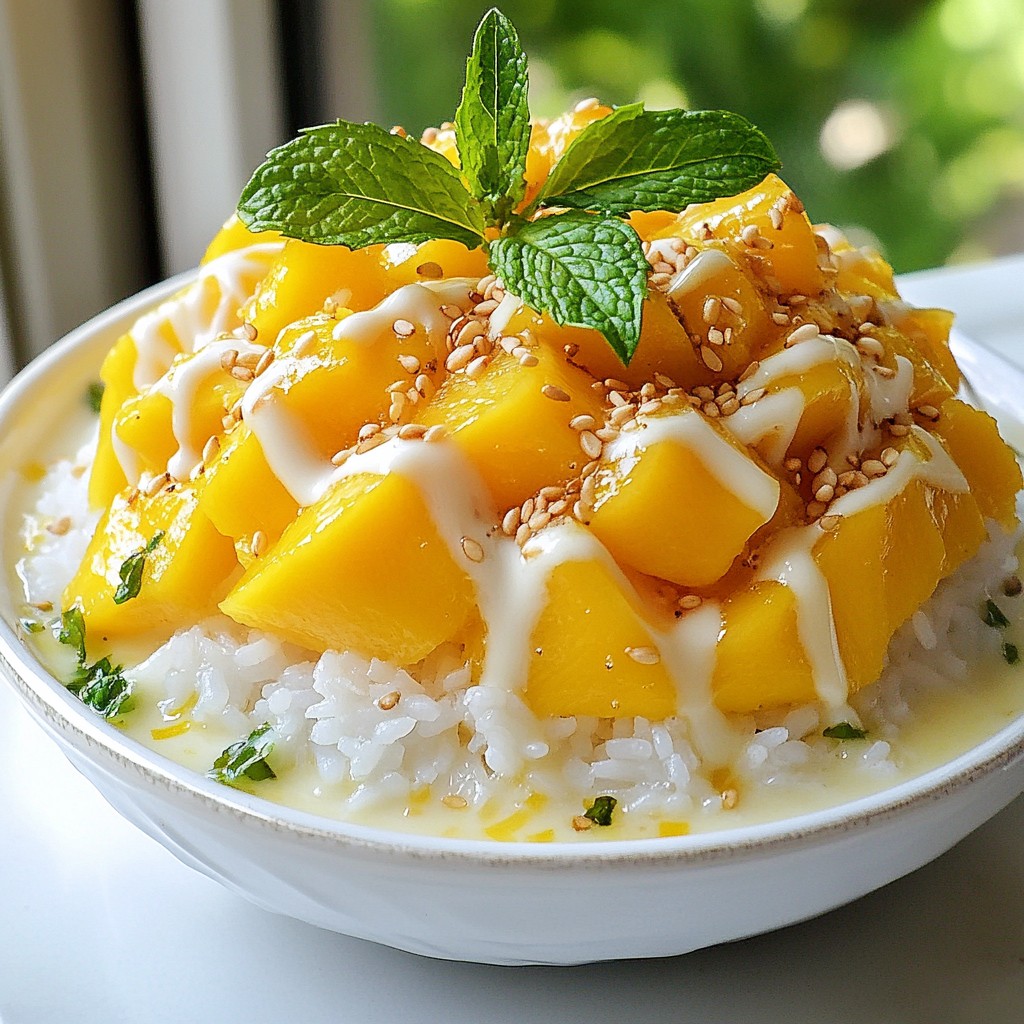
If you're craving a sweet treat that’s both delightful and easy to make, you’ve come to the right place! Thai mango sticky rice is a classic dessert that combines creamy coconut, soft rice, and fresh mango for a taste sensation you won't forget. In this post, I'll share simple recipes, tips, and variations to help you create this delicious dish at home. Let’s dive into making this tasty Thai dessert!
Why I Love This Recipe
- Deliciously Sweet and Creamy: This dish perfectly balances the sweetness of ripe mangoes with the rich, creamy texture of coconut sticky rice.
- Simple Ingredients: With just a few key ingredients, this recipe is both accessible and easy to prepare, making it a great option for any home cook.
- Beautiful Presentation: The vibrant colors of the mango and the white sticky rice create an eye-catching dessert that is sure to impress.
- Perfect for Any Occasion: Whether it's a festive celebration or a simple weeknight treat, this Thai dessert is versatile and loved by many.
Ingredients
Main Ingredients for Thai Mango Sticky Rice
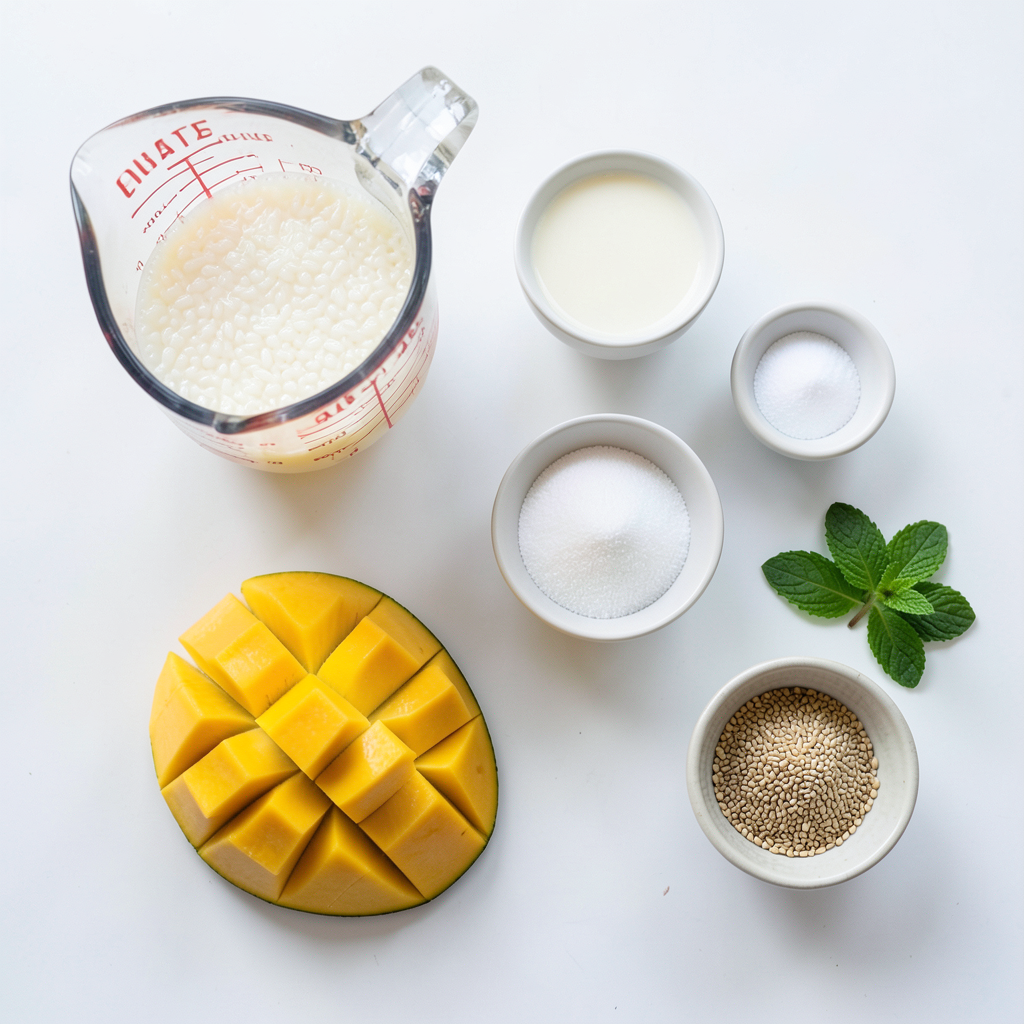
To make Thai mango sticky rice, you need these main ingredients:
- 1 cup glutinous rice (sticky rice)
- 1 ½ cups coconut milk
- ½ cup sugar
- ½ teaspoon salt
- 2 ripe mangoes, peeled, pitted, and sliced into thin wedges
- 2 tablespoons toasted sesame seeds
- Fresh mint leaves for garnish (optional)
These ingredients create a sweet and creamy dessert that many love.
Notes on Choosing Mangoes
When selecting mangoes, look for ripe ones. They should feel soft but not mushy. The color should be vibrant, often yellow or orange. A sweet aroma is a good sign too. Varieties like Ataulfo or Haden work well. They provide the best flavor and texture for your dish.
Alternative Ingredients for Dietary Restrictions
If you have dietary restrictions, you can adjust some ingredients:
- Use brown sugar instead of white for a richer taste.
- For a dairy-free option, ensure your coconut milk is pure and free from additives.
- If you're gluten-free, stick with the glutinous rice as it is naturally gluten-free.
These alternatives keep your dessert enjoyable for everyone.
Step-by-Step Instructions
Preparing the Sticky Rice
Start by rinsing the glutinous rice under cold water. Rinse until the water runs clear. This step removes extra starch. After rinsing, soak the rice in water for at least four hours. If you can, soak it overnight. Soaking helps the rice cook better.
Once soaked, drain the rice well. Line a steamer basket with cheesecloth. This keeps the rice from falling through. Place the drained rice in the steamer basket. Steam the rice over gently simmering water for 30 to 40 minutes. Stir halfway through to cook evenly. The rice should be tender and cooked through when done.
Cooking the Coconut Sauce
While the rice cooks, prepare the coconut sauce. In a saucepan, mix the coconut milk, sugar, and salt. Heat this mixture over medium heat. Stir until the sugar dissolves completely. Be careful not to let it boil. Set aside ¼ cup of this sauce to drizzle later.
Assembling the Dessert
After steaming, transfer the sticky rice to a large bowl. Pour the remaining coconut sauce over the warm rice. Gently fold the rice to coat each grain. Let it sit for 15 to 20 minutes. This allows the rice to absorb the sauce and flavors.
When you are ready to serve, scoop a generous amount of sticky rice onto plates. Arrange the sliced mango beside the rice. Drizzle the reserved coconut sauce over both. For a crunchy touch, sprinkle toasted sesame seeds on top. Optionally, add fresh mint leaves for decoration.
Tips & Tricks
Best Practices for Soaking Sticky Rice
Soaking sticky rice is key to great texture. Rinse the rice in cold water until it runs clear. This removes extra starch for fluffier rice. After rinsing, soak the rice in water for at least four hours. If you can, soak it overnight. This makes the rice soft and easy to cook.
Achieving the Perfect Texture
To steam rice perfectly, drain it well after soaking. Line your steamer basket with cheesecloth or a clean kitchen towel. This keeps the rice from falling through. Steam the rice over simmering water for 30 to 40 minutes. Stir halfway through to ensure even cooking. When done, the rice should be tender and sticky.
Serving Suggestions for Presentation
For a beautiful finish, use dark plates. They make the vibrant mango and white rice stand out. Spoon the sticky rice onto the plate and arrange mango slices beside it. Drizzle the reserved coconut sauce over the top. Add toasted sesame seeds for a crunch. Fresh mint leaves add color and freshness. Consider a lime wedge for extra zing!
Pro Tips
- Soaking Time is Key: Soak the glutinous rice for at least 4 hours or overnight to achieve the best texture and flavor.
- Steaming for Perfection: When steaming, ensure the pot is gently simmering to avoid overcooking the rice. Stir halfway through for even cooking.
- Coconut Sauce Balance: Do not boil the coconut milk mixture; heating it gently will prevent curdling and maintain a smooth texture.
- Garnishing for Flair: Fresh mint leaves and toasted sesame seeds add a delightful crunch and enhance the flavor profile of the dish.
Variations
Mango Sticky Rice with Other Fruits
You can switch up mango sticky rice with other fruits. Try using ripe bananas or sweet strawberries. Pineapple also adds a fun twist. Each fruit brings a unique flavor. It makes the dish more colorful too. Serve the rice with a mix of fruits for a tasty surprise. You can even drizzle extra coconut sauce on top.
Vegan and Dairy-Free Adjustments
Making this dish vegan is easy! Replace the sugar with a plant-based sweetener like agave. Use coconut milk as is; it’s already dairy-free. You can also add more fruit to enhance the flavors. Instead of using butter or cream, stick with coconut milk. This keeps your dessert rich and creamy without dairy.
Regional Variations of the Dish
Thai mango sticky rice varies by region. In some places, cooks add black sesame seeds instead of white. Others mix in pandan leaves for a unique taste. In southern Thailand, you might find a salty coconut sauce. This adds a savory touch to the sweet rice. Each region’s twist makes this dish even more exciting!
Storage Information
How to Store Leftovers
To store leftover Thai mango sticky rice, place it in an airtight container. Make sure the rice cools before sealing it. This keeps the rice fresh and moist. You can store it in the fridge for up to three days. If you want to keep it longer, freeze it for up to one month.
Reheating Tips for Optimal Taste
When you are ready to eat the leftovers, gently reheat them. You can use the microwave or a steamer. If using a microwave, add a splash of coconut milk. This helps to keep the rice creamy. Heat in short bursts to avoid drying it out. If using a steamer, place the rice in a bowl and steam until warm.
Shelf Life of Ingredients
- Glutinous Rice: Can last for years if kept dry and cool.
- Coconut Milk: Unopened cans can keep for up to two years. Once opened, use within a week.
- Sugar: Never spoils if stored in a dry place.
- Salt: Also has an indefinite shelf life.
- Mangoes: Fresh mangoes last about five days at room temperature. If you refrigerate them, they last a week.
Knowing how to store and reheat your Thai mango sticky rice ensures you enjoy this delightful dessert even after the first serving!
FAQs
What type of rice is best for mango sticky rice?
The best rice for mango sticky rice is glutinous rice, also known as sticky rice. This rice has a high starch content, which gives it its unique chewy texture. You must rinse the rice well to remove excess starch before soaking. This step is key for getting the right consistency.
Can I make mango sticky rice in advance?
Yes, you can make mango sticky rice in advance. However, it is best to prepare the rice and coconut sauce separately. You can store them in the fridge for up to two days. When ready to serve, reheat the rice gently. This will help maintain its texture and flavor.
What is the cultural significance of this dish?
Mango sticky rice is a beloved Thai dessert. It is often enjoyed during festivals and celebrations, especially during the mango season. The dish symbolizes sweetness and joy. It brings people together, making it a perfect treat for sharing with family and friends.
You've learned how to make delicious Thai mango sticky rice. We covered the main ingredients and tips for choosing mangoes. I shared ways to adapt the recipe for dietary needs. You now have clear steps for preparing the sticky rice and cooking the coconut sauce. We also discussed various serving options and how to store leftovers.
This treat is tasty and can be enjoyed in many ways. Now, it’s time for you to try making it your own. Enjoy this delightful dessert and share it with friends!