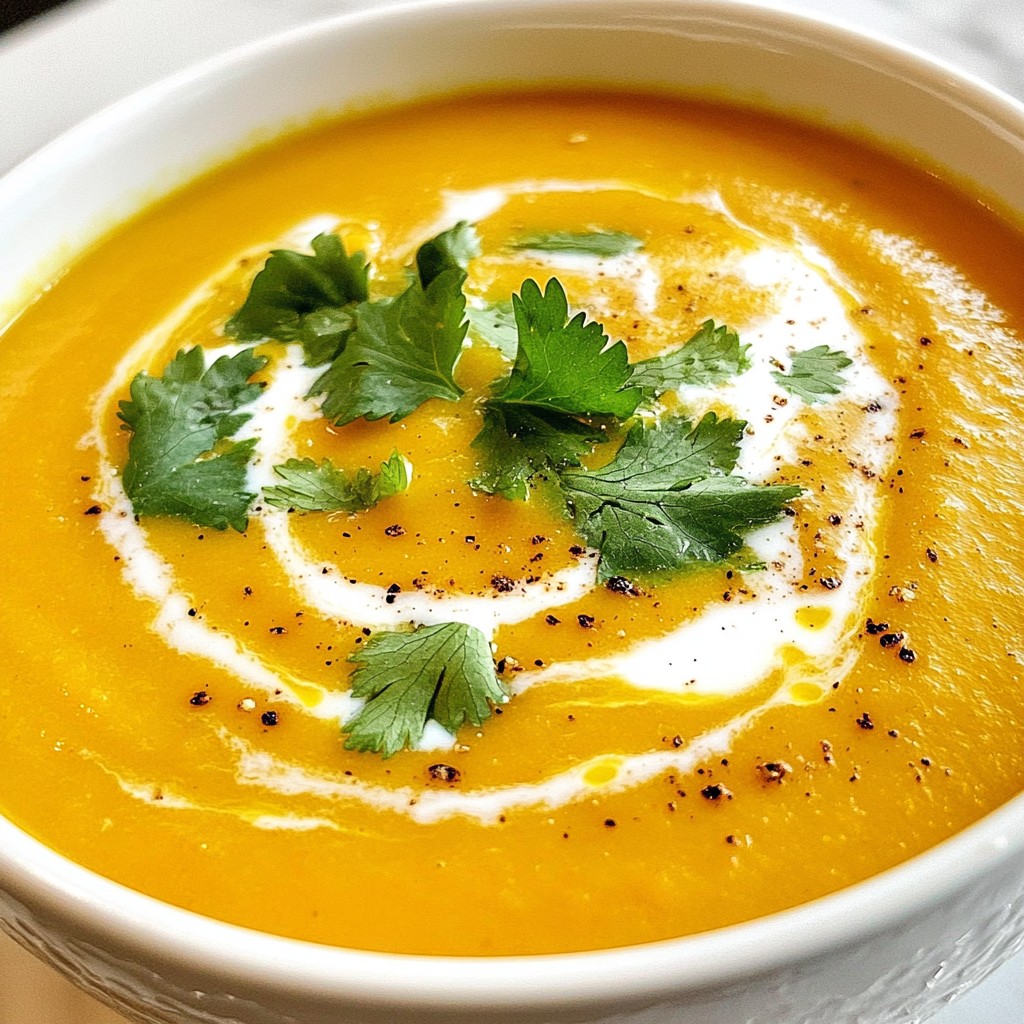
If you're craving a warm and soothing dish, look no further than my Roasted Butternut Squash Soup. This rich and creamy delight mixes simple ingredients like sweet squash, aromatic onion, and rich coconut milk. With every spoonful, you’ll enjoy a burst of flavor and comfort. Plus, you can easily customize it to suit your taste. Ready to dive in? Let’s make a cozy bowl of soup together!
Why I Love This Recipe
- Comforting Flavors: This soup is the perfect blend of sweet and savory, offering a warm hug in a bowl that’s especially delightful on chilly days.
- Easy Preparation: With minimal prep and hands-on time, this recipe makes it easy to whip up a delicious meal without the fuss.
- Healthy Ingredients: Packed with nutritious butternut squash and enriched with coconut milk, it’s a wholesome choice that doesn’t compromise on taste.
- Versatile Dish: Whether served as a starter or a main course, this soup can be adapted with toppings or paired with your favorite bread for a complete meal.
Ingredients
To make a rich and creamy roasted butternut squash soup, you need fresh and simple ingredients. Here’s the list:
- 1 medium butternut squash, peeled and cut into 1-inch cubes
- 1 medium onion, diced
- 3 cloves garlic, minced
- 2 tablespoons olive oil
- 4 cups vegetable broth
- 1 teaspoon ground cumin
- 1 teaspoon ground coriander
- 1/2 teaspoon nutmeg
- Salt and freshly ground black pepper to taste
- 1/2 cup coconut milk
- Fresh cilantro leaves for garnishing
Each ingredient plays a key role. The butternut squash gives the soup its sweet and nutty flavor. The onion and garlic add depth and aroma. Olive oil helps roast the veggies to perfection. Vegetable broth serves as a warm base, while spices like cumin and coriander bring warmth. Nutmeg enhances the sweetness of the squash. Coconut milk adds creaminess, making the soup smooth. Finally, cilantro adds a fresh touch on top.
Gather these ingredients to start your soup-making journey!

Step-by-Step Instructions
Preparing the Butternut Squash
1. First, preheat your oven to 400°F (200°C). This ensures the squash roasts well.
2. In a large bowl, mix the cubed butternut squash, diced onion, and minced garlic.
3. Drizzle the mixture with olive oil. Add salt and black pepper. Toss it all together until coated.
Roasting the Vegetables
1. Spread the vegetable mix on a baking sheet in one layer. This helps them roast evenly.
2. Roast in the oven for 25-30 minutes. The squash should be fork-tender and lightly caramelized when done.
Blending the Soup
1. After roasting, transfer the veggies to a large pot.
2. Pour in the vegetable broth. Add ground cumin, ground coriander, nutmeg, and more salt and pepper to taste.
3. Use an immersion blender to blend the soup until smooth. If you don’t have one, use a regular blender. Blend in small batches and let it cool to avoid splatters.
Finalizing the Soup
1. Stir in the coconut milk for a creamy finish.
2. Heat the soup on low for about 5 minutes. Taste it and adjust the seasoning if needed.
3. Serve hot, garnished with fresh cilantro leaves for added flavor and color.
Tips & Tricks
Enhancing Flavor
To elevate the taste of your soup, consider these spices:
- Cinnamon: A hint of warmth adds depth.
- Ginger: Fresh or ground can brighten the flavor.
- Chili Powder: For a touch of heat.
You can also change the broth. Vegetable broth works well, but chicken broth can add richness.
Achieving the Perfect Texture
For creaminess, blending is key. Use an immersion blender for smooth results. If using a regular blender, blend in small batches. This avoids splatter and mess.
Be careful not to over-roast your squash. It should be tender and lightly caramelized. Over-roasting can make it too sweet and change the flavor.
Serving Suggestions
Pair your soup with crusty bread for a filling meal. A simple salad can also complement the dish.
Serve the soup hot for the best taste. If it cools too much, reheat gently over low heat. Enjoy your delicious bowl!
Pro Tips
- Roasting for Flavor: Roasting the butternut squash, onion, and garlic enhances their natural sweetness and adds depth to the soup's flavor.
- Adjusting Consistency: If the soup is too thick, gradually add more vegetable broth until you reach your desired consistency.
- Herb Variations: Experiment with different herbs like thyme or sage as a garnish for a unique twist on the classic flavor profile.
- Make Ahead: This soup can be made in advance and stored in the fridge for up to 5 days or frozen for up to 3 months, making it a great meal prep option.
Variations
Dietary Adaptations
You can easily adapt this soup to fit your diet. For a vegan option, simply use vegetable broth and coconut milk, which are both plant-based. This soup is already gluten-free, so you don't need to change anything if you're avoiding gluten.
If you want a low-carb version, skip the coconut milk and focus on the butternut squash. You can use cauliflower instead of squash for a lighter option. This keeps the soup creamy while cutting down on carbs.
Flavor Variations
Adding other vegetables can change the taste of your soup. Carrots or sweet potatoes work great with butternut squash. They add sweetness and depth to the flavor. You can also try adding cooked leeks for a mild onion taste or bell peppers for a hint of spice.
Spices can make a big difference too. If you want a kick, add cayenne pepper or smoked paprika. For a more earthy flavor, try adding thyme or sage. Each spice brings its own unique twist to this cozy bowl.
Presentation Ideas
Garnishing your soup can make it look fancy. You can sprinkle roasted pumpkin seeds on top for crunch. Drizzle some extra coconut milk for a beautiful swirl. Fresh herbs like cilantro or parsley add color and freshness.
You can serve the soup in different types of bowls. A rustic bowl gives a homey feel. For a more elegant look, use a white bowl to let the soup shine. You can even serve it in a hollowed-out bread bowl for fun!
Storage Information
Refrigeration Guidelines
To store leftover roasted butternut squash soup, let it cool first. Pour it into an airtight container. Make sure to seal it well to keep out air. This soup lasts about 4 to 5 days in the fridge. If you want to eat it later, check for any signs of spoilage before warming it up.
Freezing Instructions
You can freeze this soup if you have too much. Use a freezer-safe container or a zip-top bag. Leave some space at the top, as the soup will expand when it freezes. To thaw, place it in the fridge overnight or run warm water over the bag. Avoid defrosting in the microwave, as it can change the texture.
Reheating Tips
When you're ready to eat, you have two good options to reheat the soup. You can use the microwave or stovetop. If you use the microwave, heat in short bursts and stir often. If you choose the stovetop, warm it on low heat. Stir it gently to keep the creamy texture. Both methods work well, but stovetop reheating often keeps the flavor intact better.
FAQs
What is the best way to peel butternut squash?
To peel butternut squash, use a sharp vegetable peeler. Start at the top and work down. Make sure to remove all the skin. You can also cut the squash in half to make it easier to hold. If the skin is tough, you can microwave it for a minute to soften it.
Can I make roasted butternut squash soup ahead of time?
Yes, you can make roasted butternut squash soup ahead of time. Cook the soup fully and let it cool down. Store it in an airtight container. It will last in the fridge for about three days. You can also freeze it for up to three months. Just remember to thaw it before reheating.
How can I thicken the soup if it's too thin?
If your soup is too thin, there are a few ways to thicken it. You can add more roasted squash and blend again. Another option is to stir in some corn starch mixed with water. Let it cook for a few minutes to thicken. You can also add more coconut milk for creaminess.
Is it possible to make this soup without coconut milk?
Yes, you can make this soup without coconut milk. Use heavy cream or whole milk instead for a rich taste. You can also use unsweetened almond milk for a lighter option. Just adjust the seasoning to keep the flavor balanced.
This blog post covered how to make a tasty roasted butternut squash soup. We explored key ingredients, like butternut squash, coconut milk, and various spices. I provided step-by-step instructions on roasting and blending the soup for the best texture and flavor. We discussed tips for enhancing flavor and making dietary adaptations. Lastly, we looked at smart storage and reheating methods.
Enjoy making this warm, comforting soup. It’s delicious and rewarding to prepare!