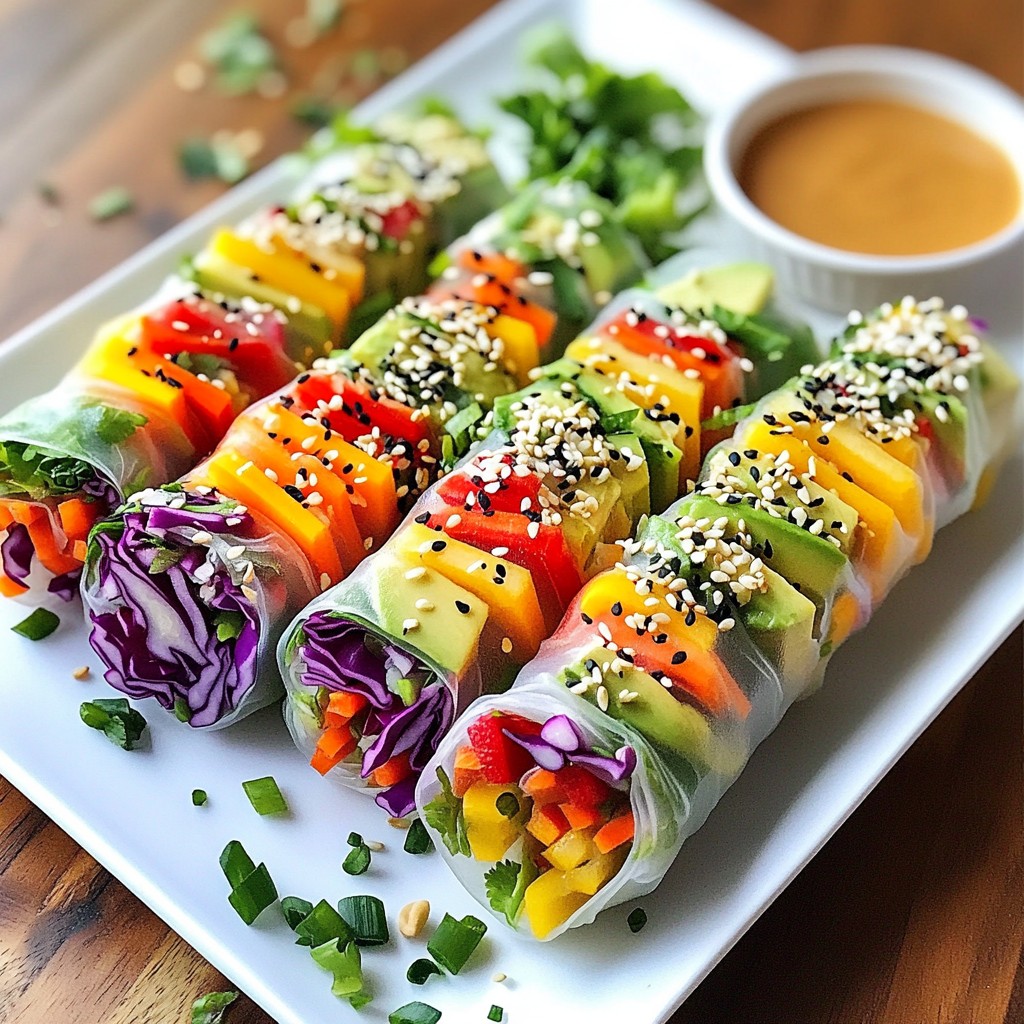
Are you ready to brighten up your meals? Rainbow Veggie Spring Rolls are not just colorful; they are fresh, healthy, and packed with flavor! In this easy guide, I’ll walk you through selecting the best veggies, crafting a delicious dipping sauce, and avoiding common mistakes. Whether you're a beginner or a seasoned cook, these rolls will impress your family and friends. Let’s dive into this vibrant recipe that’s as fun to make as it is to eat!
Why I Love This Recipe
- Colorful Presentation: These spring rolls are a visual delight, bursting with vibrant colors that make them appealing to both the eyes and the palate.
- Fresh Ingredients: Packed with fresh vegetables and herbs, these rolls are not only healthy but also provide a refreshing crunch in every bite.
- Easy to Customize: You can easily swap in your favorite veggies or proteins, making this recipe versatile for any dietary preference.
- Delicious Dipping Sauce: The creamy peanut sauce perfectly complements the fresh flavors of the spring rolls, making each bite even more enjoyable.
Ingredients
List of Vegetables for Rainbow Spring Rolls
- Rice paper wrappers
- Carrot
- Cucumber
- Red bell pepper
- Yellow bell pepper
- Red cabbage
- Baby spinach or mixed greens
- Avocado
- Fresh mint leaves
- Fresh cilantro leaves
- Sesame seeds (for garnish)
Dipping Sauce Ingredients
- Creamy peanut butter
- Soy sauce
- Fresh lime juice
- Honey or maple syrup
- Water (for consistency)
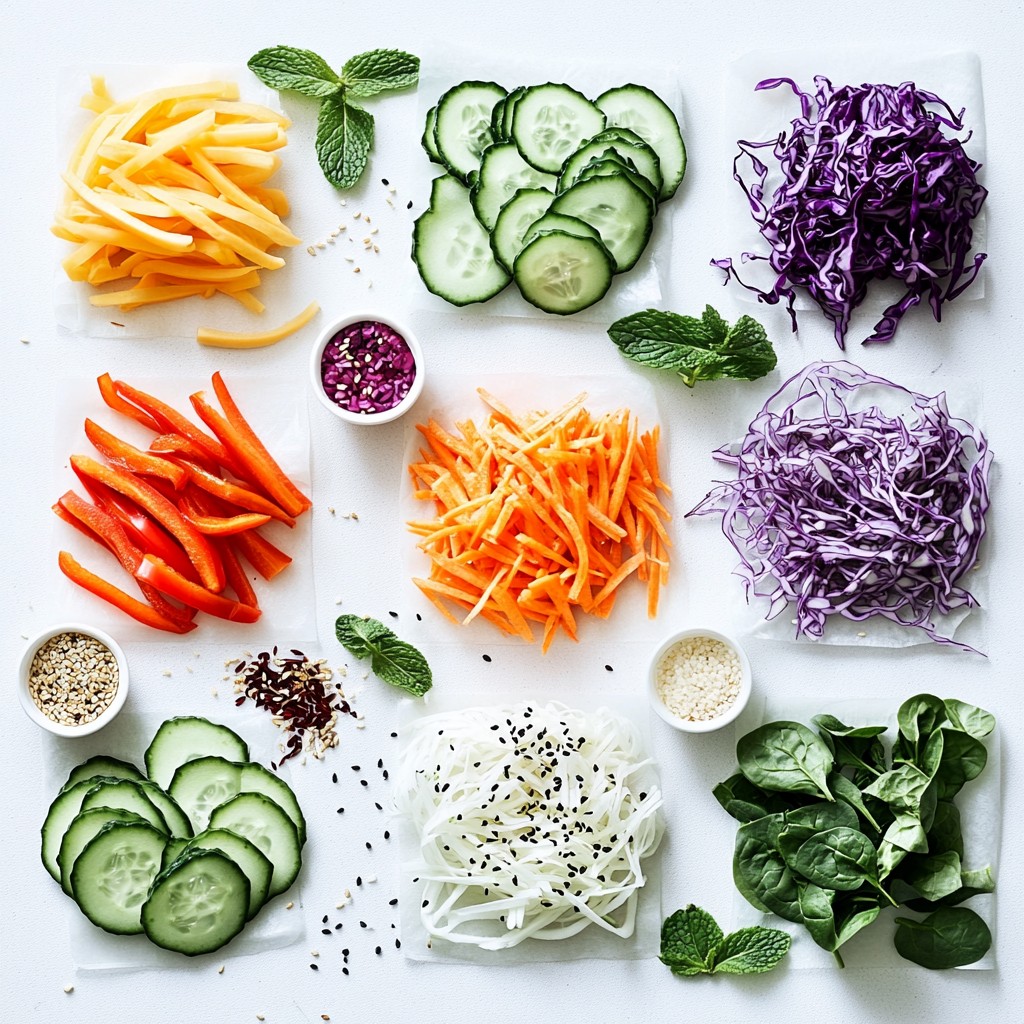
When making rainbow veggie spring rolls, fresh ingredients matter. Start with rice paper wrappers; they hold everything together. Use medium carrots, thinly cut into strips. Cucumbers add crunch and freshness.
Red and yellow bell peppers bring color and sweetness. Shredded red cabbage adds a nice crunch. Choose baby spinach or mixed greens for a base.
Sliced avocado gives creaminess. Fresh mint and cilantro offer bright flavors. Lastly, sprinkle sesame seeds on top for a tasty finish.
For the dipping sauce, creamy peanut butter is a great base. Mix it with soy sauce for saltiness. Fresh lime juice adds zing. Sweetness comes from honey or maple syrup. Use water to adjust the sauce's thickness to your liking.
These fresh ingredients make spring rolls vibrant and tasty. They are perfect for a light meal or snack. Enjoy the burst of flavors in every bite!
Step-by-Step Instructions
Preparing the Vegetables
Start by washing all your vegetables. Use cool water and gently scrub them. This step is key for clean and fresh flavors. Next, julienne the carrot and cucumber. Slice the red and yellow bell peppers thinly. Shred the red cabbage into fine strips. Arrange each type of vegetable in separate bowls. This makes it easy to grab what you need during assembly.
Soaking Rice Paper Wrappers
Prepare a large shallow plate or bowl filled with warm water. The water should not be boiling, just warm enough to soften the wrappers. Dip one rice paper wrapper in the water for about 10 to 15 seconds. You want it soft and flexible for rolling. Be careful not to soak it too long, as it can tear easily.
Assembling the Spring Rolls
Lay the softened rice paper flat on a clean surface. Start by placing a few spinach leaves in the center. Add small portions of carrot, cucumber, red bell pepper, yellow bell pepper, and red cabbage. Next, add avocado slices and sprinkle with fresh mint and cilantro. For the best look, layer the colors so they show through the wrapper. Fold the bottom of the rice paper over the filling, then tuck in the sides. Roll it tightly, similar to how you roll a burrito. Repeat this with the rest of the wrappers and fillings.
Making the Dipping Sauce
In a medium bowl, mix together the creamy peanut butter, soy sauce, fresh lime juice, and honey or maple syrup. Whisk everything until it is smooth and creamy. If it’s too thick, add water a little at a time. You want a nice dipping consistency that clings to the spring rolls.
Serving Suggestions
Arrange your finished spring rolls on a platter. Make them look nice by spreading them out a bit. Sprinkle sesame seeds on top for a fun crunch. Serve the spring rolls with the dipping sauce in a small bowl. You can also add a few lime wedges for extra zest on the side. Enjoy your colorful, fresh dish!
Tips & Tricks
Common Mistakes to Avoid
- Over-soaking rice paper: Soaking rice paper too long makes it tear easily. Dip it for 10-15 seconds in warm water. It should be soft but firm enough to handle.
- Overfilling spring rolls: Adding too much filling can cause them to burst. Use a small amount of each veggie. This keeps your rolls neat and easy to eat.
Enhancing Flavor
- Recommended herbs and spices: Fresh mint and cilantro add a bright taste. You can also try adding basil or chives for extra flavor.
- Alternative sauces to try: Besides peanut sauce, you can use hoisin or sweet chili sauce. These add a sweet and spicy kick to your spring rolls.
Preparation Tips
- Prepping vegetables in advance: Wash and cut your veggies ahead of time. This makes assembly quick and easy when you're ready to roll.
- Efficient assembly line setup: Arrange your ingredients in a row. Place rice paper, veggies, and sauce all within reach. This setup helps you roll faster and keeps everything organized.
Pro Tips
- Choose Fresh Ingredients: Selecting the freshest vegetables will enhance the flavor and texture of your spring rolls. Look for vibrant colors and crispness.
- Soak Rice Paper Properly: Ensure that you soak the rice paper just long enough to become pliable but not too soft, as it can tear easily when rolling.
- Customize Your Fillings: Feel free to mix and match your favorite vegetables or add protein like shrimp or tofu for an extra boost.
- Keep It Simple: Don’t overload the rice paper with too many fillings; otherwise, it will be difficult to roll up. Less is often more!
Variations
Different Vegetable Combinations
You can swap and change the veggies based on the season. For spring rolls, fresh and colorful options work best. Try using snap peas in spring or zucchini in summer. If you're allergic to a specific vegetable, avoid it and choose safe options. For instance, if you can’t eat avocado, use sliced mango for a sweet twist.
Protein Additions
Adding protein can make your spring rolls more filling. You can use shrimp, tofu, or chicken. For shrimp, lightly cook them before adding. Tofu is great if you want a vegetarian option. Just press it to remove extra water and cut it into small cubes. You can also use tempeh or chickpeas for plant-based protein.
Globally Inspired Versions
You can give your spring rolls a global flair. For an Asian twist, add sliced radishes and bean sprouts. You can even include kimchi for a spicy kick. For a Mediterranean version, use roasted red peppers, olives, and feta cheese. This adds a nice tang and richness. Don't be afraid to mix and match flavors from different cuisines!
Storage Info
Storing Unused Spring Rolls
To keep your spring rolls fresh, wrap them in a damp paper towel. Place them in an airtight container. This helps maintain moisture and flavor. Store the container in the fridge. They stay fresh for about two days. Check for any signs of spoilage before eating.
Freezing Spring Rolls
You can freeze spring rolls for later. First, lay them flat on a baking sheet. Make sure they do not touch. Freeze for about one hour until firm. Then transfer them to a freezer bag. Remove as much air as possible. When you want to eat them, reheat in the oven or air fryer. Bake at 375°F for about 10-12 minutes. This keeps them crispy.
Storing Dipping Sauce
You can store leftover dipping sauce in a sealed jar. Keep it in the fridge for up to one week. If it gets too thick, add a little water to thin it out. You can also adjust the flavor. Add more lime juice or honey for a fresh twist.
FAQs
How long do spring rolls last in the fridge?
Spring rolls stay fresh for about 3 days in the fridge. After that, they may lose their taste and texture. You’ll know they are bad if they become slimy or smell off. Always check for these signs before eating.
Can I make spring rolls ahead of time?
Yes, you can make spring rolls a few hours before serving. I recommend making them no more than 4 hours ahead. To keep them fresh, cover them with a damp cloth. This prevents the rice paper from drying out.
What can I serve with rainbow veggie spring rolls?
These spring rolls pair well with many sides. Try serving them with a sweet chili sauce or a creamy peanut dip. Fresh fruits like mango or pineapple also complement the rolls nicely. For drinks, consider iced tea or coconut water.
Are rainbow veggie spring rolls gluten-free?
Most of the ingredients are gluten-free. Rice paper wrappers, vegetables, and fresh herbs are safe. However, check the soy sauce for gluten. You can use tamari or coconut aminos as gluten-free options.
Rainbow spring rolls are bright, tasty, and fun to make. We covered the best veggies, dipping sauce, and step-by-step instructions. Remember to avoid common mistakes like over-soaking rice paper and overfilling the rolls. Explore different flavors with herbs, proteins, and unique combinations. For storage, keep unused spring rolls fresh in the fridge or freeze them for later. With these tips, you can enjoy and share delicious spring rolls anytime. Happy rolling!